



Concentricity between the impeller and housing plays a critical role in low-pressure fan performance. This article explains how manufacturing precision affects airflow, noise, and efficiency in fan production.
Many low-pressure fan manufacturers face serious problems due to insufficient fan housing roundness: uneven impeller clearance, unstable airflow, increased vibration, loud noise, low efficiency, and poor stability.
What Happens When Concentricity Is Lost in a Low-Pressure Fan?
Uneven Impeller Clearance
If the center of the impeller and the housing of the axial low-pressure fan are not on the same central axis, after the impeller is installed, the clearance on one side will be very small, and the clearance on the other side will be very large.
In severe cases, the impeller will rub against the inner wall of the fan, resulting in equipment damage.
Increased Vibration and Noise
Uneven clearance directly leads to severe instability when the impeller rotates, causing vibration.
Vibration will further shorten bearing life and increase noise.
Reduced Airflow Efficiency
Uneven clearance results in uneven airflow distribution through the axial low-pressure fan, with excessive air volume in some areas and insufficient in others, eventually leading to low fan efficiency.
So, how to ensure concentricity?
Where Concentricity Errors Begin in Low-Pressure Fan Manufacturing
As mentioned earlier, concentricity depends on whether the centers of the housing and impeller of the axial low-pressure fan are on the same axis.
Therefore, the roundness of the housing is critical, and the accuracy during assembly is equally important.
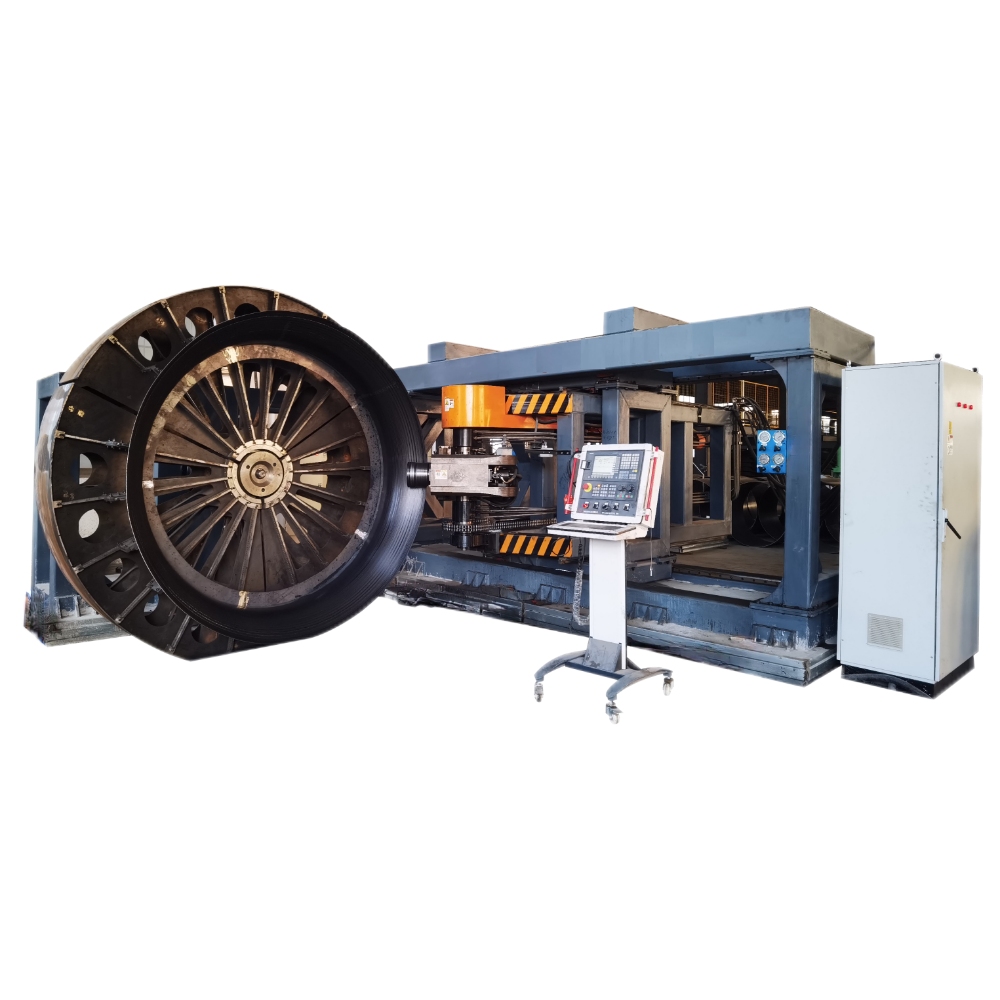
Housing Rolling Accuracy
High precision is required for the housing rolling process. If the housing is not perfectly round after rolling, the impeller will still be off-center, no matter how carefully you assemble it. This is the foundation of ensuring fan quality.
Welding Deformation
How Manufacturing Errors Affect Low-Pressure Fan Performance
- Unstable airflow
- Increased airflow turbulence
- Higher mechanical vibration
- Lower overall fan efficiency
How Altron’s Machines Maintain Concentricity in a Low-Pressure Fan


When Low-Pressure Fan Manufacturers Should Upgrade Their Production Process
With the increasing requirements for product performance and quality, traditional manual rolling & welding or semi-automatic manual production can no longer meet modern production needs, which has become the biggest bottleneck restricting the improvement of enterprise capacity and product quality.
When Production Quality Is Inconsistent
Manufacturers’ biggest fear is: Customers get a good product the first time, but receive defective ones when reordering. This huge gap directly leads to customer complaints. As complaints increase, brand reputation suffers, old customers are lost, and potential clients turn to other suppliers.
Coupled With Frequent Repairs
If you often need to adjust a part to achieve basic functions, it means that sufficient precision was lacking in the previous processes.
Rising labor costs and a shortage of experienced workers
Manual welding, forming, and calibration processes require skilled operators, making production both labor-intensive and difficult to scale.
FAQ: Low-Pressure Fan
Q: What is a low-pressure axial fan?
A: Low-pressure axial fans are designed to deliver large volumes of air at relatively low pressures. In these fans, air flows parallel to the fan axis, similar to how air flows through a propeller. They are commonly used in applications requiring high airflow with low system resistance, such as building ventilation, cooling systems, and industrial exhaust.
Q: What is the typical pressure range for low-pressure axial fans?
A: Low-pressure axial fans typically operate at pressures below 1000 Pa.
Q: What are the advantages of low-pressure axial fans?
- High airflow capacity
- Simple structure
- Lower energy consumption in low-resistance systems
- Compact installation
CNC Spinning Flanging Machine How To Manufacture The Air Inlet Of Large Centrifugal Fan
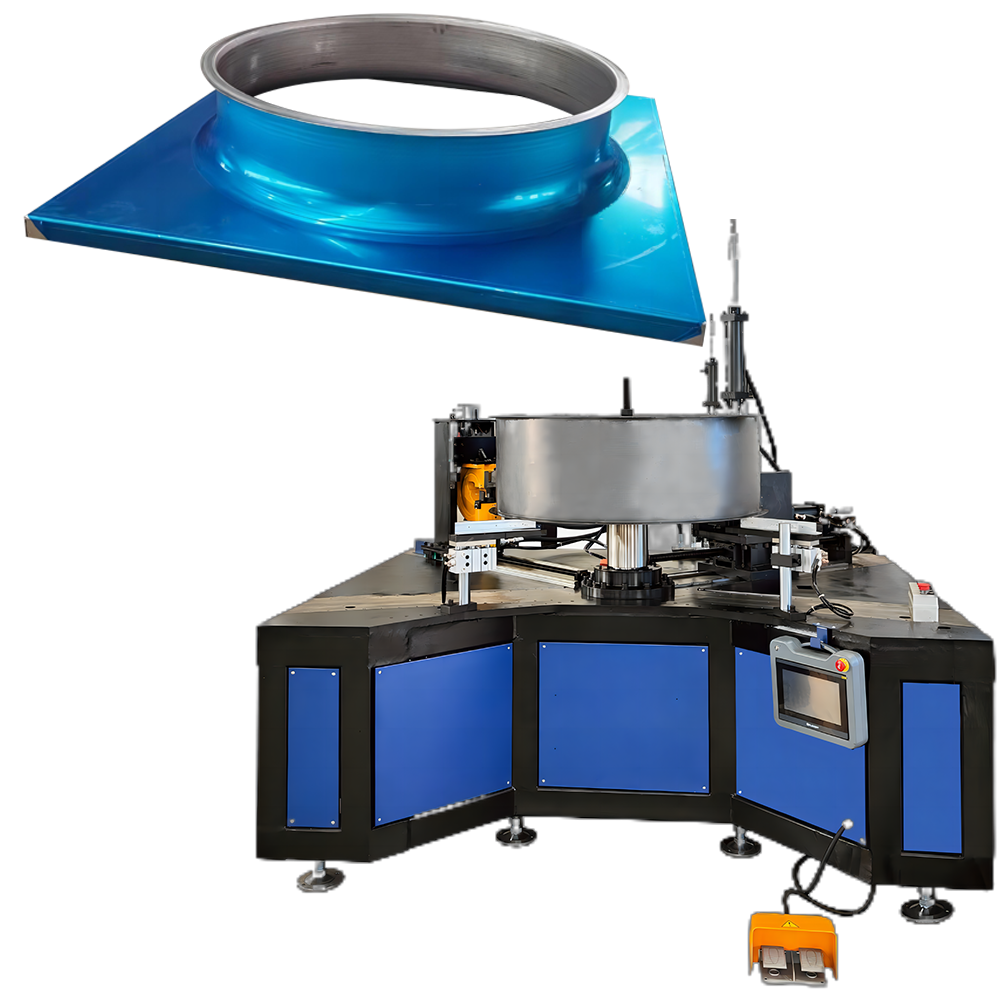
PLC Flanging and Hole Punching Machine
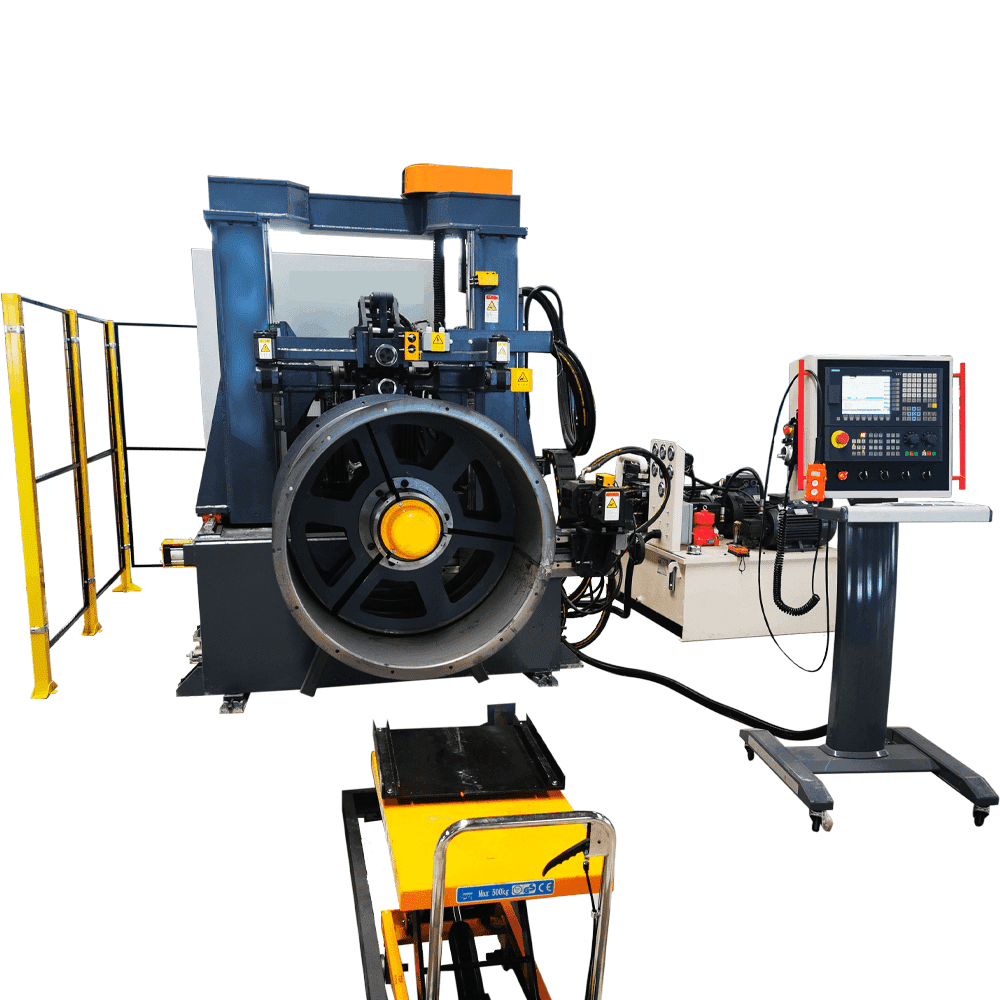
CNC Flanging And Punching Machine ACFB-1605
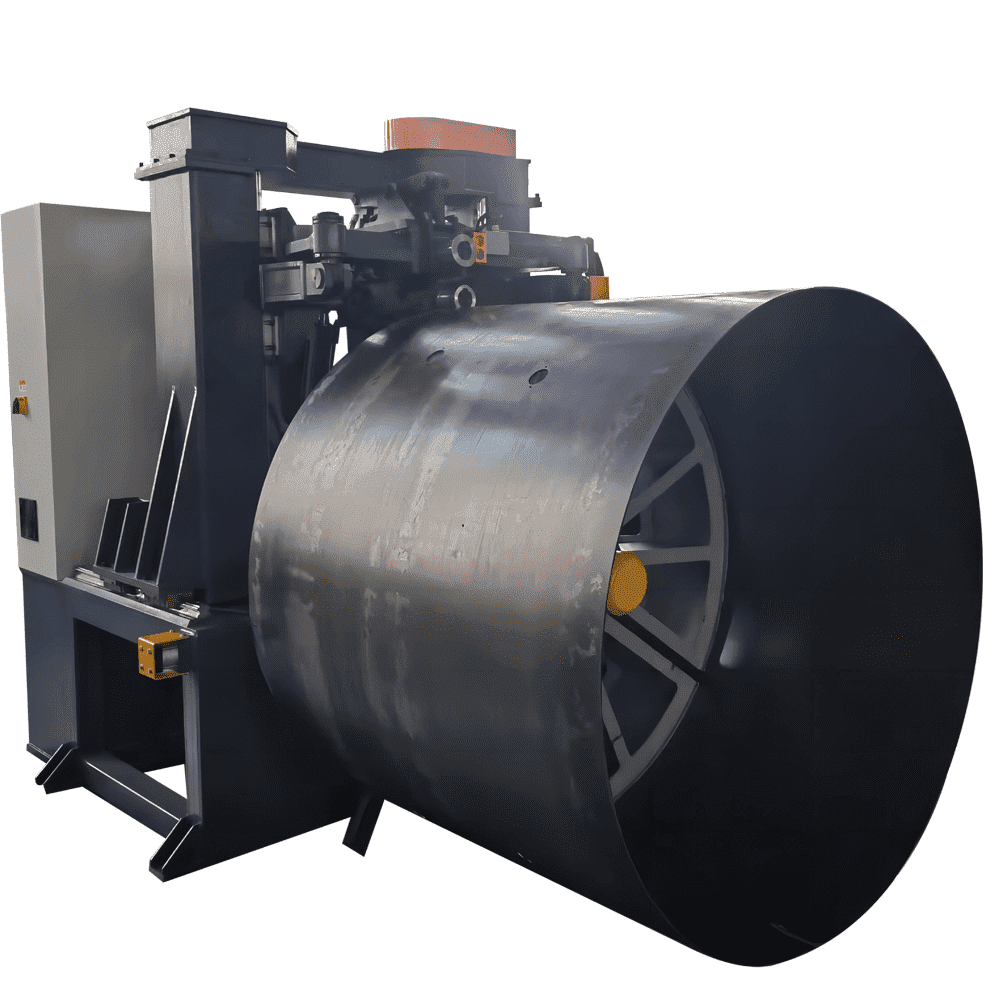
CNC Flanging And Punching Machine ACFB-2008