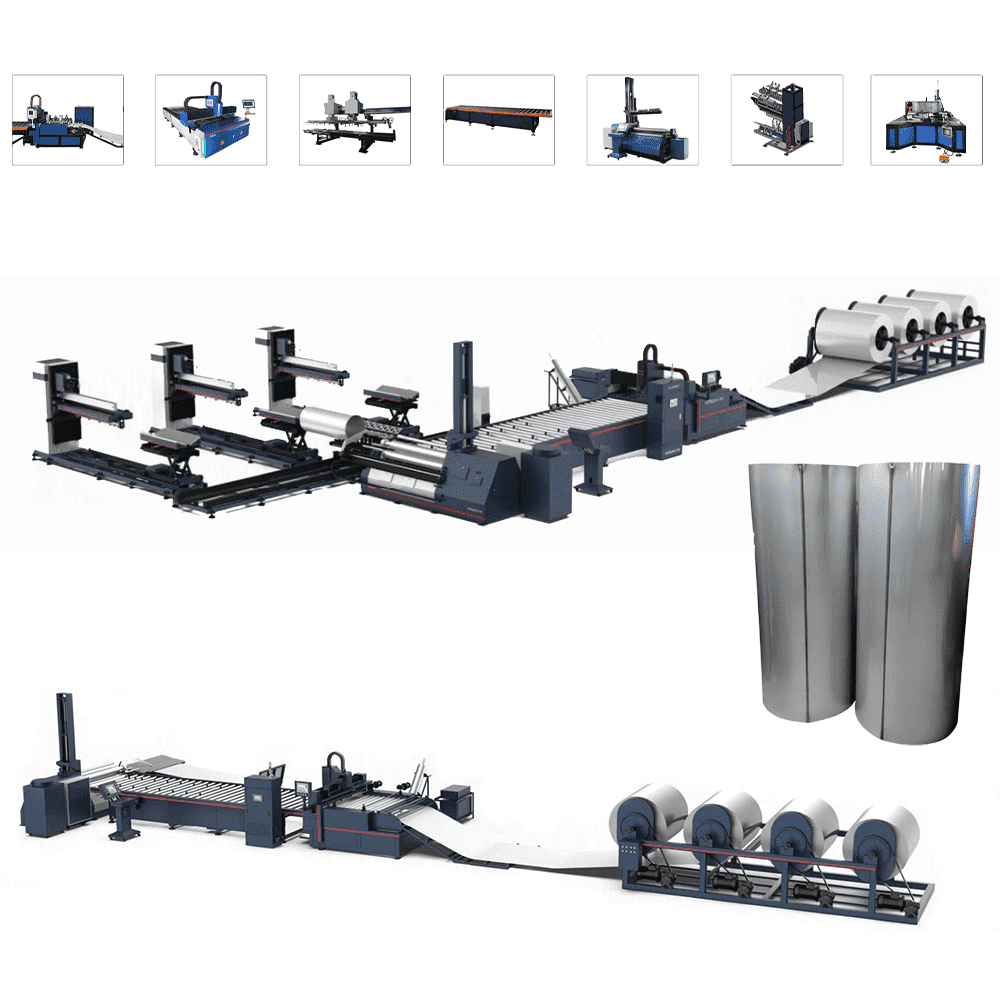




Altron focuses on the automated rolling and welding of industrial axial fans, solving various unstable factors faced by axial fan manufacturers in manual production! Effectively improve the quality of fans, reduce costs, and complete the technical upgrade of the axial fan parts manufacturing process!

Altron provides rolling machines, automatic lifting seam welding, and automatic circumferential seam welding to make standard axial fan ducts and axial fan flanging;
It provides basic guarantees for axial fan installation. The gap between the duct and the axial fan blade determines the axial fan efficiency and quality! Different axial fan blade types have different manufacturing processes, such as: aluminum alloy die casting, stamping formed blades and axial fan hub welding.
Industrial Axial Fan Rolling Process
In the axial fan air flow rolling process, there are many standard models and non-standard models. According to the axial fan drawing, the axial fan drawing and size of the laser cutting are calculated and obtained.

To distinguish different sheet materials, material thickness, and rolling diameter, you only need to enter the corresponding data on the Altron rolling machine and test it!
According to the different resilience of the metal sheet, adjust the height data of the roller of the metal rolling machine!
The 4-roller Rolling machine is digitally controlled. When the correct air duct is obtained, the data program can be saved, which can be quickly produced in the future!
Axial Fans Automatic Seam Welding Process
Altron has extensive experience in automated welding, especially in the process of welding axial fan cylinders. Different materials use different welding processes!
The main commonly used welding processes are: gas shielded welding, argon arc welding, laser welding, plasma welding and submerged arc welding! The welding quality and use environment produced by different welding processes are different!
| Welding Type | Welding Characteristics |
| TIG | Beautiful, flat welds, no spatter, good welding air tightness, usually welding 0.5-3mm wall thickness. |
| MAG | High welding speed, suitable for automated welding; low cost and large spatter, welding carbon steel and stainless steel 2-6mm wall thickness. |
| MIG | Continuous wire feeding, high welding speed, suitable for medium and thick plates; can be flat welding and vertical welding with strong adaptability, pulse welding can be selected. |
| PAW | Stable welding, suitable for thick plate welding, high quality, high welding temperature and strong penetration, can weld plates within 10mm without cracks. |
| SAW | Welding 5-50mm wall thickness plates, large penetration, beautiful weld formation; need to apply different types of flux, widely used in pressure vessels. |
| Laser Welding | welding thin plates, beautiful welds, high efficiency, usually welding sheet metal appearance workpieces. |
Plasma welding or submerged arc welding is used for thicker plates, laser welding or argon arc welding is used for thinner materials, and usually carbon steel materials can be welded by gas shielded welding for multi-layer and multi-pass welding!
After the metal plate is rolled, the next process is seam welding. Thicker plates can be spot welded on the rolling machine, and thinner materials only need to be fixed on the lifting straight seam welding machine, manually positioned and started to fix the machine! Set the welding length, start the arc at the starting point of the seam welding, and complete the welding!
Note: Different materials, welding current and voltage, all need to be matched and adjusted with each other; and pay attention to whether the type and model diameter of the filler welding wire are correctly selected!
Welding skills for axial fan ducts
Usually, welding defects are prone to occur at the arc starting point and the end seam welding position of the axial flow fan duct!
Solution:You can add arc starting plates at the starting and ending positions of welding to extend the welding length appropriately! Cut off the excess arc starting plates after welding is completed, effectively improve the welding quality, and reduce the cracking of the weld mouth during flanging!
Conventional gas shielded welding MIG and argon arc welding TIG current and voltage parameter table
The current and voltage data parameter table is for reference by axial flow duct welding engineers, and needs to be fine-tuned according to actual working conditions and situations.

Axial Fan Rolling & Welding Production Line
In the global industrial fan manufacturing process, the use of automated machines is only a preliminary transformation. Currently, most large-scale industrial fan manufacturers usually consider using the wear-free production line to further reduce labor costs!
The Rolling & Welding Production Line production line mainly removes the process that requires secondary training and transportation in traditional single-machine production!
The process flow of the axial fan production line:
Roll feeding-metal effect flat-laser cutting-automatic rolling-seam welding-flanging and punching
More Axial Fan Automation Machines
Altron continues to innovate and develop different automation machines in the field of axial fans to solve the difficulties in making different axial fan assemblies and to produce them at a low cost!
The impeller automated visual welding robot can meet the welding of axial fan impellers and centrifugal fan impellers! Effectively improve welding quality!
After the impeller welding is completed, the dynamic balance of the impeller is very important. A good fan must strictly control the axial fan noise and vibration, etc.!
Altron also provides: impeller welding robots, CNC flanging machines, PLC customized flanging machines, automatic punching machines, roll forming production lines, bending, etc., all of which provide customized automatic production lines for industrial axial fans!
Axial Fans In Different Materials And Applications
Stainless steel is often used in high-temperature environments or axial flow fan ducts with higher quality requirements such as corrosion resistance.
Galvanized sheet materials are usually used in oil fume axial flow ventilation fans.
Carbon steel materials are usually used in industrial axial flow fans!
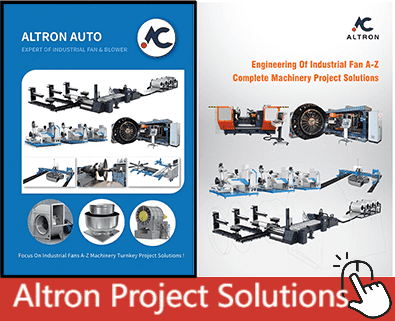
To learn more about industrial fans and automation machines, download Altron’s Catalog!
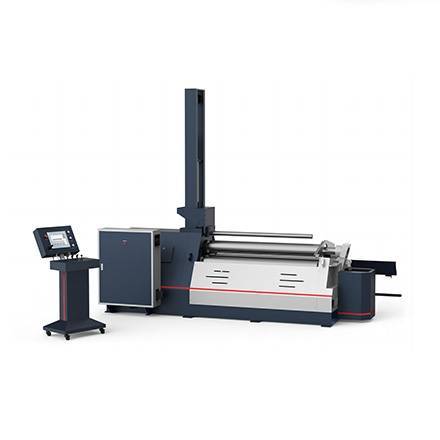
4-Rolling Machine work & welding for Axial Fan
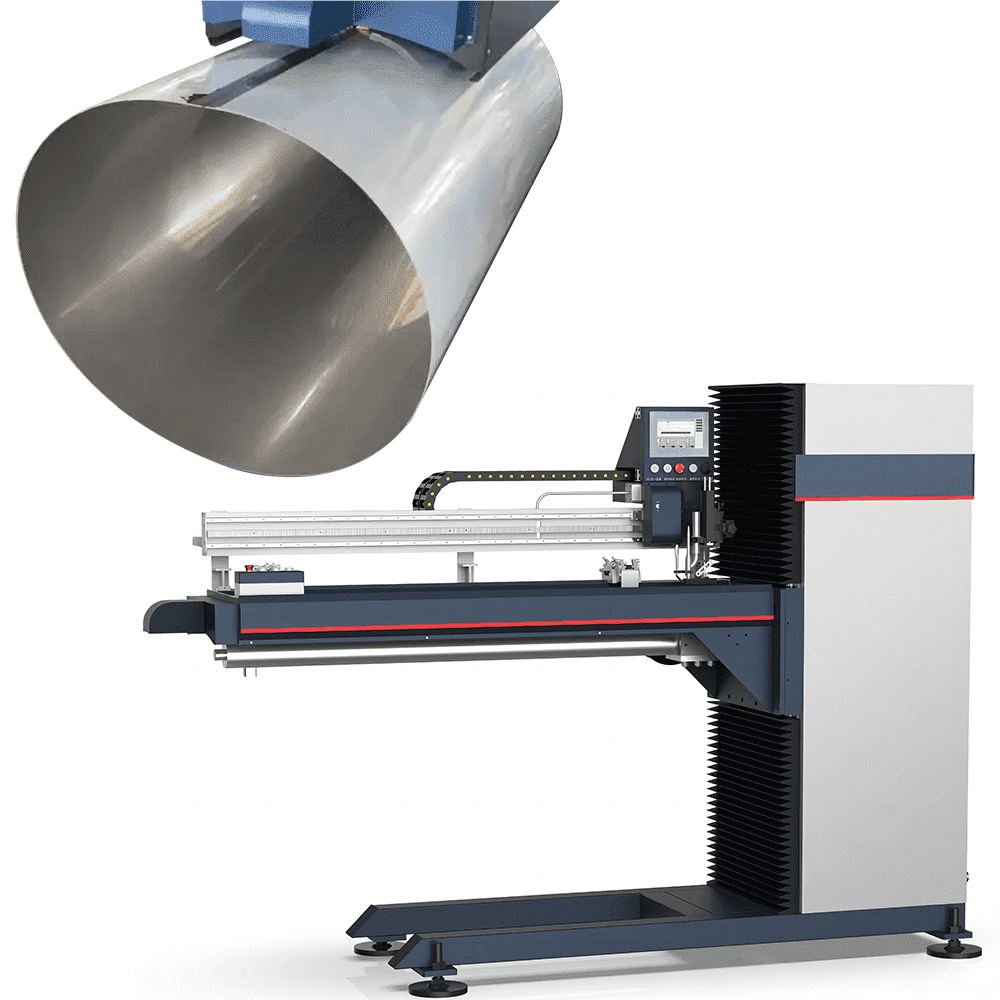
Auto-Seam Welding Machines
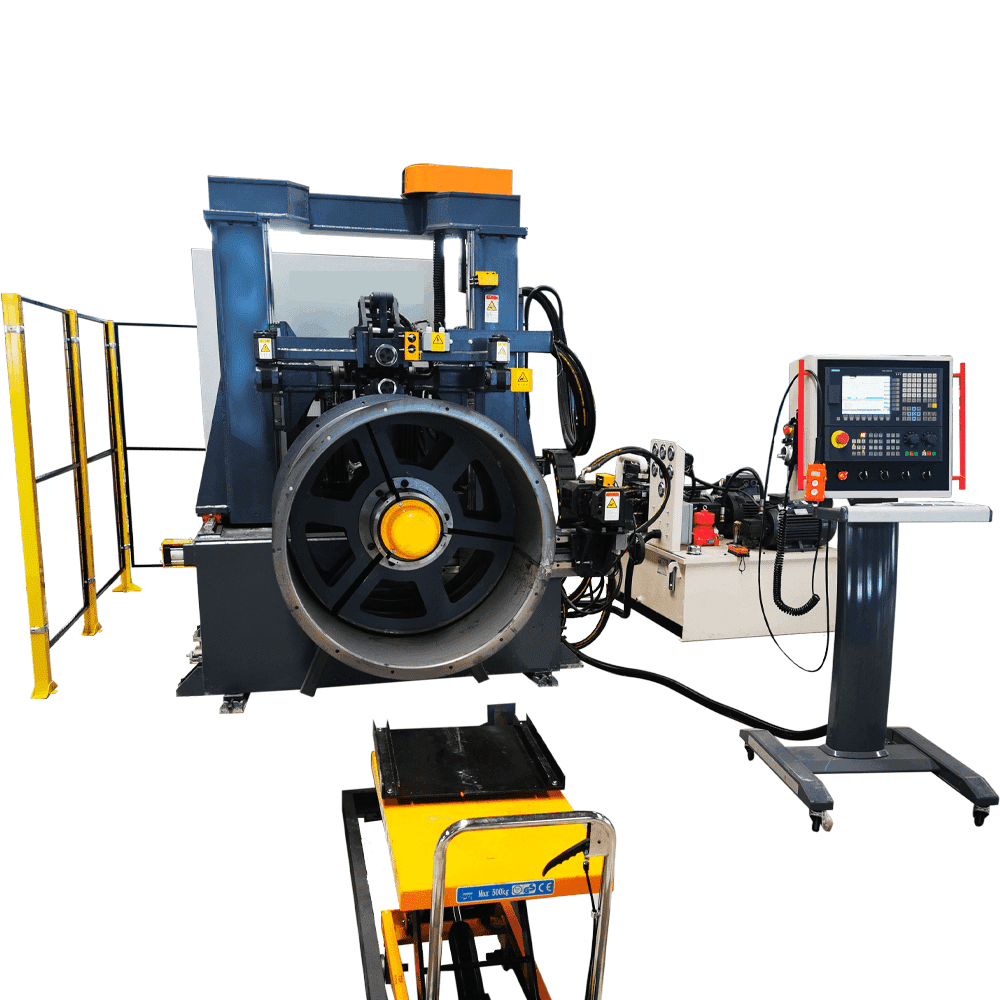
CNC Flanging And Punching Machine ACFB-1605