


Metal Spinning Basics: Process, Types, Materials, Applications and More

Metal spinning basics is a highly efficient metal-forming process that primarily involves applying pressure to change the shape of metal to manufacture components. Unlike traditional machining and other cutting processes, spinning typically does not require the removal of large amounts of material to achieve the final shape; it is therefore particularly well-suited to the manufacture of axially symmetrical components such as circular, conical, cylindrical, and hemispherical parts.
Serving as a fundamental introductory guide, this article provides a comprehensive overview of the core concepts of metal spinning, covering its basic principles, the tools and dies used, suitable materials, common applications, and the different types of spinning. Furthermore, we shall conduct an in-depth comparison of the differences between hand spinning and CNC spinning machines, whilst objectively analysing the advantages and disadvantages of the process, to help you quickly develop a systematic understanding of metal spinning technology.
What Is Metal Spinning?
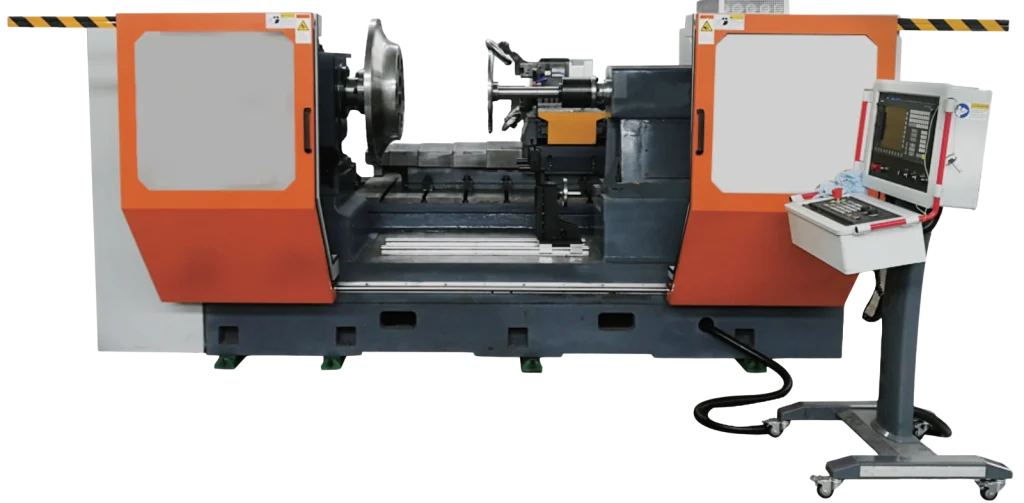
Metal spinning is essentially a metal forming process, the core principle of which involves altering the shape of a rotating metal blank by applying controlled pressure. In the metal spinning process, the metal blank is typically securely clamped in the spinning equipment, after which the workpiece rotates along with the spindle and the die.
At this stage, tools such as spinning wheels gradually apply pressure to the material, causing continuous localised plastic deformation that progressively conforms to the mandrel or forms the desired contour, ultimately resulting in an axially symmetrical component. It is particularly important to emphasise that metal spinning is primarily a forming process rather than a cutting process.
The concept of shaping materials while rotating them has parallels with ancient pottery-making techniques, but modern metal spinning developed much later as a metal-forming process. Early metal spinning relied heavily on manual skill and simple mechanical equipment, while the introduction of mechanised and CNC systems gradually improved productivity, dimensional control, and repeatability.
How Does the Metal Spinning Process Work?
The core principle of the metal spinning process is not simply the compression of rapidly rotating metal; a more accurate description is that, whilst the metal blank is rotating, spinning wheels or forming tools apply controlled pressure to it, thereby gradually shaping the material. This method of point-by-point, continuous local plastic deformation is the key factor that distinguishes the spinning process from other forming technologies.
The Basic Working Principle
The operation of metal spinning relies primarily on the precise coordination of three core actions. Firstly, the metal rotates: the metal blank is clamped onto the spindle and rotates at high speed; secondly, the tool applies pressure: the spinning wheel or forming tool, driven by a hydraulic or servo system, applies precise localised pressure to the rotating material; finally, progressive forming, whereby the tool moves step by step along a pre-set trajectory, causing the material to gradually conform to the mandrel through continuous plastic deformation.
It is important to emphasise that metal spinning does not typically form the material into its final shape in a single operation, but rather achieves a smooth transition to the target contour through continuous or repeated progressive forming.
Why Spinning Speed Matters
Spinning speed plays a crucial role throughout the entire forming process; it affects forming quality, material flow, surface finish, production efficiency, vibration, and process stability. However, there is no single fixed rotational speed that applies to all scenarios, as the appropriate spinning speed must be dynamically adjusted according to a variety of factors.
These factors include the type of material, the thickness of the blank, the diameter of the workpiece, the spinning method employed, and the specific design of the tooling and fixtures. Only by comprehensively considering these variables can the optimal rotational speed parameters be determined, thereby ensuring the smooth progression of the spinning process.
What Tools and Tooling Are Used in Metal Spinning?
The successful execution of the metal spinning process relies on the precise coordination of a set of core components, typically comprising a spinning machine, a mandrel, spinning wheels or forming tools, a chuck, and the metal blank. Among these, the design and selection of the tooling directly determine the final shape and forming quality of the part.
Metal spinning tooling typically consists of a mandrel or die that defines the required part geometry, together with spinning rollers or forming tools that apply localized pressure to the rotating blank. Depending on the part geometry and removal requirements, solid mandrels, segmented mandrels, and collapsible tooling may be used.

Collapsible Tooling
Collapsible or segmented mandrels are used when the finished part has a geometry that makes removal from a conventional solid mandrel difficult. After forming, the mandrel can be collapsed, segmented, or otherwise retracted to provide clearance for removing the finished workpiece.
Common Tooling Materials
In actual production, there is considerable flexibility in the choice of materials for moulds and tooling; common options include steel, plastic, and wood. The specific choice of material usually requires a comprehensive assessment of several factors, including the specific requirements of the part, the anticipated production batch size, the characteristics of the metal to be spun, and the overall manufacturing cost.
For example, wood or plastic is typically used for prototype validation or small-batch production and is often employed in manual spinning, whilst steel tooling, due to its high hardness and wear resistance, is the ideal choice for high-volume production.
What Materials Can Be Used for Metal Spinning?
The metal spinning process has a wide range of applications and can be used to process a variety of metallic materials with good ductility and formability. Depending on the specific application requirements of the component, common materials used in metal spinning mainly include the following categories:
• Aluminium alloys
Aluminium alloys are among the most commonly used materials in metal spinning due to their light weight and excellent formability. They are widely used in the production of lighting fixtures, in the automotive industry, and in the manufacture of various industrial components.
• Stainless steel
Stainless steel is highly favoured for its high strength and excellent corrosion resistance. However, due to its material properties, stainless steel places relatively higher demands on spinning equipment and processing techniques.
• Carbon steel
Carbon steel is used in metal spinning for applications requiring good strength and relatively low material cost.
• Copper and Brass
Copper and brass possess excellent ductility; they are not only easy to machine but also have a pleasing surface finish, and are therefore frequently used in the manufacture of decorative products, electrical components, and lighting products.
• Titanium Alloys and Nickel-Based Alloys
Titanium alloys and nickel-based alloys can also be formed by spinning, but their high strength and relatively limited formability can make room-temperature forming more challenging. Depending on the material grade, part geometry, and required deformation, warm or hot spinning may be used to reduce forming forces and improve formability.
What Can Metal Spinning Be Used For?
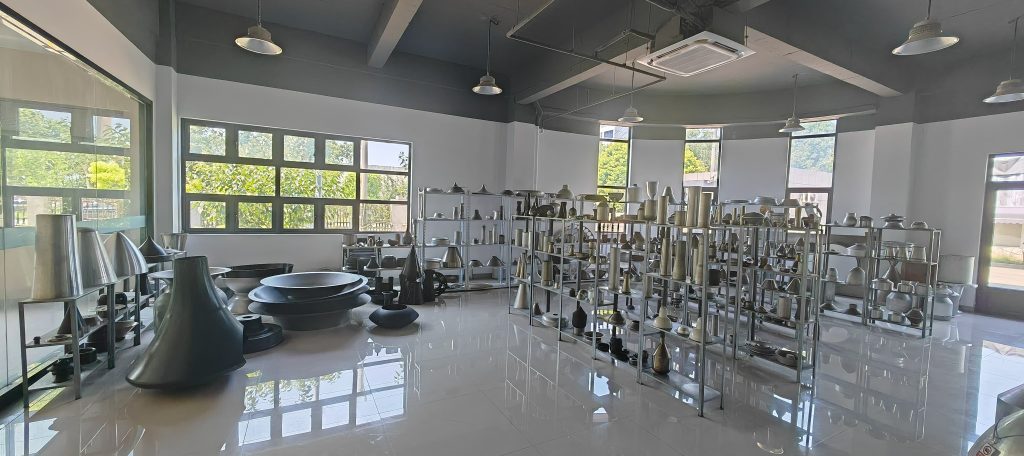
The metal spinning process is highly specialised in terms of shape fabrication and is particularly well-suited to the production of various axially symmetrical metal components. From a geometric perspective, metal spinning is particularly well suited to producing axially symmetric components such as discs, cones, cylinders, and hemispherical or other curved shells.
- Axially symmetrical rotational bodies: such as various flat discs and dish-shaped components.
- Conical components: such as conical covers and funnel-shaped structures.
- Cylindrical and tubular components, including thin-walled shells, sleeves, and other rotationally symmetric sections, can also be produced using suitable spinning or flow-forming processes.
- Hemispherical parts, such as hemispherical heads and missile bodies.
In addition to these basic shapes, metal spinning can also be used to produce parabolic surfaces, ellipsoidal surfaces, and complex parts with variable cross-sections. Thanks to this high degree of shape adaptability, the process plays an irreplaceable role in numerous industries:
- Aerospace and defence sectors
In the aerospace and defence sectors, metal spinning is a core process for manufacturing high-strength, high-precision thin-walled rotationally symmetric components. Typical applications include missile casings, rocket engine casings, fighter aircraft auxiliary fuel tanks, intake ducts, fairings, and high-pressure vessel heads. These components typically impose extremely high demands on the material’s grain structure and mechanical properties, and spinning (particularly high-force spinning) is ideally suited to meeting these stringent standards.
- Automotive and Industrial Manufacturing
In automotive manufacturing, spinning and related flow-forming processes can be used for components such as wheel rims, exhaust components, housings, and other rotationally symmetric parts.
- Household, Lighting, and Decorative Products
Metal spinning technology is equally ubiquitous in everyday life. It is extensively used in the manufacture of cookware, cutlery, lampshades, loudspeakers, gongs, aluminium barrels, furniture fittings, and decorative accessories. Because spinning can form a component from a single sheet-metal blank without a welded seam, the resulting parts can provide a continuous surface and are well suited to applications where appearance and structural continuity are important.
What Are the Basic Steps in the Metal Spinning Process?
Metal spinning is a rigorous manufacturing process. To ensure the dimensional accuracy and surface quality of the final component, the following standard procedure is typically followed:
Step 1: Preparation of Materials and Tooling
Firstly, a suitable metal material must be selected, and the metal blank must be cut and prepared in accordance with the drawing specifications. At the same time, a matching die or mandrel must be selected, and the condition of the spinning tools and equipment must be carefully inspected to ensure they are in good working order.
Step 2: Fitting the Mandrel or Die
The mandrel or die is fitted onto the spindle of the spinning machine. During this process, it is essential to ensure that the mandrel or die is securely fixed and to carefully verify that its dimensions and shape fully comply with the requirements of the target product.
Step 3: Mounting the Metal Blank
Mount the prepared metal blank (typically a circular sheet or pre-formed component) onto the equipment. It is essential to ensure the blank is correctly positioned and centred, and to check the stability of the clamping system to prevent displacement during high-speed rotation.
Step 4: Setting the Spinning Parameters
Precisely set the spinning process parameters based on the material properties, blank thickness, and part dimensions. These key parameters include spinning speed, tool pressure, and feed rate.
Step 5: Flow Forming the Workpiece
Start the machine, and the workpiece begins to rotate at high speed. The spinning wheel or forming tool gradually applies pressure to the material along a pre-set trajectory, causing continuous localised plastic deformation and ultimately forming the desired shape.
Step 6: Removal and Inspection of the Finished Product
Once forming is complete, stop the machine and safely remove the part. Carry out any necessary trimming of the part in accordance with design requirements, followed by a rigorous inspection to ensure that the part’s dimensional tolerances and surface quality meet the specified standards.
Basic Safety Precautions
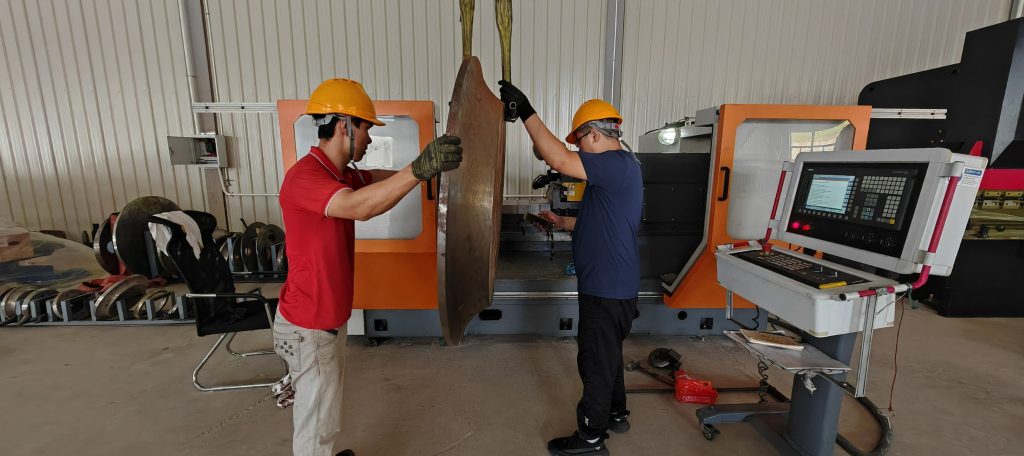
Safety must always be the top priority during operation. Operators must undergo appropriate professional training. During actual operation, ensure that the workpiece is correctly clamped and check the condition of the dies and tools before starting the machine. Always use the appropriate rotational speed and, whilst the equipment is running, strictly avoid any contact between your body or clothing and rotating parts.
What Are the Different Types of Metal Spinning?
Metal spinning processes can be subdivided into various types based on their deformation characteristics, processing conditions, and tooling arrangements. Understanding these classifications helps in selecting the most suitable process solution according to specific production requirements.
1. Conventional Spinning
Conventional spinning is the most fundamental and common method of metal spinning. In this process, the metal blank rotates at high speed around a mandrel, whilst tools such as spinning wheels gradually apply pressure to the material, causing continuous localised plastic deformation and ultimately forming the desired shape. Conventional spinning primarily alters the shape of the blank, with only a slight reduction in wall thickness.
2. Shear spinning
Shear spinning deliberately reduces the wall thickness of the workpiece during forming. Under ideal shear-spinning conditions, the final wall thickness can be approximated by the sine law: t₁ = t₀ × sin α, where t₀ is the initial sheet thickness, and α is the mandrel half-cone angle measured relative to the axis of rotation. In practice, the actual thickness may deviate from the theoretical value because of factors such as tool clearance, material behaviour, springback, and process conditions.
3. Tube Spinning
Tube spinning is primarily used to process tubular metal blanks. This process allows the wall thickness, diameter, or length of the tube to be altered and is commonly employed in the manufacture of various axially symmetrical tubular components.
4. Hot Spinning
Hot spinning is a spinning process carried out whilst the material is heated. For materials such as titanium alloys or certain high-strength alloys, which have poor plasticity at room temperature and are difficult to form, hot spinning can significantly reduce the difficulty of forming them, enabling them to achieve the target shape smoothly.
5. Flow Spinning
Flow spinning utilises spinning rollers to induce axial flow in the material. This process is commonly used to manufacture thin-walled or high-strength tubular components; it not only achieves high forming accuracy but also significantly improves material utilisation.
Manual vs. CNC Metal Spinning
With the advancement of manufacturing technology, the metal spinning process has gradually evolved into two main operational modes: traditional manual spinning and modern CNC spinning. They differ significantly in terms of control methods, applications, and machining accuracy.
• Manual Metal Spinning
Manual metal spinning is a traditional process that relies heavily on the operator’s experience. Throughout the forming process, the operator holds the tool (such as a spinning bar) directly to control its trajectory and the amount of force applied. This process offers a high degree of flexibility and is well-suited to small-batch production, prototype development, or parts with simple geometries. However, as it relies entirely on manual control, it is difficult to guarantee product consistency in high-volume production.
• CNC Metal Spinning
CNC metal spinning is the result of the evolution of traditional metal spinning towards more consistent and automated production. It utilises a CNC system to precisely control the tool’s trajectory and machining parameters, thereby significantly improving part repeatability and dimensional accuracy. By reducing reliance on the consistency of manual operation, CNC spinning is better suited to parts requiring stable, high-precision repeat production, making it the preferred choice for modern industrial batch manufacturing.
What Are the Advantages of Metal Spinning?
The metal spinning process is highly favoured in industrial manufacturing, primarily due to its multiple advantages in terms of cost, performance, and machining quality.
•Reduced Material Waste and Lower Costs
 Compared to traditional machining processes involving extensive material removal, spinning generally does not require the removal of large amounts of material, thereby significantly reducing material waste. However, its actual cost advantages depend on a variety of factors, including the type of material used, the investment in tooling and dies, the anticipated production batch size, and the complexity of the parts.
•Higher Part Strength
During spinning, plastic deformation can cause work hardening and changes in the material’s microstructure, which may increase hardness and yield strength in some materials. However, the resulting mechanical properties depend strongly on the material, deformation history, heat treatment, and process parameters.
•High reliability
Particularly when controlled by modern CNC systems, metal spinning offers outstanding manufacturing reliability. CNC equipment reduces operator-dependent variation and provides more consistent control of tool paths and process parameters, thereby improving repeatability and dimensional consistency.
•High Production Flexibility
Metal spinning offers high production flexibility because tooling and process parameters can be adapted to produce different axisymmetric geometries. This makes the process particularly attractive for prototypes, customised components, and low- to medium-volume production.
•Good Dimensional Accuracy
Appropriate machine configuration, precise tooling design, and optimised process parameters can effectively control material deformation and springback, thereby helping to improve the dimensional accuracy of the final parts.
•Excellent Surface Finish
Metal spinning can produce a good surface finish when appropriate tooling, tool geometry, lubrication, and process parameters are used. The resulting surface quality may reduce the need for extensive secondary finishing, although additional machining or surface treatment may still be required depending on the application.
What Are the Downsides of Metal Spinning?
Although metal spinning offers numerous advantages, it is subject to certain objective constraints in practical applications. Understanding these limitations helps manufacturers make more informed process choices.
•Longer Production Cycles
Metal spinning is typically an incremental forming process. For parts with complex shapes, multiple passes and forming operations by the spinning wheels are often required to complete the part, which can result in longer processing times per unit and a relatively slow overall production pace.
•High demands on operational skills
Metal spinning places high demands on the control of process parameters. Traditional manual spinning relies heavily on the operator’s personal experience and manual dexterity; even with modern CNC spinning, technicians must set the spinning speed, tool pressure, tool path, and feed rate appropriately according to specific operating conditions to ensure forming quality.
•More Suitable for Specific Production Batches
Metal spinning is not a universal tool for mass production. It is typically the ideal choice for prototyping and low- to medium-volume production batches; for very large-volume production requirements, other highly automated stamping or forging processes may offer greater economic benefits.
•Limitations on part geometry
Metal spinning has distinct limitations in terms of its ability to form complex geometries. It is best suited to the production of circular, conical, cylindrical, hemispherical, and other axially symmetrical parts. For complex, asymmetrical parts, the spinning process is often unsuitable, and other machining methods may be required.
Metal Spinning vs. Hydroforming, Stamping and Deep Drawing
In the field of metal fabrication, selecting the appropriate forming process is crucial to the success of a project. To better highlight the advantages of metal spinning, we have carried out a detailed comparison with three common metal forming processes: hydroforming, stamping, and deep drawing.
Metal Spinning vs. Hydroforming
These two processes differ fundamentally in their forming principles. Metal spinning primarily relies on the high-speed rotation of the blank and the mechanical pressure applied by the tool (spinning wheel) to alter the shape, and typically requires the use of a mandrel and spinning tool for support; hydroforming, on the other hand, utilises high-pressure fluid as a force-transmitting medium to force the metal to conform to the die cavity, and therefore requires specialised dies and a complex fluid system.
In terms of applications, metal spinning excels at manufacturing axially symmetric parts, whilst hydroforming is capable of producing more complex hollow shapes.
Metal Spinning vs. Stamping
Stamping is a forming process based on the use of a press, typically requiring specialised rigid dies. Its greatest advantage lies in its extremely high production efficiency, making it highly suitable for ultra-high-volume production. In contrast, metal spinning is an incremental forming process, with relatively simple and more flexible tooling.
Consequently, whilst stamping may be more efficient for ultra-high-volume production, metal spinning is undoubtedly the more suitable choice for certain axisymmetric parts and production requirements that demand flexible design adjustments.
Metal Spinning vs. Deep Drawing
Deep drawing is a type of stamping process that utilises a punch and die to draw sheet metal into the die cavity, forming cup- or box-shaped parts. Unlike deep drawing, metal spinning employs the principle of rotational forming. Deep drawing is typically used to meet the stringent requirements of certain high-volume production runs, whilst metal spinning offers greater flexibility in the machining of axially symmetric parts, making it particularly suitable for small- to medium-volume, multi-variety production scenarios.
FAQ on the Basics of Metal Spinning
To help readers quickly find answers to common questions about metal spinning, we have compiled the following three key questions and their concise answers:
What Is the Metal Spinning Process?
The metal spinning process is an incremental forming process, the basic steps of which can be summarised as follows:
- Prepare the metal blank.
- Mount the blank on the spinning machine.
- Rotate the workpiece at high speed.
- Apply pressure using spinning wheels or forming tools.
- Gradually shape the metal into the desired form.
- Remove and inspect the finished product.
What Are the Downsides of Metal Spinning?
Although metal spinning offers numerous advantages, it also has some limitations:
- Production speeds may be slower for parts with complex shapes.
- The process requires a high level of technical skill from operators.
- It is primarily suitable for the machining of axially symmetrical parts.
- For very large-scale production requirements, other machining processes may offer better economic benefits.
What Are the 7 Common Methods of Metal Processing?
Common metal manufacturing processes include:
1.Casting
2.Machining
3.Forming
4.Forging
5.Stamping
6.Extrusion
7.Welding
These processes cover different manufacturing principles, including material removal, plastic deformation, casting, and joining. Metal spinning is a specialised forming process used primarily to manufacture hollow, axisymmetric components.

Conclusion
Metal spinning is a fundamental yet highly versatile metal forming process. It reshapes rotating metal through controlled pressure and is capable of processing a wide range of materials, including aluminium, steel, stainless steel, copper, brass, titanium, and nickel alloys.
Furthermore, the combination of manual and CNC spinning provides modern manufacturing with a range of production options, from extreme flexibility to a high degree of automation.
CNC spinning is particularly well-suited to the manufacture of various axially symmetrical components, and Altron can flexibly select the most appropriate spinning method based on specific material properties and component requirements.

Related Products
Automatic Damper Frame Forming Production Line

Pipe Production Line for Rolling Machine
Elbow Ducts Robotic Welding Machines