


Lock Forming Process and Machine Guide for HVAC Duct Manufacturing

Many duct manufacturers rely on manual folding and seaming, resulting in slow production speeds, inconsistent seam quality, and uneven airtightness. Manual seaming is a particular bottleneck in high-volume HVAC duct production.
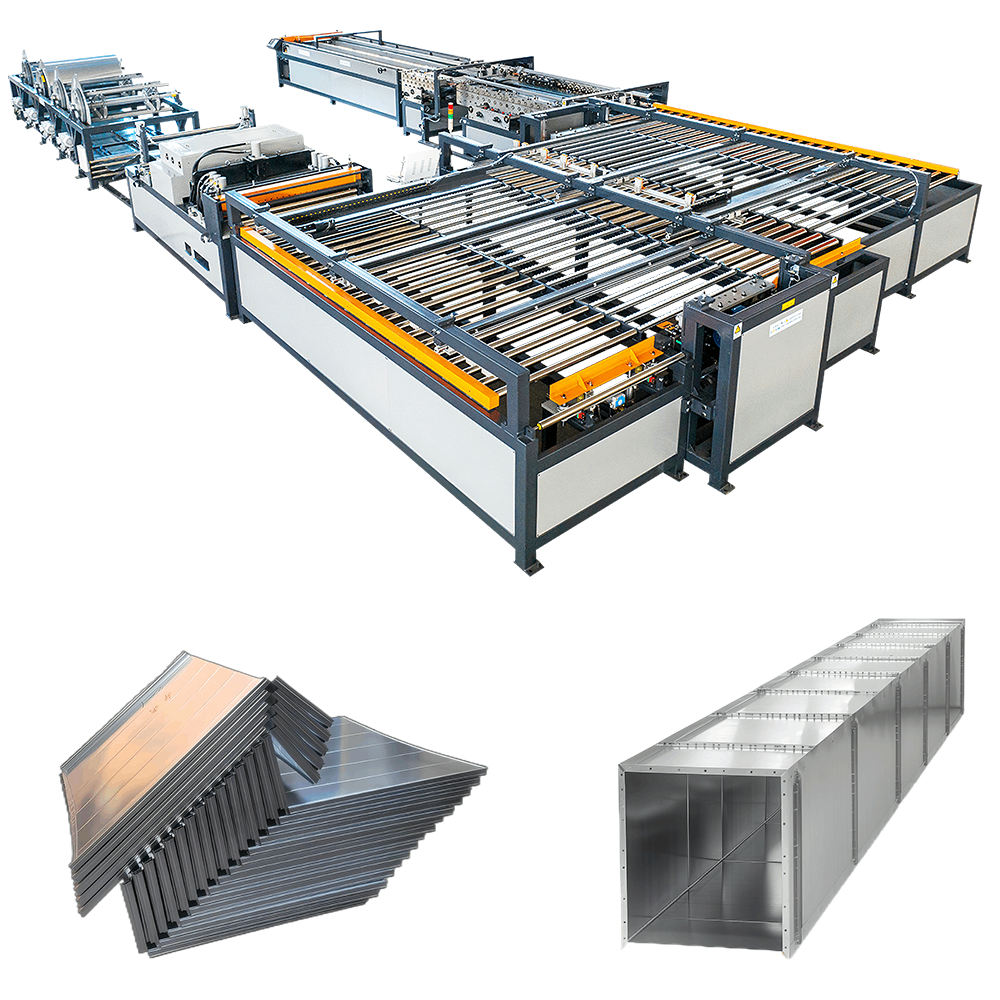
Lock forming machines, also known as sheet metal lock forming machines or duct lock forming machines, provide a continuous mechanical joining solution for HVAC duct manufacturing and sheet metal fabrication. They improve production speed, seam consistency, and manufacturing efficiency by creating accurate lock seams through progressive roller forming.
What Is Lock Forming?
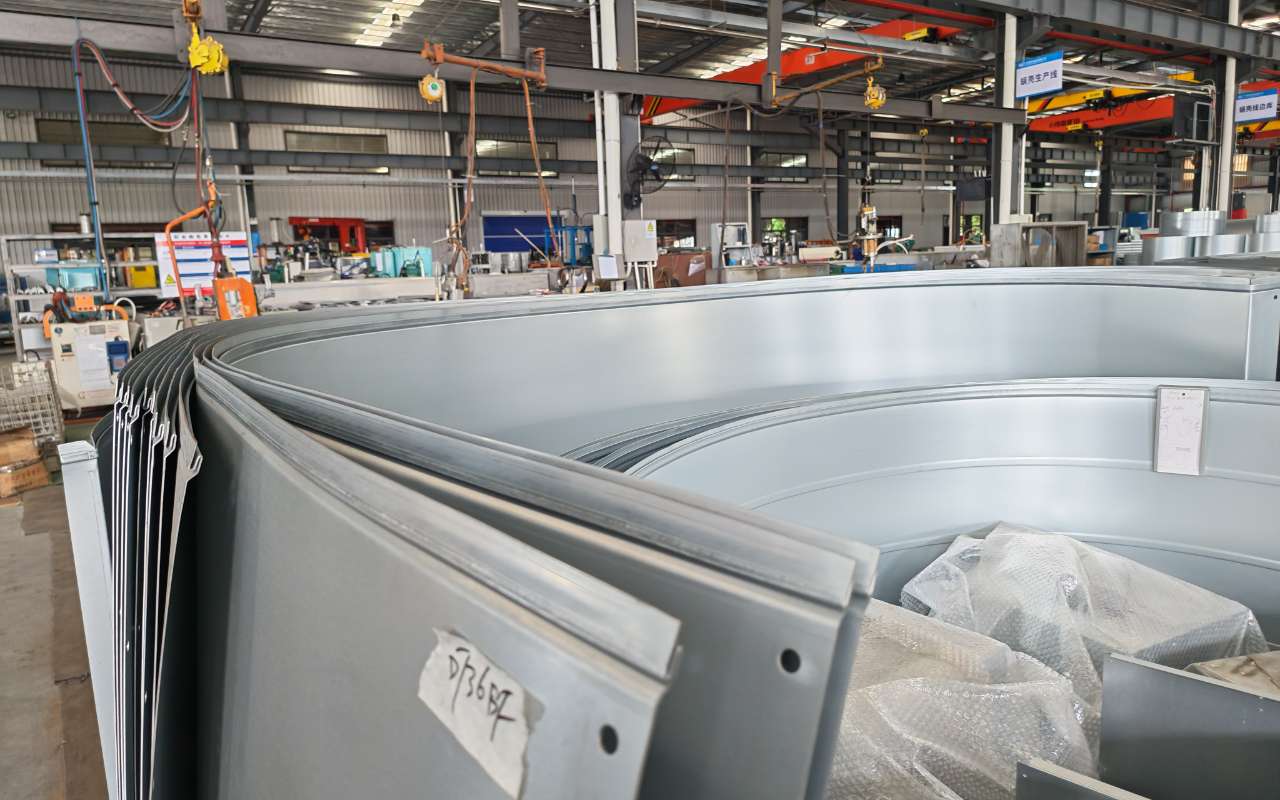
Lock forming is a sheet metal forming process that creates a mechanical locking seam by folding and interlocking metal edges through progressive forming rollers. It is widely used in HVAC duct manufacturing, ventilation systems, and sheet metal fabrication because it provides fast production and consistent seam quality.
What Problems Can Lock Forming Solve?
Problem 1: Slow Manual Lock Seaming
Traditional manual processes involving multiple stages of cutting and alignment are not only highly labour-intensive but also prevent any increase in production capacity.An automatic lock forming machine uses continuous roller forming technology to create consistent lock seams, reducing manual labor dependency and improving production efficiency for high-volume sheet metal fabrication.
Problem2:Inconsistent Seam Quality
Variations in the force applied and the angle used by different operators lead to seam leaks, resulting in rework; controlling the pressure via fixed rollers and ensuring a steady feed guarantees seam strength and repeatability.
Problem 3: Too many Secondary Operations
Manual cutting, folding, and locking require repeated inspection; lock forming, which combines edge forming and seam closing, reduces production steps and material handling.
Lock Forming Process: How a Sheet Metal Lock Forming Machine Works
step1:Sheet Metal Feeding
The feeding system in a lock forming machine ensures accurate material alignment before the sheet metal seam forming process begins.
step2:Edge Preparation
The forming rollers gradually transform the sheet edge into a specific lock seam profile, ensuring accurate folding angles and consistent seam dimensions.
step3:Progressive Roller Forming
Unlike simple bending, lock forming uses multiple forming stations to gradually create the seam profile to reduce deformation and improve forming accuracy.
step4:Lock Seam Closing
The two metal edges interlock to form a mechanical interlock
Single Lock Seam vs Double Lock Seam: Choosing the Right Lock Seam for HVAC Duct Manufacturing
Single-seam and double-seam designs essentially determine the strength of the joint, airtightness, durability, and suitability for specific applications.
Single Lock Seam: The metal edges are folded and interlocked once, making them suitable for residential HVAC ductwork where air pressure is low and vibration is minimal.
Double Lock Seam: :Folded and secured once more on top of the single seam, it offers greater tensile strength and superior vibration resistance, making it suitable for industrial ventilation and large-scale ductwork.
Airtight: The Single Lock Seam is suitable for general use, but for high-pressure ductwork and long-distance conveyance, sealing strips are required to enhance airtightness.
The Double Lock Seam has fewer gaps and offers more consistent airtightness, making it suitable for industrial dust extraction ductwork and high-pressure air supply systems.
Production speed and costs: The Single Lock Seam machine offers high speed and low production costs, making it suitable for the mass production of standardised air ducts.
The Double Lock Seam requires more forming steps; production speed is slightly lower, but the quality of the finished product is high.
Material and Thickness: The thicker the material and the larger the dimensions, the higher the requirements for the interlocking seam. For 0.5–0.8 mm galvanised steel, a single lock is recommended, whilst for steel sheets of 1.2 mm or thicker, a double lock is generally preferred.
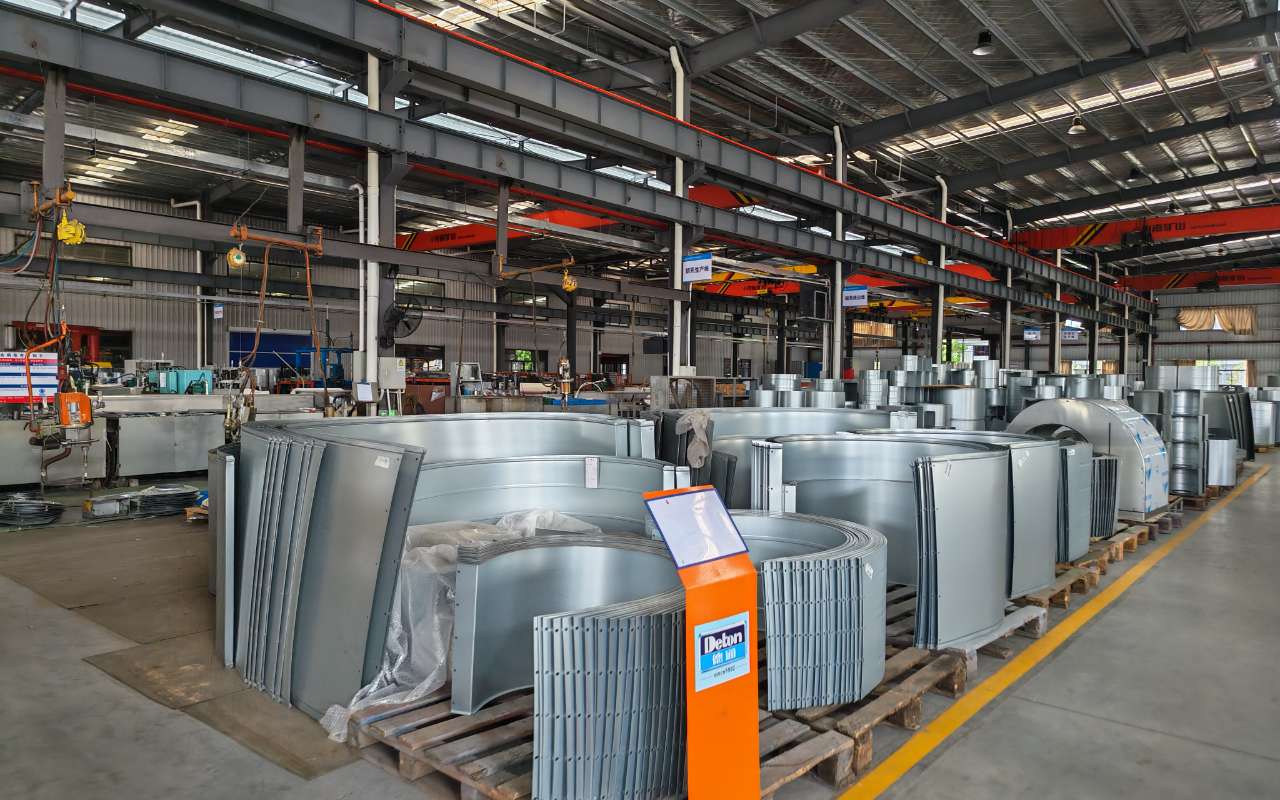
Types of Lock Forming Seams
Pittsburgh Lock Seam
Pittsburgh lock seam is a mechanical seam formed by folding two sheet metal edges together and locking them through a series of rollers. It usually consists of a right-angle lock seam.
Pittsburgh lock seam is one of the most widely used sheet metal seams in HVAC duct manufacturing because it provides reliable mechanical strength and good airtightness for rectangular and spiral duct systems.
Advantages: high connection strength, good airtightness, high production efficiency
Right Angle Lock Seam
A right-angle lock is a folded sheet metal edge profile that inserts into the Pittsburgh lock seam to complete the mechanical connection.
It is not a primary locking seam used on its own, but rather provides locking engagement, reinforcement, and connection stability.
Standing Seam
Used where surface appearance and water resistance are important. Standing seam creates a raised vertical joint by folding sheet metal edges upward and locking them together.
Unlike in Pittsburgh, the standing seams protrude from the surface
Advantages: better surface appearance, good water resistance, high structural rigidity
C-Lock Seam / C-Lock Seam Pin
C-lock seam uses a C-shaped folded profile to mechanically secure sheet metal components together.
Advantages: easy assembly, good repeatability
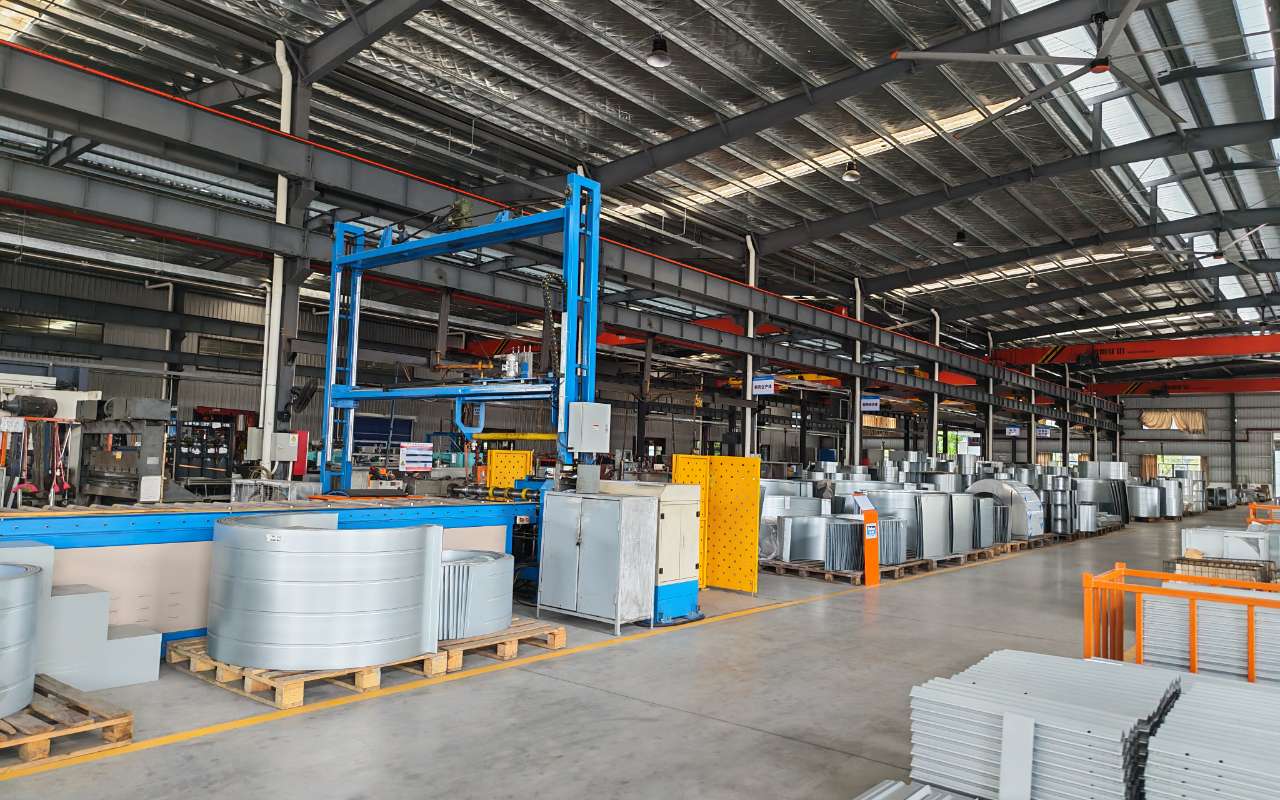
Elbow Lock Forming
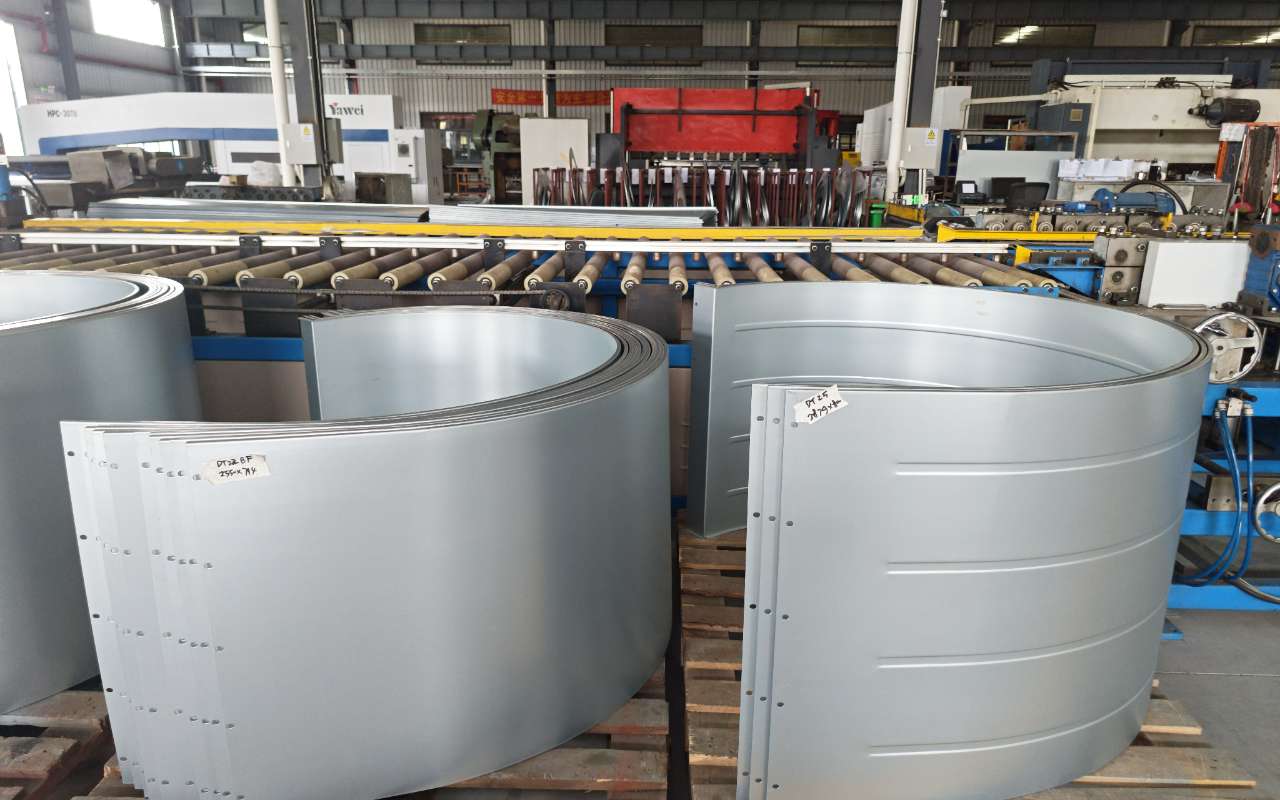
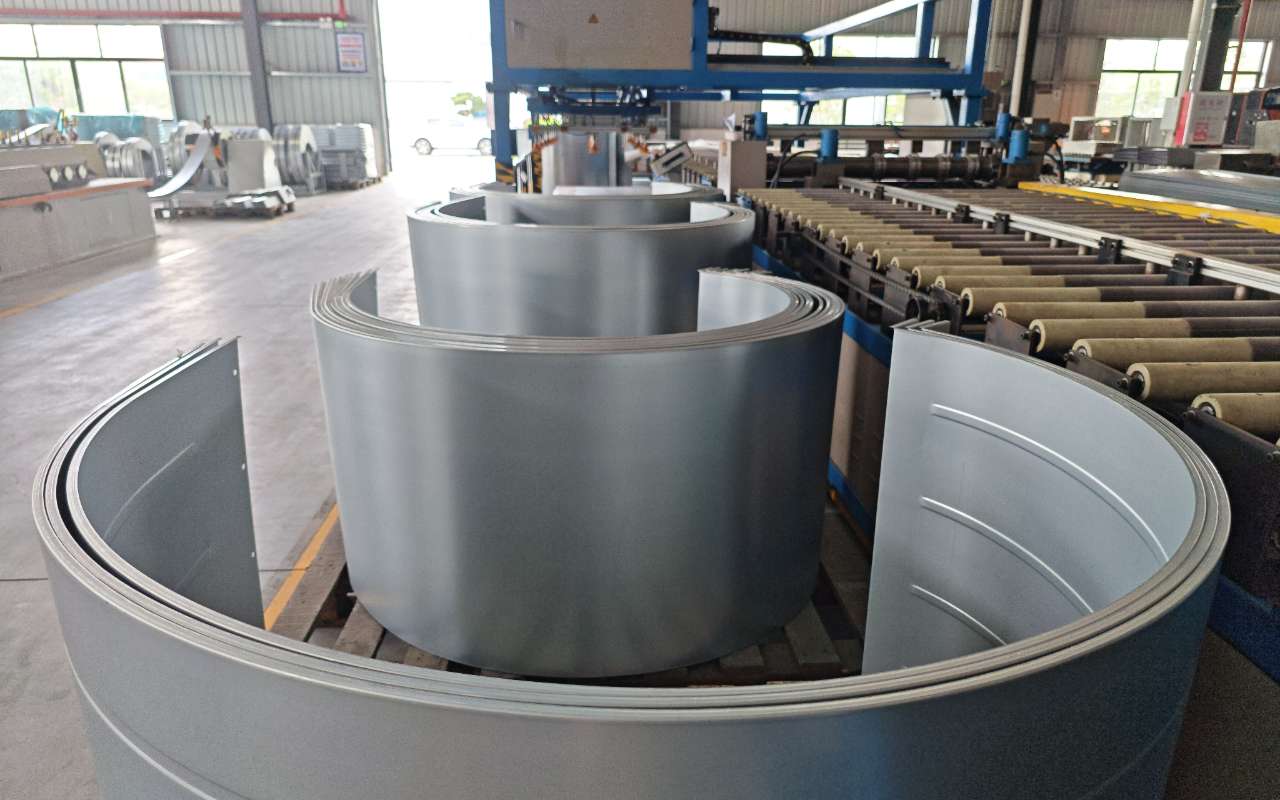
Elbow lock forming is used to create mechanically locked seams on curved duct components where traditional straight seam forming is difficult.
Lock forming through dedicated rollers, controlled forming pressure, consistent seam closing to improve seam quality, and assembly accuracy
Lock Forming vs Welding: Which Process Is Better for Sheet Metal Manufacturing?
Lock forming and welding are two common sheet metal joining methods used in metal fabrication.
Welding creates a permanent connection by melting and fusing metal, while lock forming creates a mechanical interlocking seam by folding and pressing sheet metal edges together.
The better choice depends on product requirements, production volume, material thickness, and application conditions.
|
Factor |
Lock Forming |
Welding |
|
Connection |
Mechanical interlock |
Metal fusion |
|
Production speed |
High |
Medium |
|
Heat distortion |
No |
Possible |
|
Labor requirement |
Lower |
Higher |
|
Thin sheet metal |
Excellent |
Requires skill |
|
Large structural parts |
Limited |
Excellent |
|
HVAC duct production |
Common choice |
Used for special cases |
Lock forming is not designed to replace all welding applications
Lock forming is especially suitable for thin sheet metal products such as HVAC ducts, ventilation systems, and fabricated sheet metal components.
For heavy structural components requiring maximum load strength, welding remains the preferred solution.
How to Ensure Lock Forming Provides Sufficient Strength?
Select the Right Lock Seam Type: A single-lock seam is suitable for general applications; for applications requiring high levels of vibration resistance and airtightness, a double-lock seam should be selected.
Match Seam Type with Material Thickness: The thickness of the material determines the mechanical load that the seam can withstand; in addition, the dimensions of the duct, operating pressure, vibrational environment, and service life requirements must also be taken into account. Whilst a single seam is sufficient for residential ductwork made from 0.8 mm galvanised steel, a double seam may be required for industrial dust extraction systems to enhance stability, given the long-term vibrations and pressure fluctuations involved.
Maintain Accurate Forming Pressure: The strength of the seam depends to a large extent on whether the roller pressure remains stable during the forming process. Insufficient pressure may result in a loose seam, inadequate joint strength, and air leakage, whilst excessive pressure may cause material deformation and surface damage; therefore, the seaming machine requires precise control of roller pressure, the forming gap, and the feeding speed.
Use High-Quality Forming Rollers: The forming rollers directly determine the shape of the seam; if you are experiencing an uneven seam, incomplete locking, or reduced airtightness, this is most likely due to roller wear or an unsuitable design.
Types of Lock Forming Machines: Which Machine Fits Your Production?
Manual Lock Forming Machine
It involves low investment costs and is simple to operate, allowing for flexible switching between different products, making it suitable for small-batch customised production. However, it relies heavily on the experience of the workforce, seam consistency varies depending on the worker, and production speeds are relatively low.
Semi-Automatic Lock Forming Machine
The operator positions the sheet metal, and the machine controls roller forming automatically. Compared to manual forming machines, semi-automatic lock forming machines improve forming consistency and production speed, whilst reducing operator fatigue and the need for manual adjustments. They are suitable for medium-volume production and flexible fabrication workshops.
Automatic Lock Forming Machine
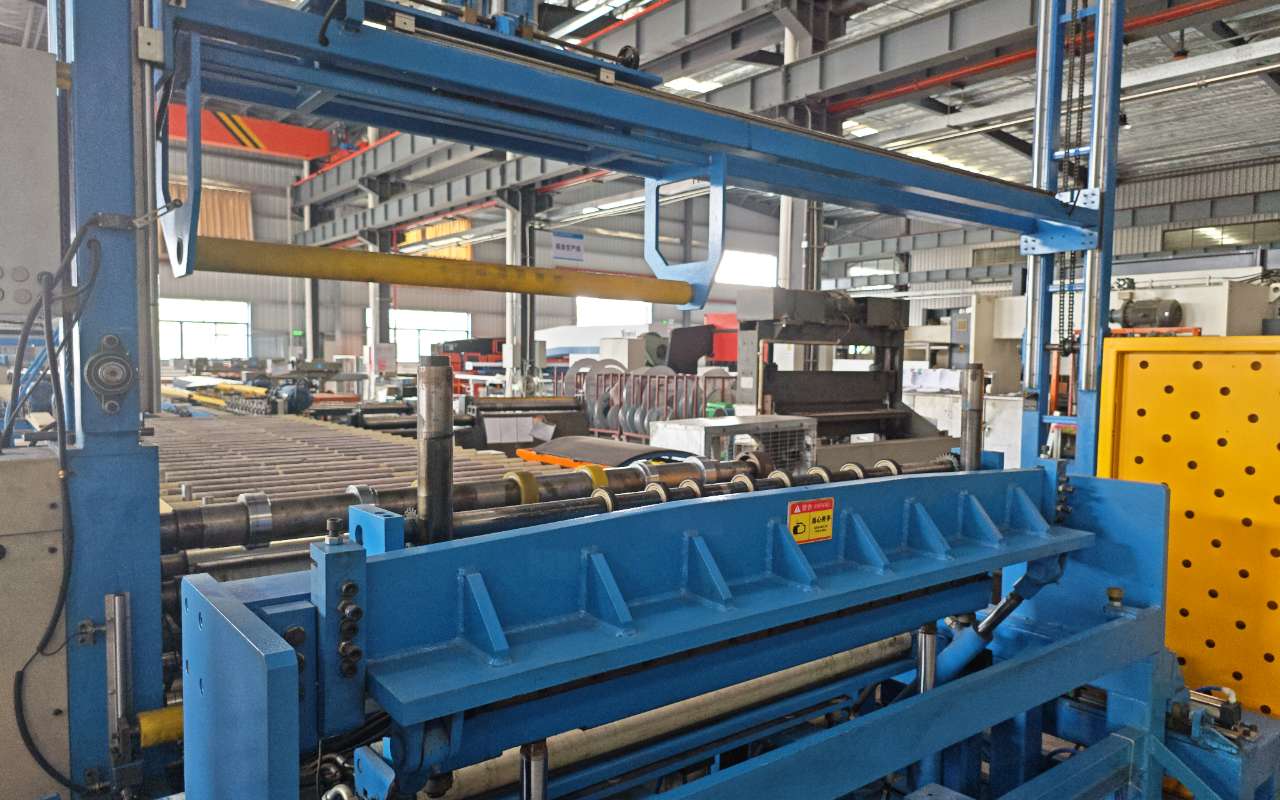
Automatic feeding, roller forming, and seam closing work continuously under PLC control. A single operator can monitor continuous production, reducing reliance on manual labour, resulting in faster production speeds and better seam consistency. Suitable for HVAC duct manufacturers and mass production lines.
Pittsburgh Lock Forming Machine
Designed specifically for the production of rectangular HVAC ducts, it is primarily used to produce Pittsburgh lock seams and duct corner joints. It features a strong mechanical connection and good airtightness, making it suitable for continuous duct production.
Elbow Lock Forming Machine
Used for elbows and non-standard duct fittings. Solves the problem of inconsistent seams caused by traditional manual flanging and splicing, improving assembly accuracy and reducing the need for manual finishing.
Lock Forming Machine Components: How Each System Affects Seam Quality
Forming Rollers: Forming rollers are the core components of a lock forming machine. Their design directly affects lock seam shape, locking strength, and final product quality.
Feeding System: Ensure material alignment and continuous production to improve production consistency
Drive System: decides the forming speed and operation stability
PLC Control System: Modern automatic lock forming machines use PLC control systems to adjust forming speed, store production parameters, and simplify product changeover.
Materials, Thickness Requirements, and Applications of Lock Forming in Sheet Metal Fabrication
Lock forming is widely used in the sheet metal fabrication industry,industries where manufacturers need fast production, consistent seam quality, and reliable mechanical connections.
|
Industry |
Typical Products |
Common Materials |
Thickness Range |
Key Requirements |
|
HVAC Manufacturing |
Air ducts, ventilation pipes, duct panels |
Galvanized steel, stainless steel |
0.5–1.2 mm |
High production speed, airtight seams |
|
Industrial Ventilation |
Exhaust ducts, dust collection ducts |
Galvanized steel, stainless steel |
0.8–1.5 mm |
Strong seams, vibration resistance |
|
Cleanroom & Food Processing |
Stainless ventilation systems |
Stainless steel |
0.5–1.0 mm |
Corrosion resistance, smooth surface |
|
Architectural Metal Fabrication |
Decorative panels, curved sheet structures |
Aluminum, stainless steel |
0.5–1.5 mm |
Surface quality, appearance |
|
General Sheet Metal Fabrication |
Covers, enclosures, custom sheet parts |
Steel, aluminum |
0.5–2.0 mm |
Flexible production |
How Thickness Affect Lock Forming Selection?
Thin Sheet Metal (0.5–0.8 mm)
Thin sheet metal is commonly used for residential and commercial HVAC ducts; ,for lightweight structures, a single-seam joint and a standard roll-forming system are usually sufficient to meet the requirements.
Medium Thickness (0.8–1.2 mm)
Medium thickness is generally used in industrial ducts and large ventilation systems. Equipment requiring increased strength needs better roller rigidity.
Thicker Sheet Metal(1.2mm+)
For thicker sheet metal applications, manufacturers often consider double lock seams because they provide higher mechanical strength and better resistance to vibration.
Manual vs Automatic Lock Forming: Which One Is Better for Your Production?
Traditional manual lock forming relies heavily on operator skills and experience. While it can work for small-batch production, manufacturers with increasing orders often face inconsistent seam quality, slow production speed, and higher labor costs.
For manufacturers producing large volumes of HVAC ducts, an automatic lock-forming machine can significantly reduce labor dependency and improve production consistency.
|
Factor |
Manual Lock Forming |
Automatic Lock Forming |
|
Investment |
Low |
Higher |
|
Production speed |
Low |
High |
|
Labor dependency |
High |
Low |
|
Seam consistency |
Operator dependent |
Stable |
|
Batch production |
Limited |
Excellent |
|
Automation integration |
No |
Yes |
Choose Manual lock forming if: low production volume, many customized products, limited investment
Choose automatic lock forming if: standardized products, daily high production demand, labor cost is high, and plan production automation
How to Choose the Right Lock Forming Machine?
Consider your application and product requirements
The first step is to consider your industry and product, as different products have different requirements for lock seams.
For rectangular and spiral ducts used in HVAC duct manufacturing, we recommend automatic lock forming machines and high-speed roller forming systems to meet your requirements for production speed, weld consistency, and airtightness.
For large ventilation ducts and dust collection systems in industrial ventilation and exhaust systems, the double-lock seam capability is recommended as it provides a more secure joint and greater resistance to vibration.
If your product range is varied and order volumes are unpredictable, we recommend a semi-automatic machine with adjustable forming stations to enable rapid changeovers between different specifications.
Match Machine Capability with Material and Thickness
The thickness of the material directly determines the forming force, roller design, and machine structure
For medium thicknesses (0.8–1.2 mm), a more powerful drive system and a precise roller adjustment mechanism should be selected.
Stainless steel products are stronger and more difficult to form, requiring wear-resistant rollers and precise pressure control.
Select Single Lock Seam or Double Lock Seam Capability
The single-lock forming machine is suitable for standard parts and medium-to-low-volume production
Double-lock forming is suitable for industrial ventilation and high-pressure applications where stability and airtightness are of paramount importance.
Consider Production Volume
Low Production Volume: If you are a contract manufacturer with a wide variety of products and small batch sizes, we recommend a semi-automatic lock-forming machine, which offers low investment costs and flexible changeovers.
Medium Production Volume: The automatic lock-forming machine meets your requirements for continuous production, reduced reliance on labour, and consistent quality.
High Production Volume: The fully automated production system comprises automatic feeding, edge-sealing and forming, cutting, and integration with the duct production line, enabling maximum output, ensuring product consistency, and improving labour efficiency.
Choose Between Semi-Automatic and Fully Automatic Lock Forming Machines
A fully automatic lock-forming machine is suitable for factories that require continuous production, high output, and integration with automatic duct production lines.
Check Machine Adjustment and Changeover Capability
If your product specifications change frequently, you should pay attention to roller adjustment, the quick-change system, and parameter storage. Roller adjustment affects moulding accuracy; the quick-change system reduces set-up time; and parameter storage allows product parameters to be saved, enabling rapid switching between orders.
FAQ
Is Lock Forming Airtight Enough for HVAC Duct Systems?
Yes, lock forming can provide sufficient airtightness for most HVAC duct applications when the correct seam type, forming pressure, and sealing method are selected.
For standard low- and medium-pressure HVAC ducts, a properly formed single lock seam is usually sufficient. For industrial ventilation systems, high-pressure air ducts, or applications with continuous vibration, double lock seams provide better mechanical stability and reduce the risk of seam opening.
How Long Does a Lock Forming Machine Last??
The service life of a lock forming machine depends on machine structure, operating conditions, maintenance frequency, and production volume. A well-maintained industrial lock-forminglock forming machine can typically operate for many years.
Factors affecting machine lifespan include: forming roller, drive system condition, lubrication quality, material hardness, and daily production hours
What Causes Lock Forming Seam Failure?
Lock-forming seam failure usually occurs because of incorrect machine adjustment, unsuitable seam selection, or material problems.
Causes of loose seam: insufficient forming pressure, incorrect roller adjustment
Causes of uneven seam: unstable feeding, material misalignment
Causes of material cracking: excessive deformation, unsuitable material alignment
How Much Does a Lock Forming Machine Cost?
Factors affecting price, including automation level, material thickness
, production capacity, customization
What Maintenance Does a Lock Forming Machine Need?
Regular maintenance helps maintain seam quality and reduce unexpected downtime. Important maintenance tasks include: cleaning forming rollers, checking roller wear, lubricating moving components, and inspecting drive systems
conclusion
Lock forming is more than a sheet metal joining method — it is an important process for manufacturers looking to improve production efficiency, seam consistency, and product quality.
If you are planning to upgrade your sheet metal production process, our engineering team can help you evaluate the right lock forming solution based on your products, materials, and manufacturing requirements. Contact Altron to discuss your lock forming machine requirements and find the right configuration for your production needs.

Related Products
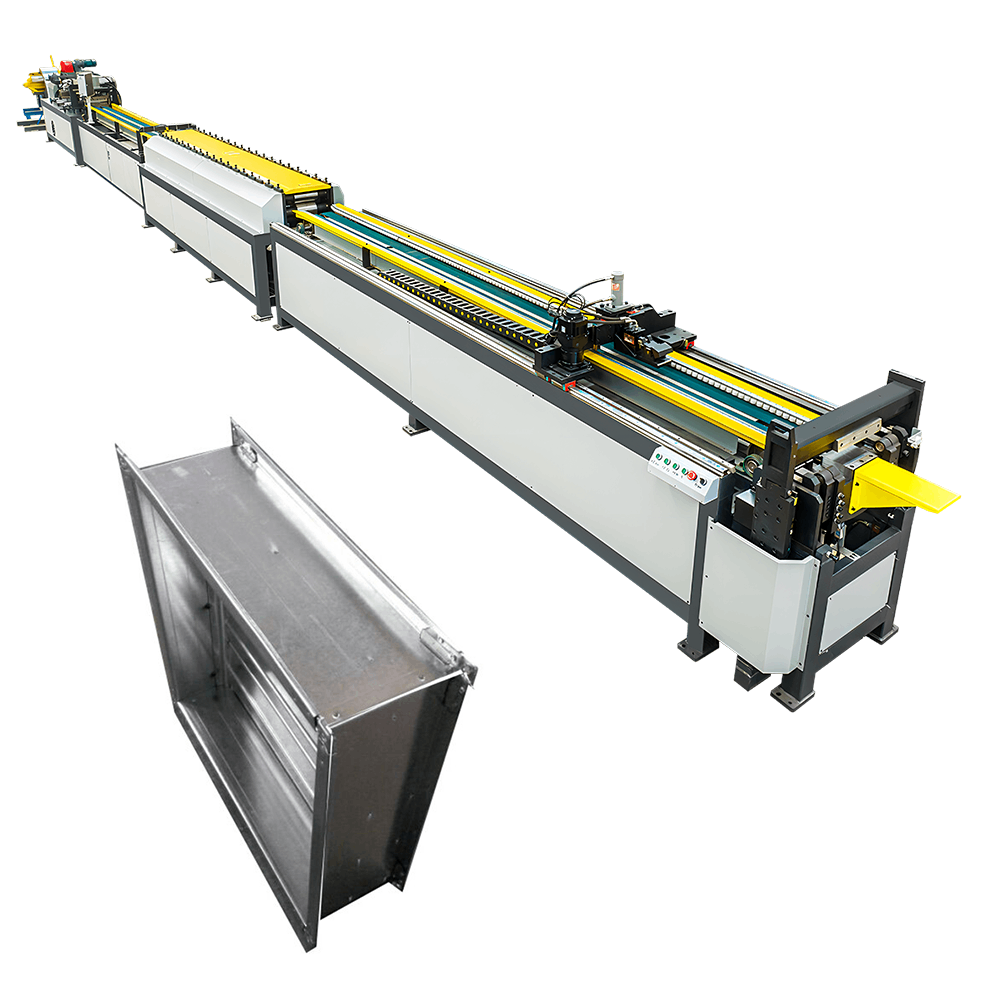
Automatic Damper Frame Forming Production Line

Pipe Production Line for Rolling Machine
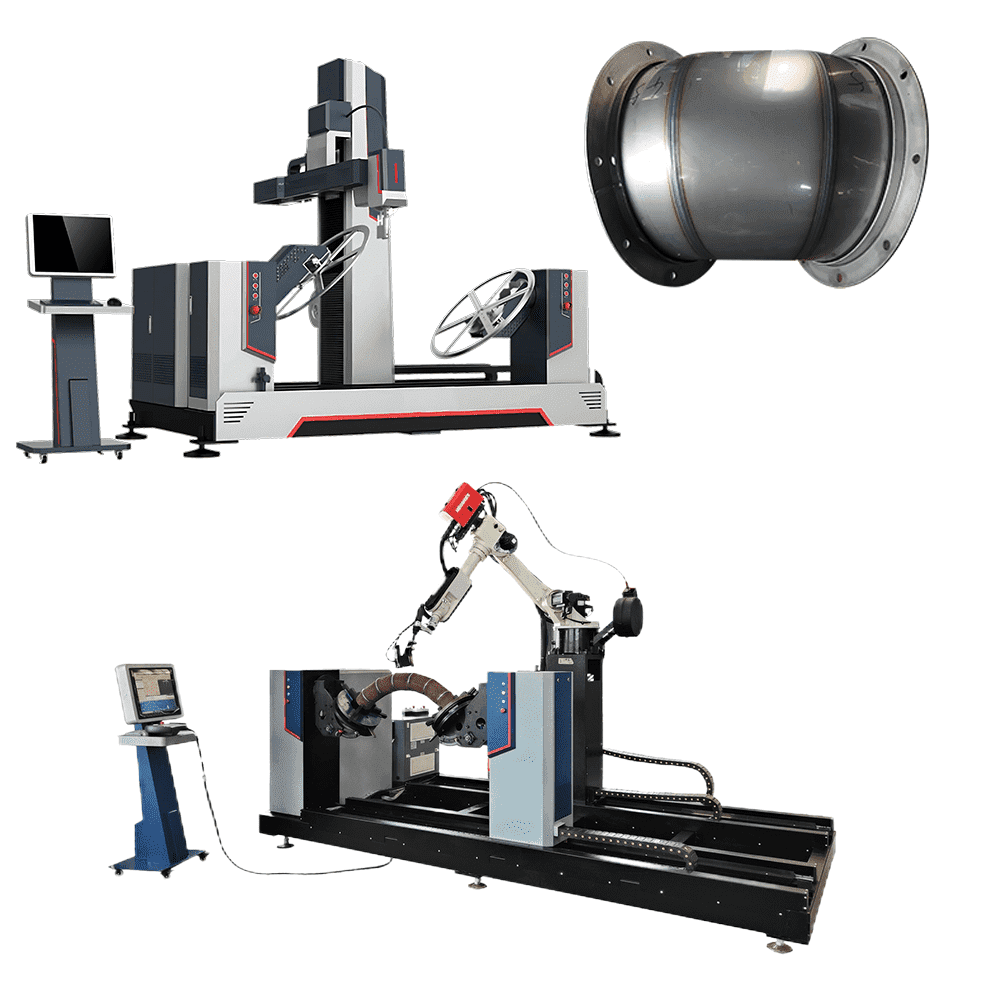
Elbow Ducts Robotic Welding Machines