


How Impeller Balancing Reduces Vibration.

How Impeller Balancing Reduces Vibration.
Impellers are core components of rotating machinery such as industrial fans and pumps, but they often vibrate, affecting product performance. This article introduces the causes of impeller vibration and provides solutions for impeller balancing to reduce vibration and ensure product quality.
Hazards of impeller vibration
1. Safety hazards
High-speed rotating blades may detach and cause injury or damage to equipment; Severe vibration of equipment can cause structural looseness and damage to connectors and pipelines.
2. Impaired athletic performance
Vibration disrupts aerodynamic stability, leading to a decrease in air volume and unstable machine pressure. In order to maintain the designed air volume, motor power consumption increases, affecting the overall performance of the machine.
3. Equipment damage
Vibration increases the radial load on the bearing, damages the lubricating film, and leads to rapid wear or burning. Eccentricity and impact loads can easily cause fatigue cracks in shafts and couplings; The impeller welds or blades may experience repeated stress, and in severe cases, they may crack or detach.
Causes of vibration
Impeller vibration is usually caused by a dynamic imbalance. When the quality distribution of the impeller is uneven during manufacturing, welding, processing, or long-term operation, its center of gravity will deviate from the center of rotation. When the equipment is running at high speed, the unbalanced mass generates a centrifugal force that increases with speed, resulting in periodic vibration of the impeller.
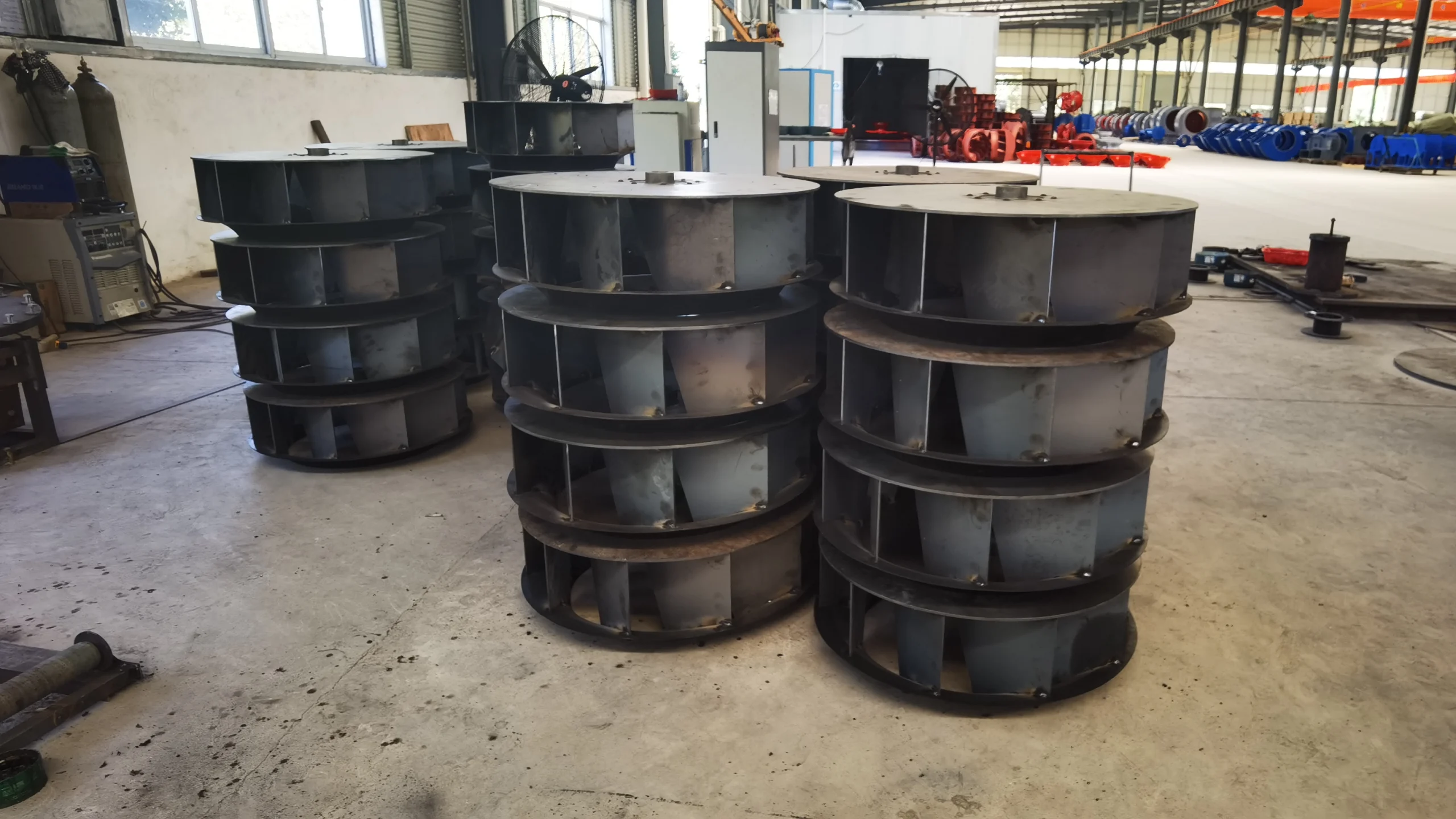
Dust, oil stains, or other impurities adhering to the surface of the impeller can also alter the original mass distribution and disrupt the dynamic balance state. Long-term exposure to vibration not only accelerates the wear of components such as bearings, shafts, and casings but may also reduce the efficiency of fan operation and, in severe cases, even lead to equipment failure or shutdown.
How to Reduce Impeller Vibration
After understanding the causes of impeller vibration, I will suggest specific measures to reduce impeller vibration.
1. Dynamic balancing correction
Dynamic balance correction is an effective measure to reduce impeller vibration. Using a professional dynamic balancing machine to inspect the impeller can accurately determine whether there is an eccentricity issue. According to the test results, adjust the mass distribution of the impeller by increasing or decreasing the counterweight, so that its rotation center is as close to the geometric center as possible. For high-speed fans or large-diameter impellers, the dynamic balance accuracy is directly related to the safety and efficiency of the equipment. Therefore, it is recommended to control the balance level within the allowable range according to current standards.
For high-speed industrial fans, it is recommended to strictly control balance accuracy according to ISO vibration standards to ensure safe operation.
2. Adjust and install the alignment
The installation accuracy of the impeller determines the vibration level. During the installation process, it is necessary to ensure precise alignment between the motor and the impeller shaft while checking the fixing of the coupling, bearing seat, and base. Improper installation or a weak foundation can easily generate additional loads, causing vibration of the impeller. In addition, regular inspection of the wear and tear of the coupling, bolt tightening status, and foundation settlement can effectively eliminate vibration sources caused by poor installation. For large wind turbines, foundation reinforcement and vibration reduction devices can be used when necessary to further reduce vibration propagation.
3. Optimize airflow conditions
Impeller vibration originates not only from mechanical factors but also from abnormal aerodynamic conditions, which can cause periodic vibrations. It’s crucial to adjust the fan inlet promptly to ensure uniform airflow distribution and avoid localized turbulence; optimize duct layout, reducing bends and abrupt changes in cross-sectional area to minimize eddies and airflow pulsation; and regularly clean filters and ductwork to maintain smooth airflow. This reduces vibration caused by aerodynamic disturbances and improves the stability and efficiency of the fan operation.

4. Repair or replace worn parts
Wear or loosening of impellers, bearings, couplings, and fasteners amplifies vibration. Routine inspection and maintenance are essential, including: checking bearing wear and lubrication status, adding or replacing lubricating grease as needed; observing impeller blades, impeller discs, and hubs for deformation, cracks, or weld fatigue signs; and checking the tightness of bolts, nuts, and couplings to prevent additional vibration caused by loosening. Severely worn or damaged components should be replaced promptly to prevent further vibration aggravation.
Reducing impeller vibration requires not only comprehensive control of mechanical, installation, and aerodynamic aspects, but also the establishment of a regular inspection and maintenance system. Through dynamic balancing, precise installation alignment, optimized airflow conditions, timely repair or replacement of worn parts, and necessary online monitoring, the equipment can operate stably for a long time with high efficiency and low vibration, improving production efficiency and extending equipment life.
FAQ
What is Impeller Vibration
Impeller vibration refers to the periodic shaking caused by imbalance, aerodynamic disturbances, or installation errors during the rotation of the impeller. It is a crucial indicator for assessing the operational condition of fans, pumps, or centrifugal equipment.
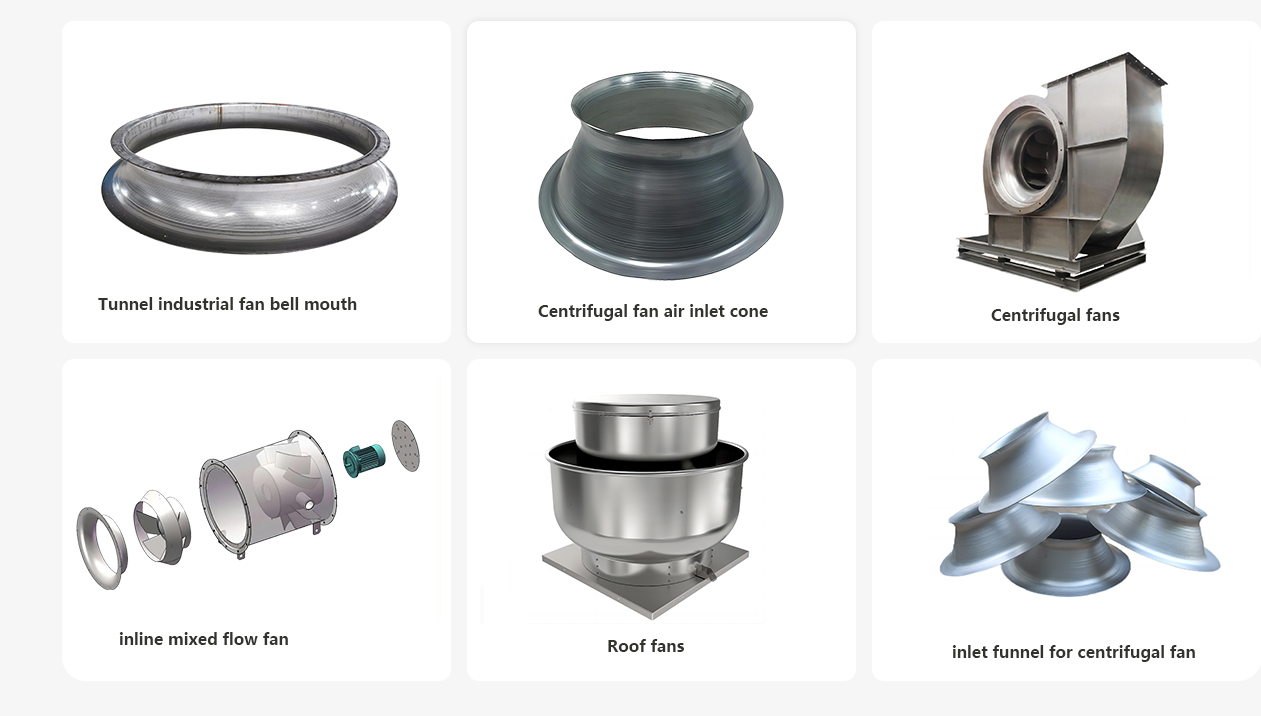
What are the application industries of Impeller Welding?
- Fan Industry
- HVAC Industry
- Industrial Fan Manufacturing Industry
- Energy and Power Industry
- Chemical and Environmental Protection Industry
- Metallurgy and Heavy Industry
How can I tell if an impeller has vibration problems?
The main signs of impeller vibration indicate that the rotating system is experiencing unbalanced forces, misalignment, or aerodynamic disturbances. These signs are both audible, visible, and measurable, and they often appear before serious damage occurs.
What causes a sudden increase in impeller vibration?
Bearing damage
Blade fouling (dust/oil buildup)
Shaft misalignment
Structural loosening
What vibration level is acceptable for an impeller?
Under normal operating conditions, when the root mean square value of impeller vibration is below 2.8 mm/s, it is generally considered to be in a safe operating state. Any vibration above this value should be closely monitored, as higher vibration values indicate increased mechanical risk.
Final Thoughts
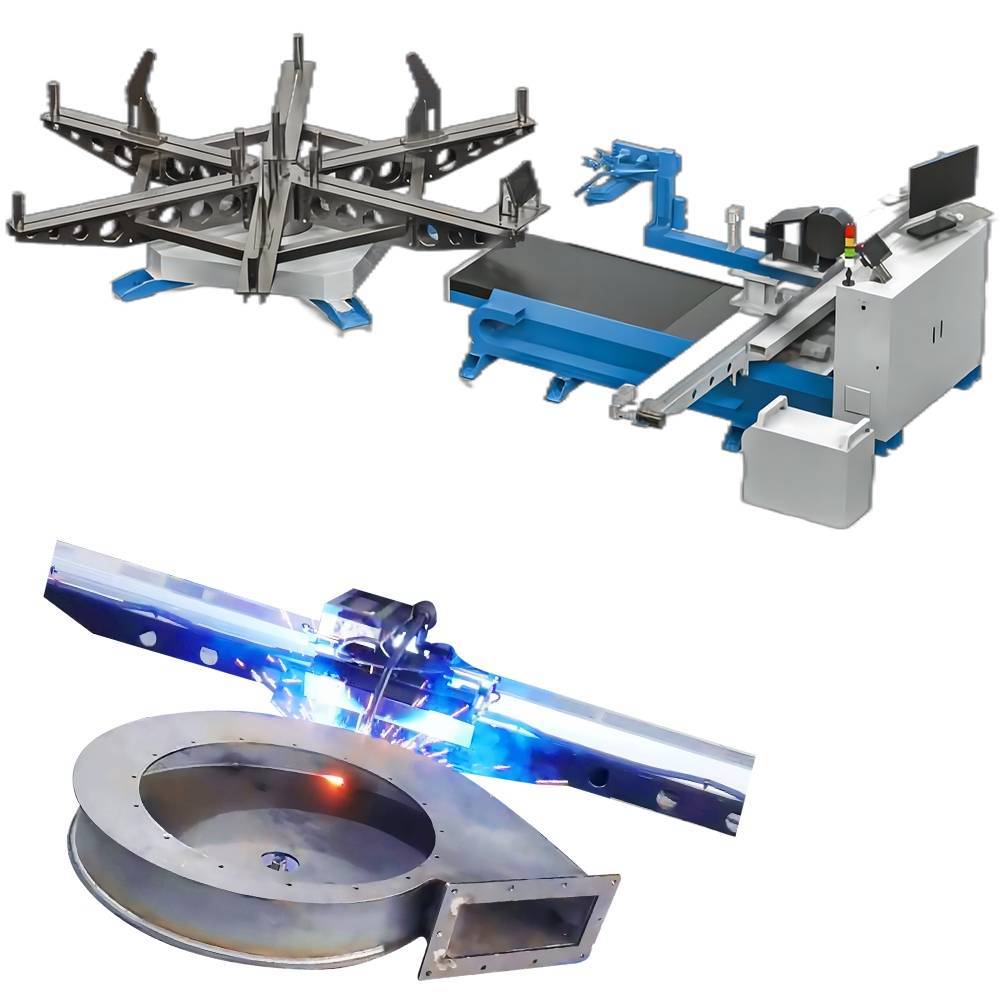
A suitable impeller welding solution can solve impeller vibration problems and ensure product quality. If you need selection or technical support, you can view our product solutions or contact us for advice, or return to the homepage to learn more about equipment application scenarios. Altron focuses on improving welding automation in impeller welding, helping factories achieve higher production efficiency.

Related Products
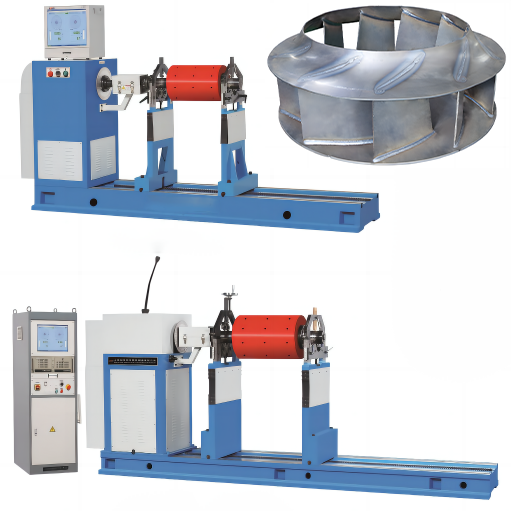
Special Dynamic Balancing Machine for Industrial Fans
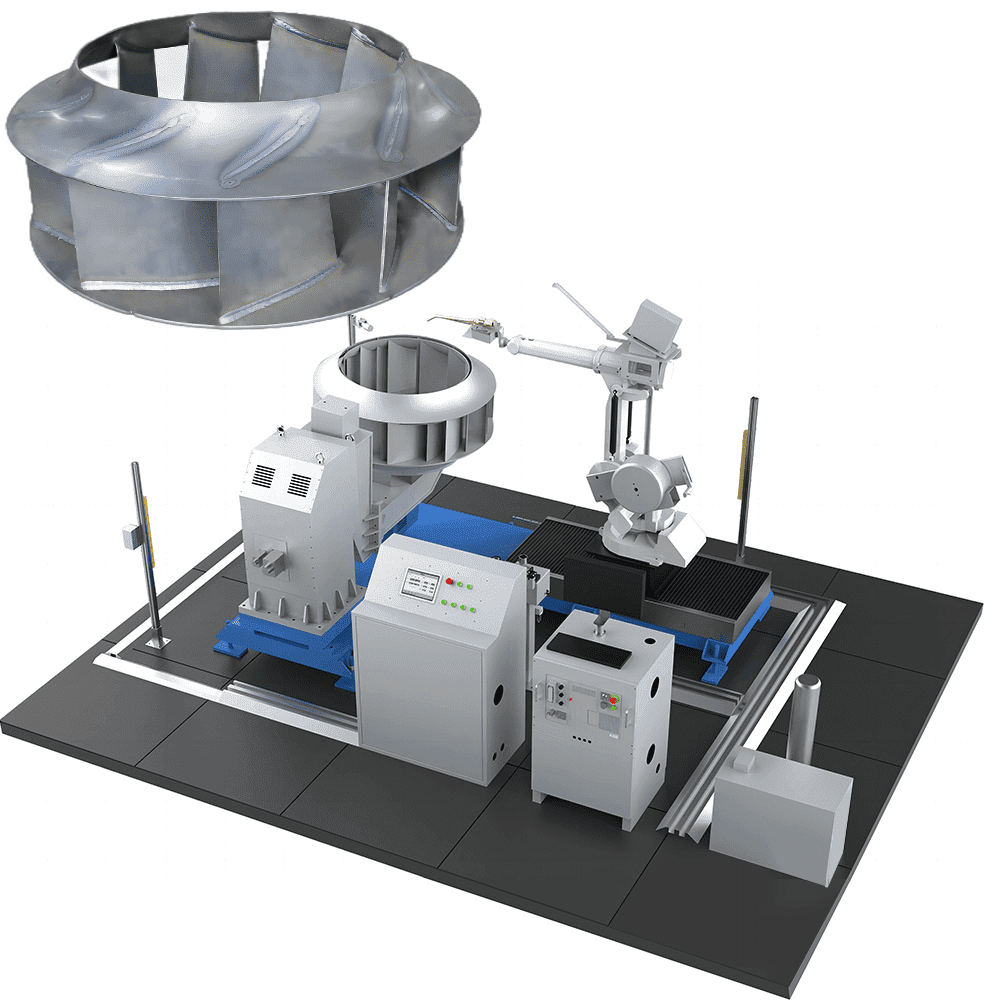
Welding Robot Machine For Centrifugal Fan Impeller
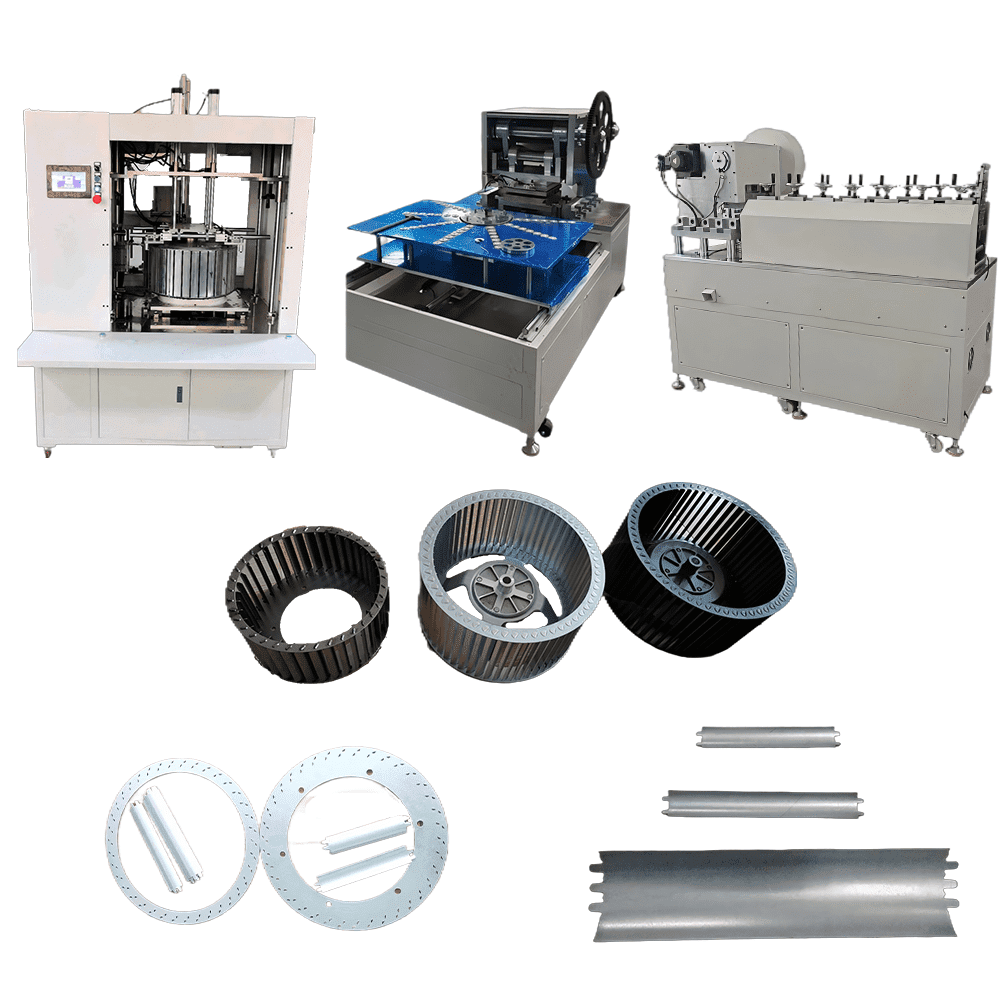
Multi-wing Centrifugal Fan Impeller Forming and Punching Machine