


How Tube Laser Cutting Improves Metal Fabrication Efficiency and Reduces Production Costs

Many metal fabrication companies still rely on saw cutting, drilling, and manual positioning for tube processing. While these methods work for simple jobs, they create bottlenecks when production volume increases or complex tube structures are required.
Laser tube cutting, also known as CNC tube laser cutting or fiber laser tube cutting, has become an advanced tube fabrication automation solution for manufacturers looking to improve production efficiency, reduce labor dependency, and replace multiple secondary processing operations.

What is tube laser cutting?
Tube laser cutting is a CNC machining technique that utilises a high-power fibre laser beam to perform automated cutting, drilling, slotting, chamfering, and severing operations on metal tubes. In industrial applications, tube laser cutting machines are also commonly referred to as laser tube cutting machines, metal tube laser cutting machines, or CNC tube cutting machines. Unlike traditional plasma cutting and sawing, tube laser cutting can perform multiple operations, such as drilling and milling, in a single clamping operation. It is capable of processing materials with varying requirements for precision and heat-affected zones, such as carbon steel, stainless steel, aluminium, and brass, and covers a wide range of geometric structures, including round tubes, square tubes, rectangular tubes, special-shaped profiles, and structural steel.
Main Components of a Tube Laser Cutting Machine
An industrial tube laser cutting machine mainly consists of a fiber laser source, rotary chuck system, laser cutting head, CNC control system, nesting software, and automatic loading system. From raw material to finished parts, tube laser cutting achieves a high degree of seamless automation.
How Does Tube Laser Cutting Work?
Step 1: Tube Loading: The automatic feeding system enables automated tube processing, separating raw tubes from bundles and feeding them into the laser cutting system with precision. The automatic feeding machine separates the pipes from their bundles and conveys them individually with precision.
Step 2: Positioning and Calibration: The pneumatic chuck tightens automatically, whilst the system uses optical or infrared sensors to measure and compensate for the pipe’s curvature, deformation, and centreline.
Step 3: CNC Programming: Import 3D CAD/CAM models, and the nesting software automatically calculates the optimal nesting layout to minimise waste from tube offcuts.
Step 4:Multi-axis Laser Cutting: The rotation of the chuck is closely co-ordinated with the multi-directional movement of the cutting head, enabling cutting, drilling, slotting, saddle cuts, and intersecting line cuts to be completed in a single operation.
Step 5: Finished Part Inspection: The finished parts are smoothly conveyed out by the automatic unloading mechanism; dimensional accuracy can be easily maintained to an extremely high standard, with no burrs and no need for grinding, allowing them to proceed directly to the next welding or assembly stage.
What problems can tube laser cutting solve?
Problem 1: Long Production Cycles in Traditional Tube Fabrication
Traditional tube fabrication often requires separate machines for sawing, drilling, and grinding.3D laser tube cutting completes processes such as slotting, grinding, and deburring in a single setup, significantly reducing handling and waiting times between processes; now, just one machine operator can carry out the work that previously required three to four workers.

Problem2: high margin of human error, and assembly is difficult
By shifting from manual measurement using a tape measure to a process driven entirely by CNC precision control, the accuracy of the machined holes and slots is consistent, reducing cumulative errors and ensuring smooth subsequent assembly.
Problem 3: Poor Tube Joint Fit-Up Creates Welding Challenges
From thermal deformation of workpieces caused by excessively large welds at joints to the precise cutting of perfect intersecting lines and self-locking mortise-and-tenon joints, weld uniformity has improved whilst welding speed has increased by more than 50 per cent.

Problem 4: Material Waste Increases Production Cost
Thanks to its precise positioning, laser cutting reduces the production costs associated with the large amounts of material waste caused by the need for allowance in traditional cutting methods; it also allows for rapid changeovers when working with workpieces of varying specifications.
Problem 5: Labor Shortage Limits Production Capacity
Laser tube cutting reduces reliance on skilled workers by converting manual expertise into data parameters; ordinary workers can become proficient after a short period of training, leading to a significant increase in production capacity.
Tube Laser Cutting vs Traditional Tube Processing
Compared with traditional tube fabrication methods such as saw cutting, CNC drilling, and manual tube processing, an automatic tube laser cutting system integrates multiple operations into one workflow.
|
Factor |
Saw Cutting |
Plasma Cutting |
Tube Laser Cutting |
|
Cutting method |
Mechanical blade cutting |
Thermal arc cutting |
Fiber laser cutting |
|
Main purpose |
Cutting tubes into required lengths |
Cutting thick metal profiles and plates |
Integrated tube processing |
|
Cutting operations |
Cutting only |
Cutting + simple piercing |
Cutting + drilling + slotting + notching |
|
Hole cutting |
Requires drilling |
Possible but rough |
Direct laser cutting |
|
Edge quality |
Clean but needs blade condition control |
Heat-affected edge, slag possible |
Smooth edge, minimal burr |
|
Heat-affected zone |
None |
Large |
Very small |
|
Secondary processing |
Often required |
Usually required |
Greatly reduced |
|
Best for |
Straight tube cutting |
Heavy steel cutting |
Complex tube fabrication |
|
Typical applications |
Pipe cutting, structural steel |
Heavy fabrication, thick profiles |
Automotive, HVAC, machinery frames |
Saw cutting offers high cutting speeds and low equipment costs. It is suitable for cutting long tubes to fixed lengths and for simple, high-volume cutting operations; however, subsequent operations such as drilling holes require additional machinery and labour, which can lead to cumulative errors.
Plasma cutting is suitable for cutting heavy-duty steel structures, thick-walled pipes and large structural components, but it can cause edge oxidation in precision machining.
The key advantage of tube laser cutting is not the cutting speed, but the fact that drilling, slotting, and tube notching can all be completed in a single set-up, thereby enabling complex pipe connections and achieving tighter tolerances.
Tube Laser Cutting vs CNC Tube Cutting
|
CNC Tube Cutting |
Tube Laser Cutting |
|
|
Tool |
Cutting tools |
Fiber laser |
|
Operations |
Mainly cutting |
Cutting + drilling + slotting |
|
Tool wear |
Higher |
Lower |
|
Complex joints |
Limited |
Excellent |
Tube Laser Cutting vs 3D Laser Cutting: Different Applications in Manufacturing
|
Factor |
3D Tube Laser Cutting |
3D Laser Cutting |
|
Main workpiece |
Tubes, pipes, profiles |
Formed 3D components |
|
Workpiece condition |
Raw tube before assembly |
Already formed parts |
|
Main movement |
Tube rotates around axis + laser head moves |
Laser head moves around fixed workpiece |
|
Main application |
Tube fabrication |
Complex component trimming |
|
Main operations |
Tube cutting, hole cutting, slotting, tube notching |
Edge trimming, hole cutting, contour cutting |
|
Fixture requirement |
Rotary chuck system |
3D fixture system |
|
Best advantage |
Accurate tube connection and welding preparation |
Flexible processing of complex surfaces |
|
Common industries |
Automotive frames, HVAC, machinery structures |
Automotive, aerospace, EV, defense |
Although both technologies use multi-axis laser systems, they are designed for completely different manufacturing challenges. 3D tube laser cutting focuses on processing tubes and profiles before assembly, while 3D laser cutting is mainly used for trimming and machining already formed three-dimensional components.
Tube Laser Cutting Applications in Metal Fabrication and Industrial Manufacturing
In actual industrial production, laser cutting of tubular materials has long since moved beyond mere ‘tube cutting’ and has been adopted as a core process across various industries.
Industrial Fan Manufacturing
The inclined brackets and curved connecting pieces, which previously required manual cutting and grinding, are now formed in a single operation using laser cutting, ensuring the high rigidity and dynamic balance accuracy of the fan’s overall structure.
Automotive & Construction Machinery
For components such as exhaust system pipework and subframes, 3D laser pipe cutting has significantly improved the precision of complex intersecting cut-outs; when combined with automated robotic welding, this has greatly reduced welding defects caused by excessive joint gaps.

HVAC & Piping
It allows for rapid specification changes across different pipe diameters and wall thicknesses, meeting the customised project requirements of the ventilation ducting industry, which involves small batches and a wide variety of products.

Steel Structure Fabrication
Replacing traditional plasma cutting and manual drilling, this method significantly increases the speed of on-site assembly of large structural components, such as steel space frames and heavy-duty steel beams, whilst enabling the fabrication of complex connections.
Tube Laser Cutting Benefits for Manufacturers
Improve Production Efficiency
This has significantly reduced the time spent on the combined machining of pipe fittings and manual handling and positioning during transfers between workshops; the system’s memory function has also minimised the need for readjustment when changing specifications.
Reduce Labor Costs
By reducing secondary operations and manual handling, an automatic tube laser cutting system helps manufacturers lower labor costs and improve production capacity.
Improve welding and product quality
The high precision of laser cutting ensures a perfect fit during downstream assembly, reducing the amount of weld filler required and thereby significantly enhancing both the overall structural strength and the aesthetic quality of the final product.
Increase Production Flexibility
There is no need to produce expensive stamping moulds; we can produce prototypes quickly based on the customer’s drawings, which greatly enhances the factory’s ability to take on high-margin, bespoke orders.
Tube Laser Cutting Machine Selection Guide
Faced with the wide range of equipment models available on the market,when selecting a CNC tube laser cutting machine, procurement managers and engineers should focus on the following five aspects when drawing up procurement plans:
Dimensions & Shapes:
Assess the maximum and minimum pipe diameters to be processed at the factory, confirm the maximum length of a single pipe, and determine whether channel sections, angle sections or H-sections need to be processed; these factors determine the choice of chuck load capacity and the range of motion of the cutting head.
Material & Thickness:
For highly reflective materials such as stainless steel, aluminium alloy and brass, fibre lasers must be fitted with anti-refle
Laser Power Selection
3kW – 6 kW Suitable for high-speed machining of the vast majority of medium- and thin-walled tubes (carbon steel/stainless steel under 6 mm), offering excellent value for money.
8kW – 12 kW: Suitable for medium- to thick-walled industrial pipes, heavy-duty steel structures and mass-production facilities with the most demanding requirements for cutting speed.
Automation Level
Semi-automatic: Operators manually lift whole lengths of tubing onto the auxiliary support frame, after which the machine automatically feeds and cuts the material. Suitable for workshops handling small batches and a wide range of specifications.
Fully automatic feeding system: Bundles of tubing are hoisted into the hopper in one go. An automatic tube laser cutting system combines cutting, drilling, slotting, and notching into one automated workflow. Suitable for high-volume continuous production.
CNC System & Software
Check whether the equipment is equipped with tried-and-tested 3D tube nesting software, and whether the software supports the direct import of 3D models from mainstream CAD programmes, thereby avoiding the hassle of redrawing.
When Is It Worth Upgrading to Tube Laser Cutting?
- When Multiple Secondary Processes Slow Down Production: When a part requires more than three machining steps, the time taken for secondary machining exceeds the cutting time.
- When Manual Tube Fabrication Becomes a Labor Bottleneck: Relying on individual experience but unable to recruit skilled workers, parts from the same batch produced manually frequently require rework due to inconsistencies.
- When Welding Quality Becomes the Limiting Factor: Robotic welding is already in use on the back end, but a great deal of manual adjustment is still required prior to welding.
- When Product Variety Increases: Orders at the factory have become more complex, with customers specifying different requirements for dimensions, hole positions, and connection methods.
- When You Need to Connect with Automated Production Lines:You have already purchased a welding robot, or you wish to reduce manual handling and are planning to set up an automated production line.
FAQ
What is the maximum Tube size a Tube Laser Cutting Machine can process
The maximum tube size depends on Chuck capacity, Laser power, Machine structure, and tube weight. For round tubes, typical capacity is around 20 mm- 350 mm diameter; for square tube around20x20mm-300x300mm
Can Tube Laser Cutting Replace Saw Cutting
Tube laser cutting does not completely replace saw cutting; the best choice depends on production requirements. When you only require straight cutting and the material thickness is large, and you also need production cost to be minimized, choose saw cutting.
Does Tube Laser Cutting Need Secondary Processing?
One of the biggest advantages of tube laser cutting is reducing secondary operations; tube laser cutting can integrate: cutting, hole making, slotting, notching, and welding preparation. However, some applications still require secondary machining depending on surface requirements, thickness, and welding standards
What is the difference between tube laser cutting and pipe laser cutting?
Tube laser cutting and pipe laser cutting use similar technology. Pipe laser cutting usually refers to processing pipes for fluid systems, while tube laser cutting focuses on structural tubes and profiles, such as round tubes, square tubes, and rectangular tubes. Modern CNC tube laser cutting machines can process both and perform cutting, drilling, slotting, and notching in one setup.
How Accurate Is Tube Laser Cutting?
Tube laser cutting accuracy depends on: machine structure, tube straightness, chuck system, laser calibration, and material thickness. Industrial tube laser systems typically achieve positioning accuracy:±0.05–0.1 mm.
conclusion
For metalworking factories seeking to boost production capacity and control costs, laser cutting of tubular materials is not merely an upgrade to equipment, but a transformation of the production process. By consolidating multiple traditional processes, it directly reduces high labour and time costs, whilst laying the foundation for extremely high precision in downstream welding and assembly.
Are you ready to boost the efficiency of tube processing in your workshop? Please feel free to contact our team of engineering experts and send us your tube drawings and processing requirements. Altron will provide you with a free assessment of your tube nesting layout, as well as a bespoke equipment selection plan.

Related Products
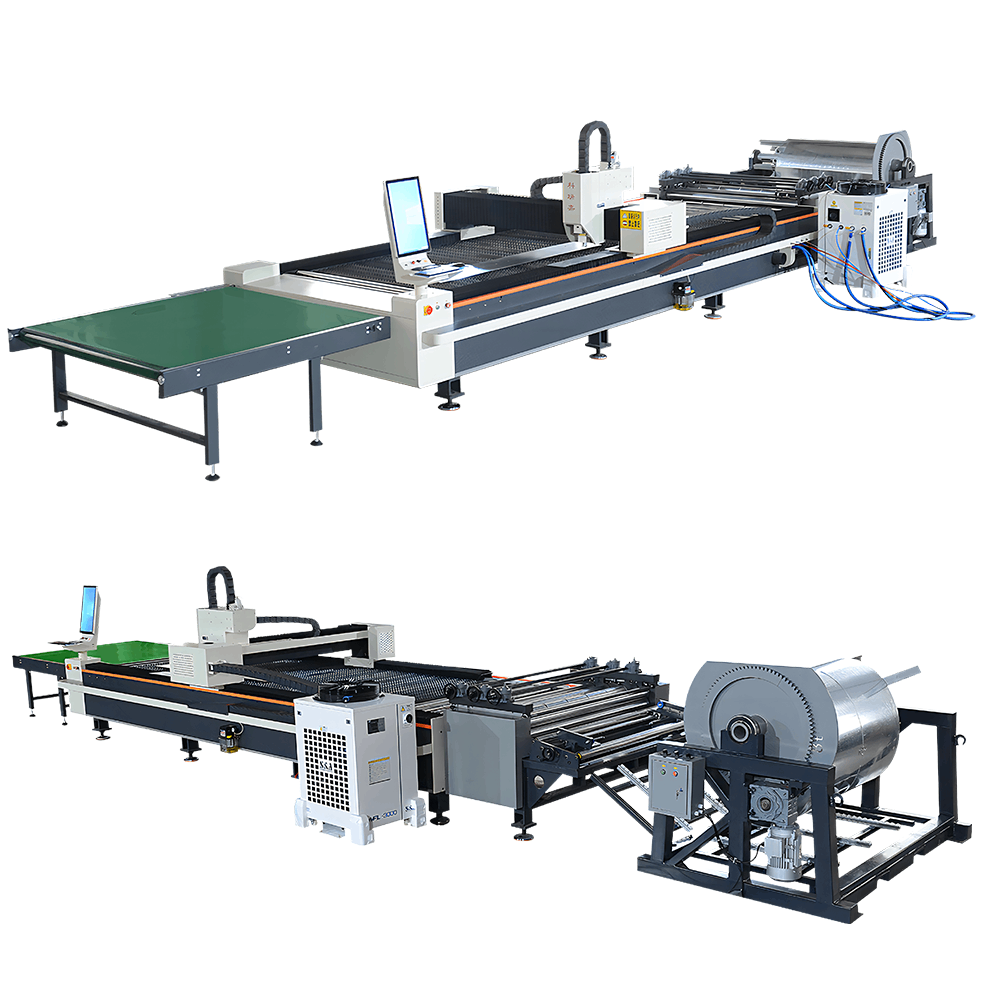
Gear Hobbing Platform Laser Cutting Production Line
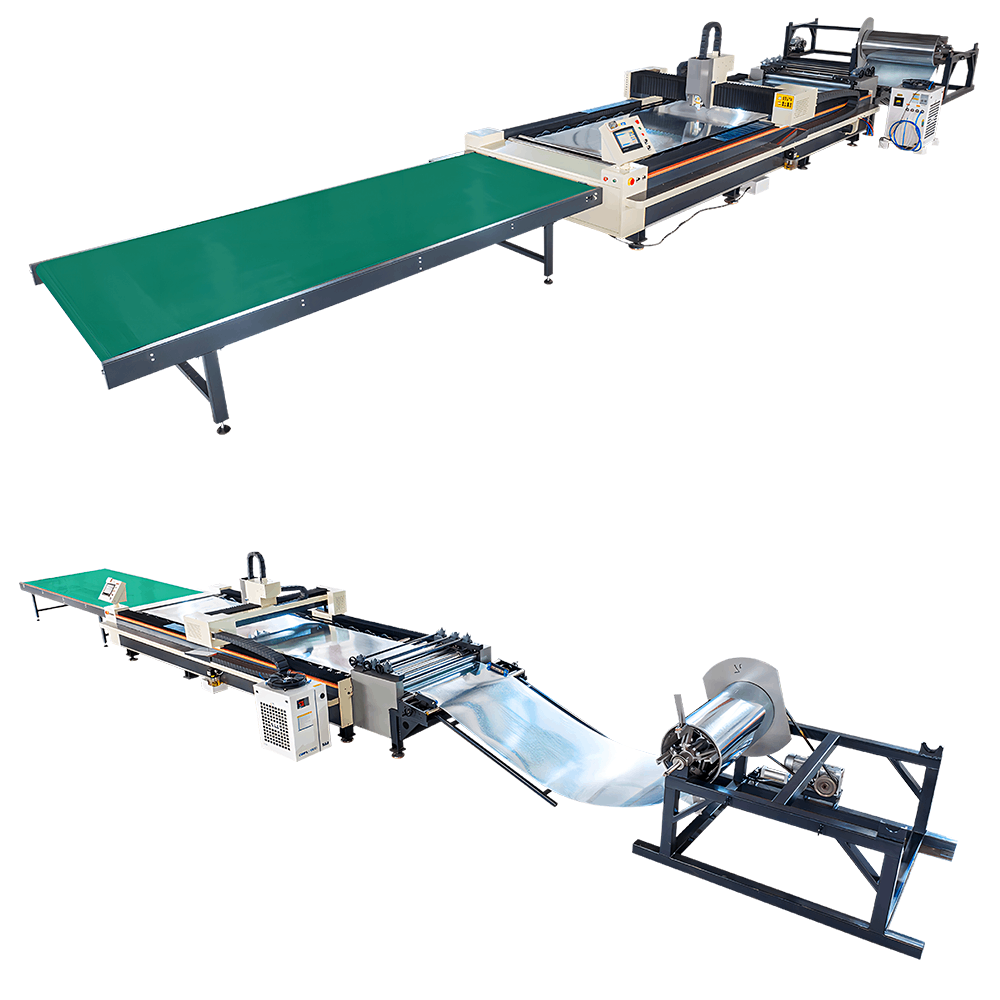
Rolling Disc Platform Laser Cutting Production Line
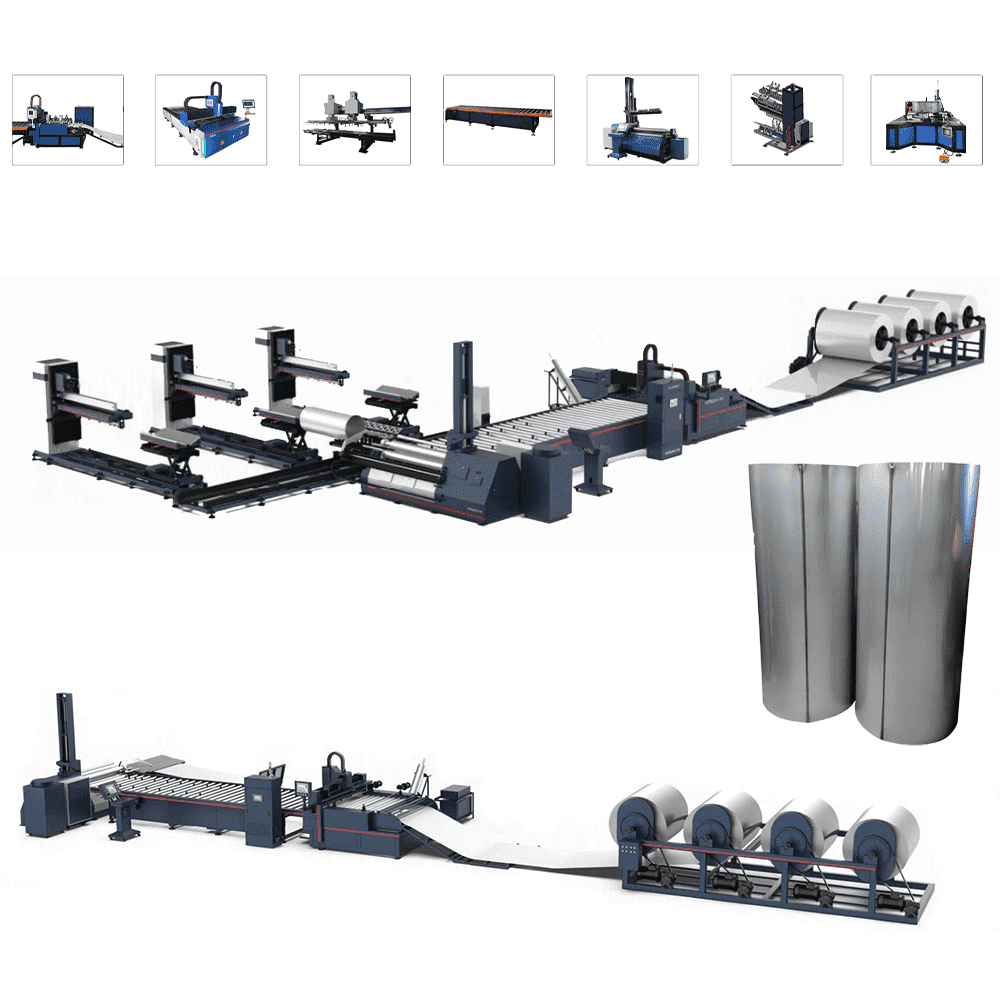
Air Duct Automatic Rolling Production Line