


3D Laser Cutting Process, Applications, and Advantages Explained

In the field of modern metalworking, two-dimensional flat cutting is unable to cut curved surfaces with undulations and complex angles, whilst traditional mechanical stamping die trimming faces the challenges of long tooling lead times, high modification costs and susceptibility to wear. As a non-contact machining technology utilising multi-axis spatial coordination, 3D laser cutting has not only significantly shortened the prototyping cycle for new product development but has also redefined the machining precision and production flexibility of complex metal components.
Industrial 3D laser cutting machines provide manufacturers with an automated solution for processing formed metal parts, curved components, and complex geometries that are difficult to process with conventional cutting methods.

what is 3D Laser cutting
3D laser cutting is an advanced laser processing technology that uses multi-axis motion systems, including 5-axis laser cutting machines or 6-axis robot laser cutting systems, to cut formed, curved, and three-dimensional metal components with high precision.
Unlike traditional 2D laser cutting, the 3D laser cutting head can move freely within a three-dimensional spatial coordinate system (X/Y/Z) and dynamically adjust the cutting head’s orientation angles via rotational axes (A/B /C), ensuring that the nozzle always maintains a constant, optimal cutting angle relative to the cutting plane, even on surfaces with varying elevations.
3D Laser Cutting System Components of a Fiber Laser Cutting Machine
A 3D laser cutting system primarily consists of a fibre laser generator, a cutting head, a multi-axis spatial motion system, a CNC control system and a three-dimensional spatial fixturing system.
The CNC system calculates the laser path based on the CAD drawings or 3D models provided; the cutting parameters are determined whilst the part is positioned and secured by a three-dimensional jig and fixture system, with sensors detecting its actual position; The CNC control system applies coordinate compensation based on this data, whilst the multi-axis motion system controls the cutting head’s trajectory and the angle of the laser beam. During cutting, the laser generator transmits the laser beam to the cutting head; the input power determines the cutting speed and thickness to complete the cut, with sensors providing real-time feedback to promptly adjust the height, path and power, thereby completing the machining process.

3D Laser Cutting vs 2D Laser Cutting: Key Differences for Metal Fabrication
|
2D Laser Cutting |
3D Laser Cutting |
|
|
Workpiece |
Flat sheet |
Formed parts |
|
Motion |
X/Y/Z |
5-axis/6-axis |
|
Cutting direction |
Fixed |
Multi-angle |
|
Setup |
Flatbed |
Fixture |
|
Application |
Sheet metal |
Automotive parts |
2D laser cutting is better suited to the mass production of simple parts, whilst 3D laser cutting is better suited to the machining of complex parts. 2D laser cutting is primarily used for flat sheet metal processing, with the developed pattern first cut from a steel sheet before being bent and welded. 3D laser cutting is mainly used on pre-formed parts; by securing them in specialised jigs, it can be used to cut holes, trim edges and create slots in complex curved and three-dimensional structures.

When Should Manufacturers Choose 3D Laser Cutting?
If your factory finds itself in any of the following situations, you may wish to consider 3D laser cutting:
Parts Are Already Formed
This is the most important consideration: if a part has already undergone bending and casting but still requires hole-cutting, trimming or slotting, then 3D laser cutting is the more suitable option.

Manual Polishing Becomes a Bottleneck
Many factories face challenges with post-cutting secondary processing; manual grinding and trimming result in high labour costs, long production cycles, and inconsistent quality. 3D laser cutting can reduce the need for this secondary processing.
Complex Geometry Requires Multi-Angle Cutting
Take tubular structural components, for example: with traditional cutting methods, the parts must be repositioned after cutting to drill holes and machine the connection points. With 3D laser cutting, machining in multiple directions can be completed in a single clamping operation.

OEM Production Requires Repeatability
For OEM manufacturers, the greatest concern is inconsistency in batch production, where the dimensions of the first and last parts vary. 3D laser technology, controlled by CNC and supported by a positioning system, ensures consistency across the batch.
Secondary processing creates high labor costs
If your production process relies on manual cutting, grinding, drilling and inspection after moulding, these machining steps are affecting your production cycle time and output. 3D laser technology can reduce reliance on manual labour and improve production throughput
What problem does 3D laser cutting solve
Problem 1: Multiple Setups Increase Tolerance Errors and Manufacturing Time
Metal parts that have undergone deep drawing or bending often require side holes, irregular cuts, or notches to be machined. Conventional processes require the workpiece to be transferred between drilling machines, milling machines, CNC punch presses, and specialised slotting machines three to five times. Each repositioning and clamping operation accumulates positioning errors, resulting in the final product’s tolerances falling significantly outside the specified limits.
3D laser processing enables comprehensive machining in a single clamping operation. Once the formed part is placed in the 3D laser processing unit, a 5-axis coordinated or robotic laser head can complete outer contour trimming, normal and oblique hole drilling, countersinking, and bevel cutting in a single pass within a three-dimensional spatial coordinate system. This eliminates the need for transfer between processes and ensures precise tolerance control, reducing secondary processing.

Problem 2:High-Strength Materials Accelerate Tool Wear, Increasing Maintenance Costs
In the automotive and heavy machinery manufacturing sectors, materials with extremely high hardness—such as hot-formed high-strength steel and titanium alloys—are being used with increasing frequency. Under ‘hard-on-hard’ stamping conditions, traditional mechanical trimming dies or punches suffer extremely rapid wear; frequent stoppages for die repair and replacement eat into a significant portion of profits.
3D laser cutting utilises non-contact fibre-optic cold cutting to instantly melt metal through high energy density. Whether cutting hardened boron steel or high-hardness titanium alloys. Compared with mechanical trimming and punching, 3D laser cutting is a non-contact laser cutting process that eliminates tool wear, thereby significantly reducing the amortisation and maintenance costs associated with expensive hard-faced trimming dies.

Problem 3: Long Production Lead Time
During the new product development or small-batch customisation phase, designing and manufacturing a dedicated mechanical trimming/punching die set for 3D moulded parts can easily incur moulding costs of tens of thousands of US dollars, with a production lead time of 1–2 months. Should any design changes arise, the entire die set becomes obsolete.
Fully mould-free digital manufacturing using 3D laser technology. 3D laser cutting requires no physical stamping or trimming dies; its ‘mould’ is simply the 3D geometric path defined in the CAM software. When design changes are required, engineers need only modify the CAD code in the offline programming software to produce a brand-new prototype on-site within minutes, reducing the time-to-market for new products by more than 80 per cent.
Problem 4: Poor Fit-Up of Bent Tubes Creates Welding Challenges
After being bent using a tube bender or hydraulically formed, tubular components (such as bicycle frames, exhaust pipes, and structural steel tubes) have their axes curved in three-dimensional space. Traditional flat-bed tube cutters are unable to clamp such components, whilst manually cutting them on a sawing machine fails to produce the complex saddle-shaped intersecting lines (saddle joints) required; this results in inconsistent gap sizes during assembly and welding, leading to frequent burn-through or incomplete welds by welding robots.
3D laser solution: spatial multi-axis angular beveling and groove cutting functions. The 3D laser head can rotate in any orientation around the bent tube to precisely cut spatially intersecting lines, interlocking grooves, and welding grooves. This enables ‘self-aligning tight fitting’ during assembly, significantly improving the joint pass rate in subsequent automated welding processes.

What Operations Can 3D Laser Cutting Perform?
1.3D Edge Trimming
Remove excess flash from the edges of deep-drawn and stamped parts to achieve a perfect outer contour
2. Laser hole cutting & Slotting
Cutting round holes, square holes, oval holes, and special-shaped assembly slots on curved surfaces, inclined surfaces, or round tubes.
3. Laser bevel cutting
By oscillating the laser head, V-shaped, Y-shaped, or K-shaped weld grooves are cut into the edges of thick-walled profiles, directly preparing them for submerged arc welding or robotic welding.
4. Tube Notching
Machine saddle-shaped intersecting cuts at saddle joints where two or more curved pipe fittings meet to ensure a perfect, seamless fit when the fittings are assembled.
Applications of 3D Laser cutting
Tube & Heavy Machinery Fabrication
Traditionally, 2D laser tube cutting machines are unable to clamp and process bent tubes—such as the large three-dimensional bent tube frames found in agricultural machinery or the irregularly shaped cab frames of construction machinery—in their spatial three-dimensional state after being bent by a tube bender. However, 3D laser cutting can utilise multi-axis angular adjustment to precisely cut complex saddle-shaped intersecting lines and interlocking grooves into already bent tubes.
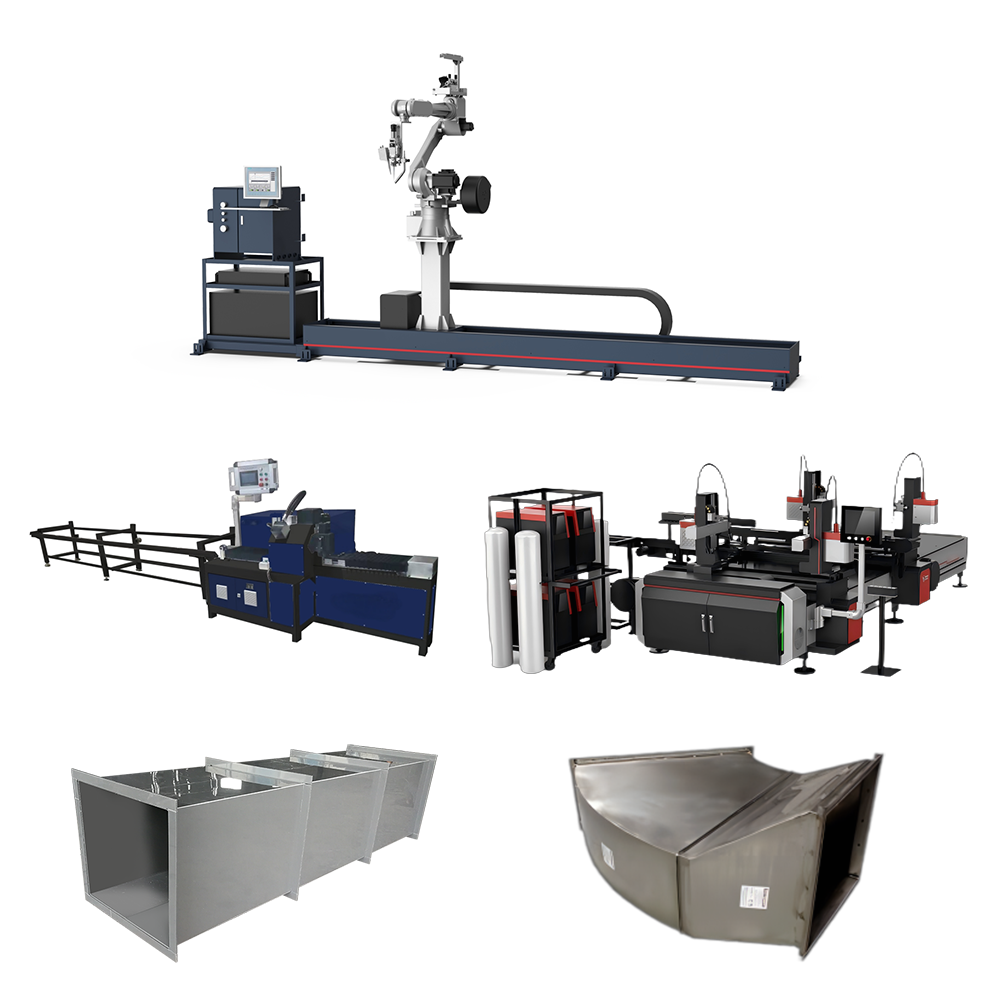
HVAC & Special Ducting
In the HVAC industry, where there are numerous product varieties and small batch sizes, there are tens of thousands of specifications for non-standard pipe fittings. Developing trimming dies for each type of non-standard elbow is extremely costly; 3D laser cutting enables completely die-free production, allowing production orders to be switched simply by loading CAD paths generated by 3D software.
Traditional plasma cutting of stainless steel produces black slag and a yellowish oxide layer on the edges, making the material highly susceptible to rust in damp environments. 3D laser cutting, combined with high-pressure nitrogen cutting, produces a bright silver mirror-like finish on the cut surface, free from burrs and corrosion-resistant, thereby directly meeting sanitary standards.

Automotive & EV Manufacturing
For ultra-high-strength steel components requiring high hardness and hot forming—such as B-pillars and chassis subframes—traditional mechanical trimming and punching dies suffer from severe chipping and wear, resulting in high maintenance costs. 3D laser cutting is a non-contact, cold-cutting process that applies no mechanical stress, thereby completely eliminating the costs associated with die wear.
Cutting aluminium alloy trays using high-pressure nitrogen results in cut edges free from oxidation layers and spatter, providing a clean metallographic end face for subsequent continuous laser seam welding, thereby completely eliminating the risk of air or water leakage in battery packs.

Aerospace & Defense
Heat-sensitive precious metals such as titanium alloys are extremely sensitive to the heat generated during cutting. 3D laser cutting utilises ultra-high power density combined with microsecond-level pulses for cold cutting, alongside high-purity argon gas shielding, thereby achieving zero micro-cracks and zero hydrogen embrittlement.
Thin-walled, irregularly shaped components are highly prone to deformation and scrapping during mechanical stamping and trimming; however, as 3D laser cutting exerts zero force, it ensures the geometric stability of thin-walled titanium alloy components.
advantage and limitation
advantage
- Flexible Manufacturing
It is capable of machining complex parts without the need for physical moulds; switching between products simply requires loading different CAD moulds.
- Minimal HAZ
The high-power beam produces a ‘cold cut’ effect, resulting in minimal thermal deformation near the cut and a burr-free cut surface.
- Minimise secondary processing
Combines trimming and drilling in a single operation, eliminating the need for deburring and punch press drilling.
limitation
- Higher Initial Investment
The initial investment in CNC systems and fibre lasers is significantly higher than that for traditional 2D laser cutting
- Programming Complexity
Operators need to have some programming experience
- Not Ideal for Simple Flat Parts
For completely flat workpieces, 3D laser cutting is neither as fast nor as cost-effective as 2D laser cutting.
How to choose a 3D laser Cutting Machine
When it comes to 3D laser cutters, it is not necessarily the case that the higher the power, the better, nor that the higher the price, the more suitable the machine. Whether a machine is suitable for you really depends on a combination of factors, including the parts to be processed, their thickness, and production volume.
1. Define Your Part Type and Processing Requirements
If the parts being machined are already formed and require hole drilling, trimming, or cutting at the connection point
When machining large, heavy workpieces, particular attention must be paid to the machine’s working range and the robot’s payload. When a workpiece is too large, the most critical issues are whether it will fit inside the machine and whether the robot can reach it.

2. Select the Right Laser Power
Laser power determines the thickness of the sheet that can be cut, as well as the cutting speed and production efficiency.
Medium-to-low power is suitable for thin sheets and precision components; it offers low investment costs and high precision.
Medium power is suitable for general industrial manufacturing, such as automotive components and industrial equipment parts, and strikes a balance between cutting speed and stability.
High power is suitable for cutting thick plates and heavy-duty components at faster speeds, but the equipment is more expensive.
3. Choose the Right Axis Configuration
The choice between a five-axis and a six-axis robotic system is one of the key differences between 3D laser and conventional laser systems.
Five-axis 3D laser cutting offers high precision and excellent repeatability, making it suitable for the mass production of products with high precision requirements and relatively stable structures.
Six-axis 3D laser systems, which feature industrial robots equipped with laser heads, offer greater flexibility and a wider processing range, making them suitable for large components and non-standard production.
4. Consider Working Size and Robot Reach
One issue that must not be overlooked when purchasing equipment is whether the parts will fit inside; this requires confirming the dimensions of the parts, the robot’s range of motion, and the working area within the equipment.
5. Match Automation Level with Production Volume
Not all factories require fully automated production lines; for medium-volume production, incorporating CNC systems and semi-automatic loading and unloading can improve consistency.
Recommended for high-volume production: a fully automated 3D laser production unit, including automatic loading and unloading, robotic handling, and automatic inspection, enabling continuous production and reducing the need for manual labour.
FAQ
What is the difference between 3D laser cutting and robotic laser cutting?
3D laser cutting and robotic laser cutting are related but not exactly the same. A 3D laser cutting system describes the ability to cut three-dimensional components using multi-axis movement. A robotic laser cutting system uses an industrial robot arm to move the laser head around the workpiece.
Is 3D laser cutting suitable for small-batch production?
Yes. One of the biggest advantages of 3D laser cutting is flexibility. It is especially suitable for: Prototype production, Customized components, Low- and medium-volume OEM production, Products with frequent design changes
How thick can 3D laser cutting cut?
The maximum cutting thickness depends on: laser power, material type, cutting speed requirement, and gas type. typical range0.5-10mm+
What materials can the 3D laser cutting process?
3D laser cutting machines process a wide range of industrial metals. Key materials include carbon steel, stainless steel, and aluminum. The technology also works efficiently on titanium and high-strength steel.
Can 3D laser cutting replace stamping?
3D laser cutting cannot completely replace stamping for all applications. However, it is a better choice for low and medium production volumes. It also benefits projects with frequent design changes, complex geometries, or strict tooling budget limits.
Conclusion
At Altron, we provide global clients with end-to-end integrated solutions. Our services range from precision cold-forming to robotic automated welding.
Want to improve your processing efficiency for complex metal components? Contact our engineering team today to submit your 3D CAD drawings. We offer a free feasibility analysis and integration proposal.

Related Products
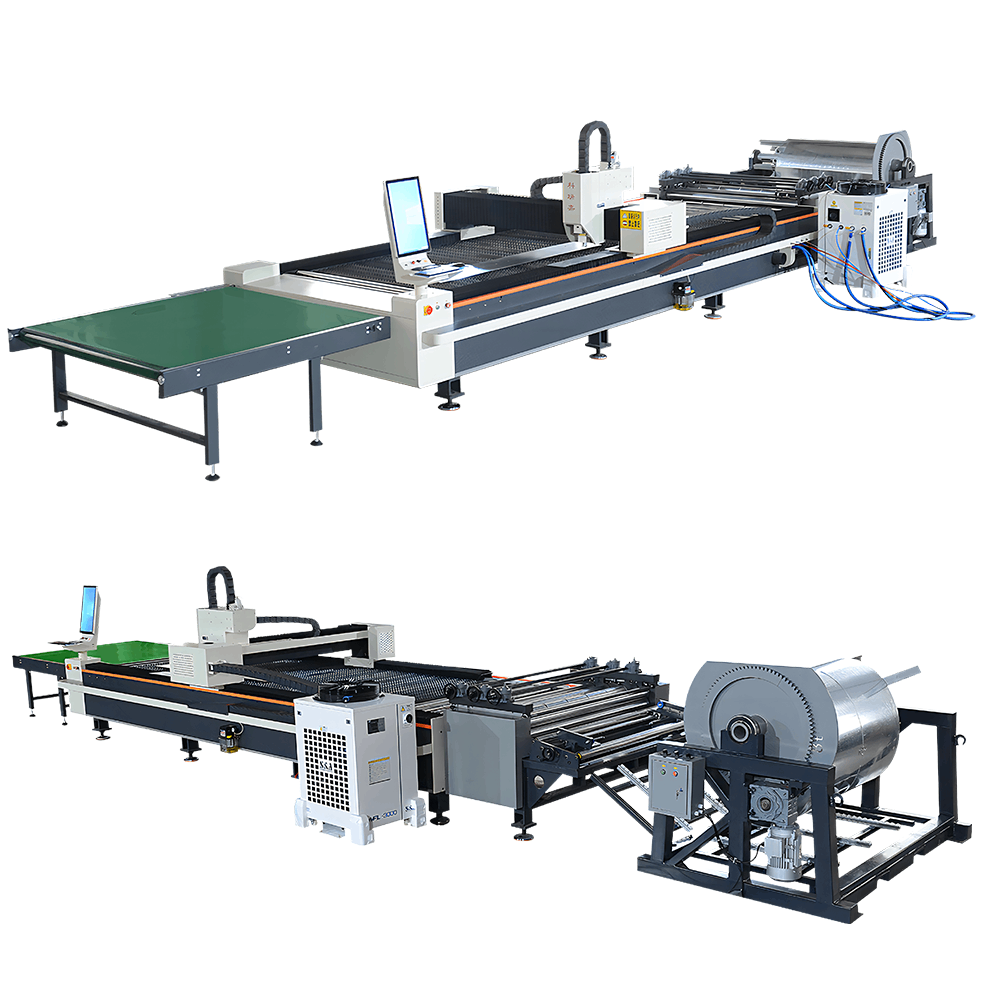
Gear Hobbing Platform Laser Cutting Production Line
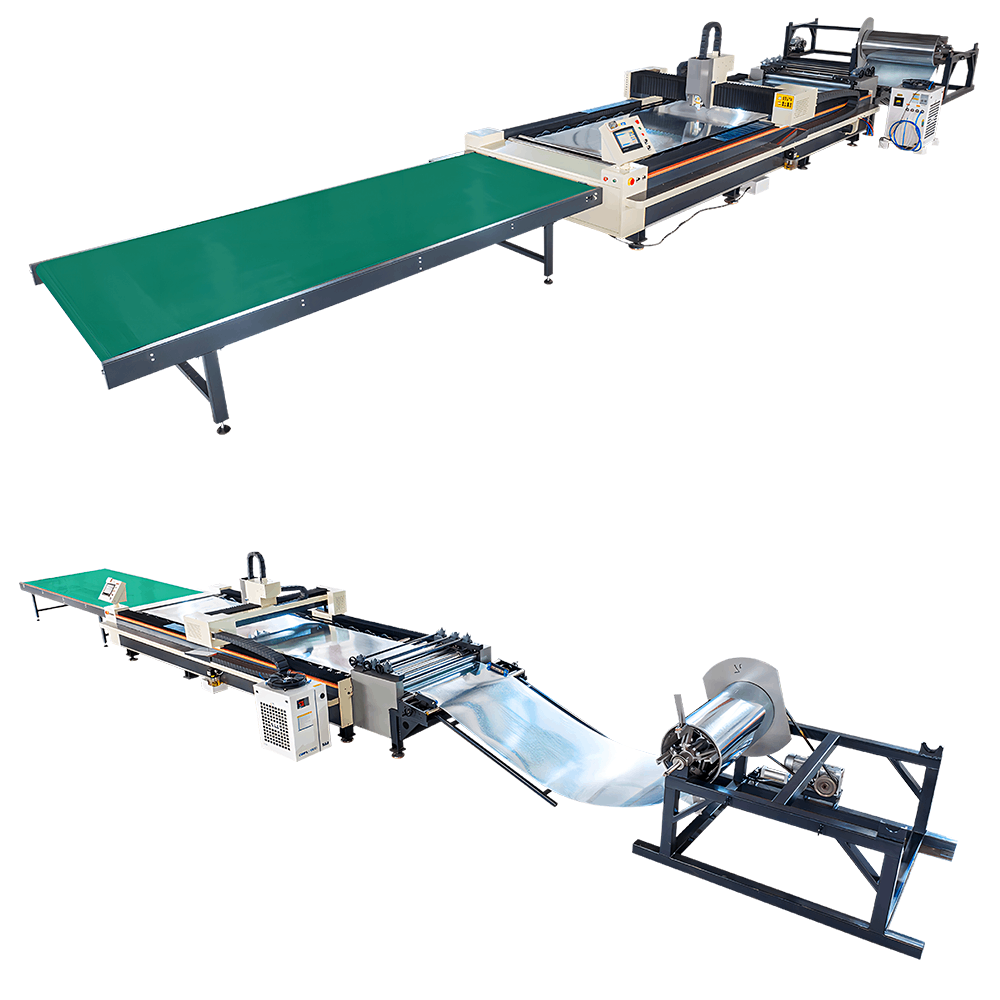
Rolling Disc Platform Laser Cutting Production Line
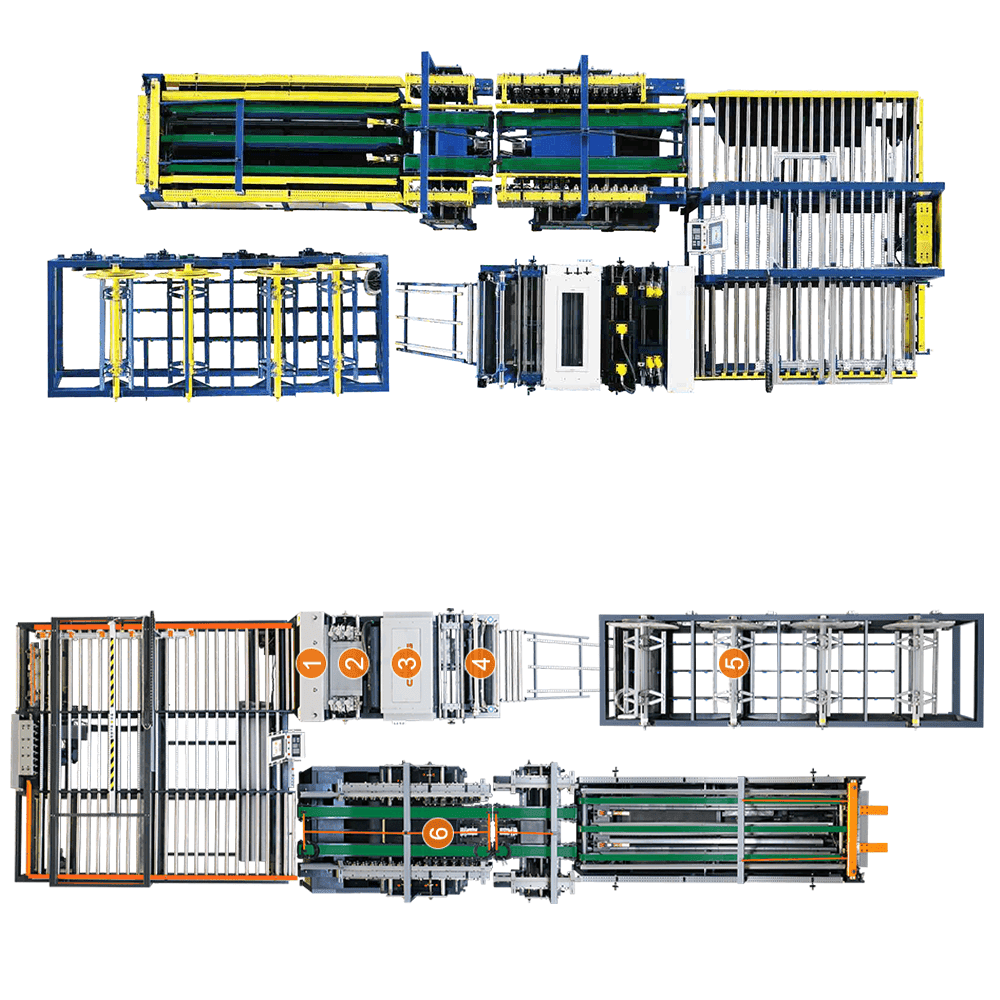
Customized Air Duct Production Lines