


Vertical Saw Cutting: Industrial Applications, Advantages and Machine Selection Guide

Is your blanking process actually generating profit for the factory, or is it hampering the efficiency of the entire production line? Long cutting cycles, edge hardening and cracking caused by the heat-affected zone, and assembly difficulties resulting from poor cut perpendicularity are the three major pain points associated with traditional blanking methods. With its thermal-stress-free cold cutting, generous throat depth and exceptional cut perpendicularity, the vertical saw machine, also known as an industrial vertical metal saw, has become an effective metal cutting solution for modern heavy industry and precision manufacturing plants seeking to overcome blanking bottlenecks.

What is a vertical saw?
A vertical band saw refers to a metal sawing machine in which the saw band or blade runs vertically. In industrial applications, vertical saw machines are commonly classified as vertical band saw machines or CNC vertical sawing machines, depending on blade configuration and automation level. Unlike traditional horizontal saws, the worktable on a vertical saw is usually horizontal or tiltable; during cutting, the saw band is driven by upper and lower saw wheels to pass through the worktable, performing a vertical sawing action. Classified by their level of automation, there are two types: manual and CNC vertical sawing machines.

What Manufacturing Problems Can Vertical Metal Saw Machines Solve?
Traditional metal cutting machines and sawing equipment often create bottlenecks in cutting speed, labor dependency, dimensional consistency, and material utilization. A vertical saw is often the only solution that offers both cost-effectiveness and technical feasibility.
Heavy Plate & Block Cutting:
Horizontal saws are typically limited by their throat depth and structural constraints, making it impossible to cut wide, large-sized steel plates lengthways; by contrast, heavy-duty vertical saw machines are designed for large plate cutting, steel plate cutting, block cutting, and oversized workpieces where conventional saws have limited capacity.
Irregular Shapes & Internal Contour Cutting:

For heavy mould blocks featuring arcs, angled bevels, or irregular contours, vertical saws allow the workpiece to be rotated and fed flexibly on a horizontal worktable.It is even possible to disconnect the saw blade, thread it through pre-drilled holes in the workpiece, and then re-weld it in place to hollow out internal contours. This makes vertical band saw machines suitable for contour cutting, profile cutting, and customized metal fabrication applications.
Heat-Sensitive Alloys:
Titanium alloys, high-strength stainless steel, tool steel, and aerospace-grade aluminium are extremely sensitive to heat. Vertical sawing is a purely mechanical cold-cutting process, whereby the vast majority of the cutting heat is carried away by the chips, thereby completely preventing material annealing, thermal deformation or thermal stress cracking.
High-Flexibility Job Shop: There is no need to frequently change expensive specialised fixtures; non-standard workpieces can be clamped and cut quickly using a flat workbench and standard clamps.
Vertical Band Saw vs Horizontal Band Saw: Choosing the Right Industrial Band Saw for Metal Processing
|
Factor |
Vertical Band Saw |
Horizontal Band Saw |
|
Cutting direction |
Vertical |
Horizontal |
|
Workpiece movement |
Operator moves material |
Machine feeds material |
|
Best for |
Complex shapes |
Straight cutting |
|
Material size |
Small-medium |
Large/heavy |
|
Flexibility |
High |
Medium |
|
Automation |
Medium |
High |
|
Production mode |
Job shop |
Batch cutting |
Both vertical and horizontal band saws are widely used industrial band saw solutions, but their advantages are different depending on material size, cutting shape, and production volume. If your factory primarily cuts long bars and long steel pipes into sections, a horizontal saw offers the highest efficiency. However, if your processes involve cutting thick steel plates into strips, blanking large ingots, or cutting irregularly shaped plates, a vertical saw is the only viable option.
Vertical Saw vs. Laser Cutting: Choosing the Right Process for Industrial Applications
Many manufacturers confuse vertical saw cutting with laser cutting because both are used for metal cutting. However, they solve completely different production problems
|
Factor |
Vertical Saw |
Laser Cutting |
|
Cutting principle |
Mechanical cutting |
Thermal cutting |
|
Heat-affected zone |
None |
Very small |
|
Thickness capability |
Excellent for thick material |
Best for thin-medium sheet |
|
Shape flexibility |
3D / irregular cutting |
2D profile cutting |
|
Edge finish |
Clean mechanical edge |
Smooth laser edge |
|
Automation |
Good |
Excellent |
|
Initial investment |
Lower |
Higher |
While laser cutting machines provide excellent flexibility for sheet metal processing, vertical metal saws are often preferred for thick plates, blocks, tubes, and structural materials.
Vertical Saw vs Circular Saw: Flexibility or Production Speed?
Vertical saws and circular saws are both used for industrial metal cutting, but they are designed for different production requirements.
|
Factor |
Vertical Saw |
Circular Saw |
|
Cutting method |
Continuous blade |
Rotating circular blade |
|
Best for |
Irregular shapes, contour cutting |
Straight cutting |
|
Production volume |
Small-medium batches |
High-volume production |
|
Material flexibility |
High |
Medium |
|
Automation |
Good |
Excellent |
For manufacturers producing customized parts, complex profiles, and irregular components, vertical saw machines provide higher flexibility. For large-volume straight cutting operations, circular saw machines offer faster production cycles.
Vertical Saw Machine Applications in Industrial Manufacturing
Thanks to their lack of a heat-affected zone, cold-cutting mechanism and outstanding ability to machine irregular contours, vertical saws are widely used in the following five major industrial sectors:
Industrial Fan Manufacturing

In industrial fan manufacturing, vertical metal saw machines are commonly used for cutting steel plates, shafts, frames, and structural components before welding and forming processes. Amongst other small- to medium-batch parts of varying specifications that demand extremely high levels of geometric consistency and control over welding residual stresses. Faced with issues such as bearing failure caused by the significant limitations of traditional equipment, complex structural shapes and large cutting tolerances, vertical saws can easily handle the cutting of non-standard wind turbine brackets and curved structural components thanks to their flexible contour cutting capabilities. Pure mechanical cold cutting and zero thermal stress ensure absolutely uniform gaps between welded joints, laying a solid foundation for the dynamic balancing of wind turbines. They are suitable for customised industrial wind turbine OEM factories and the manufacture and R&D of non-standard ventilation equipment.
HVAC & Ventilation Equipment Manufacturing
The manufacture of HVAC and ventilation equipment involves frequent changes in product dimensions and relies heavily on production flexibility. Under traditional manual cutting methods, workshops are often heavily reliant on manual positioning and stacking, resulting in poor consistency in cutting across different shifts. The rapid mould changeover and positioning adjustments offered by vertical saws can significantly reduce changeover times between small-batch orders, whilst the narrow kerf minimises extrusion deformation and material wastage in thin-walled profiles. When combined with CNC automatic feed systems, vertical saws can work as tube cutting machines and profile cutting equipment for customized metal components to perfectly balance ‘ small-batch customisation’ with ‘high-cycle, high-volume production ’.

Steel Fabrication&Structural Manufacturing
When it comes to large H-sections, heavy-duty channel sections and oversized square and rectangular tubes, the key challenge is often not micrometre-level precision but rather large material capacity. Given the enormous cross-sections and weights of heavy-duty steel components, when should one opt for a vertical band saw and when for a horizontal band saw? When it comes to trimming bevels at the ends of steel structural components or cutting irregular notches, the vertical band saw offers unrivalled flexibility in handling localised geometries. If your primary requirement is the high-volume right-angle cutting of oversized H-sections or bundled tubular sections, a heavy-duty horizontal band saw offers greater advantages.
Mold & Tool Manufacturing
Vertical saws are widely used in mould workshops. As mould steel is expensive and temperature-sensitive, hot cutting can result in a hardened layer or micro-thermal cracking at the edges; the cold-cutting process employed by vertical saws, however, fully preserves the base material’s original microstructure. Vertical saws allow the saw blade to be disconnected, enabling complex internal cavity cutting to be carried out directly within the mould, thereby maximising the retention of intact, recyclable scrap blocks.
Aerospace & Precision Manufacturing
Aerospace materials are extremely expensive and heat-sensitive; both laser and plasma cutting can cause severe oxidation of the cut surface, resulting in the entire batch of material being scrapped. The vertical saw’s zero thermal damage and high material utilisation not only ensure the stability of titanium and aluminium alloys but also improve the utilisation of raw materials, thereby significantly reducing material costs.
How to Choose the Right Industrial Vertical Saw Machine?
When procuring industrial equipment, many plant managers focus solely on the motor power of the machinery whilst neglecting its overall suitability for the production process. The selection of a vertical saw will determine the cutting cycle, material wastage, and the potential for automation in subsequent processes for the next 5–10 years; a scientific selection process can be carried out by following these five key steps:
Step 1: Identify Your Material Type
Heavy-duty, large-sized solid workpieces or thick steel plates require extremely high casting rigidity and a high-pressure hydraulic clamping system; we recommend the Heavy-Duty Vertical Sawing Machine. For hardened alloys and heat-sensitive materials, we recommend using carbide saw blades and high-end vertical saws with variable-frequency speed control.

Step 2: Define Your Production Volume
Production throughput determines the level of automation required for your machine. For small-batch, high-variety production or prototype workshops, we recommend manual or semi-automatic vertical saws, which offer quick changeovers, intuitive operation and low procurement costs.
For medium-volume production, we recommend semi-CNC vertical saws equipped with digital displays and servo-assisted feed, which significantly reduce the physical strain on workers and minimise measurement errors.
For high-throughput, high-volume OEM manufacturing, we recommend a CNC Automated Vertical Sawing System, which integrates an automatic loading hopper, servo-driven feed claws, automatic chamfering and deburring, and cut-to-length sorting, supporting ‘unattended night-shift operation’.
Step 3: Determine Cutting Accuracy Requirements
Cutting tolerances directly determine whether subsequent processes will run smoothly or experience frequent jamming; for general-purpose structures and rough cutting, a standard band saw machine with guide blocks meeting a tolerance of ±0.5 mm is sufficient.For high-precision components and automated equipment requiring tolerances of ±0.1–0.2 mm, it is essential to select a high-rigidity cast gantry frame, precision carbide guide blocks, hydraulic automatic tensioning and a servo-driven high-precision feed system to minimise the risk of saw blade deviation.

Step4:Consider Size & Cutting Capacity
When selecting a machine on site, it is essential to carry out a comprehensive assessment of the workpiece’s width, height, weight and length. The throat depth determines the maximum width of sheet metal that can be cut longitudinally, whilst the maximum clearance height determines the upper limit for cutting thick workpieces. For excessively heavy steel plates, a hydraulically driven heavy-duty floating worktable or roller conveyor must be fitted; otherwise, the plates cannot be moved manually and may damage the machine’s guideways.
For large structural steel, priority should be given to ensuring sufficient load-bearing capacity and throughput; for complex, irregularly shaped workpieces, priority should be given to ensuring adequate throat depth and cutting flexibility.
Step5:Evaluate Automation Requirements
Is the equipment intended to be connected to automated welding robots, cold-forming machines and the factory’s EMS system?
Vertical Saw Blade Selection for Industrial Sawing Machines
Even the most advanced vertical sawing machines will experience problems such as saw blade deflection, tooth chipping and slow cutting speeds if the wrong cutting tool is selected. When configuring the saw blade, on-site process engineers must take the following three key factors into account:
- TPI: When cutting thick material or large solid workpieces, select a low TPI (e.g. 1.3/2 teeth or 2/3 teeth); the wider tooth spacing helps prevent chip build-up on the teeth, which can cause the saw to break. When cutting thin sheets or thin-walled profiles, select a high TPI (e.g., 6/10 teeth or 8/12 teeth). Ensure that at least three teeth are in contact with the workpiece at all times to prevent tooth jamming and chipping.
- Blade Geometry & Material: Bimetallic saw blades are ideal for cost-effective cutting of carbon steel, structural steel, and standard stainless steel. For hard metals such as high-hardness tool steel and titanium alloys, carbide-tipped blades are the preferred choice, offering cutting speeds 2–3 times faster than bimetallic saw blades and an exceptionally long service life.
- Coolant & Lubrication: In the case of vertical saws, micro-lubrication systems or high-pressure soluble cutting fluids not only provide cooling but, more importantly, flush away chips from inside the kerf, preventing them from being drawn back into the kerf by the saw teeth and causing blade deviation.
Downstream Impact: How Precision Sawing Prepares Metal for Forming & Welding
Precision Sawing Improves Forming Accuracy
If metal components proceed immediately to subsequent processes such as cold-forming, CNC bending or punching after cutting, any deviation in the original cut length or a non-perpendicular cut end face will cause the positioning reference plane to shift during subsequent multi-pass bending or cold-forming operations.
A high-precision sawing system provides exceptional repeatability in length accuracy and perfectly perpendicular end faces. This ensures that cold-forming machines and press brakes have an absolutely stable feed reference, eliminating the need for frequent manual fine-tuning of feed times and guaranteeing the consistency of the formed parts.
Precision Sawing Reduces Welding Defects
Welding quality depends not only on the welding process itself, but even more so on the condition of the joint during pre-welding assembly. Conventional cutting often produces end faces with a bevel, which can lead to highly uneven assembly gaps during the joining process. During the joining of fan bases and support components, if there is an angular deviation in the sawn end faces, the inconsistent gaps on either side of the workpiece can cause severe thermal distortion on one side of large welds due to excessive local heat input. This distortion in the frame is directly transferred to the casing and bearing housing, compromising the dynamic balance of the fan. Precision sawing provides the perfect ‘pre-treatment’ for welding, ensuring uniform assembly welds, reducing welding wire consumption and heat input by more than 50 per cent, and curbing welding distortion at the source.

Reduces Material Waste & Rework
As rough cutting is prone to inaccuracies, and to prevent scrap resulting from pieces being cut too short, traditional workshops often adopt a conservative ‘better too long than too short’ approach, manually allowing for a 5 mm to 10 mm allowance during cutting, which is subsequently ground down during assembly, welding or further processing. However, for high-volume production, the combined cost of material waste due to inaccurate cutting, plus the additional labour costs and time lost from secondary grinding, can eat into profits by as much as tens of thousands of US dollars annually.
By introducing a CNC servo-controlled sawing facility, the scrap rate can be reduced to a minimum; the economic benefits are particularly significant when processing high-value metals such as stainless steel, titanium alloys and aluminium alloys.
Creating a Stable Manufacturing Flow
An increasing number of factories are introducing welding robots and automated assembly lines. A technical prerequisite for all automated and intelligent equipment is that every workpiece must possess the utmost dimensional consistency. Vertical saw machines link isolated steps together, enabling each automated robot to achieve continuous, high-speed welding without the need for frequent trajectory corrections or downtime caused by errors such as arc burn-through or incomplete welds resulting from widening gaps, thereby fully realising the production potential of automated welding.
Automated Vertical Saw System: From Manual Sawing to CNC Metal Cutting Systems
Traditional vertical saws are often regarded as semi-automatic machines that require an operator to manually guide the material as it is fed through. However, in modern smart factories, CNC band saw machines combine automatic feeding, servo positioning, and digital control to achieve repeatable cutting accuracy and reduce dependence on skilled operators.
CNC Servo Feeding System: Precise positioning and repeatable cutting are achieved through servo systems and CNC control; for systems of different sizes, dimensional parameters can be adjusted quickly without the need for repeated testing.
Automatic Deburring and Edge Processing: Once sawing is complete, many factories still require manual deburring, cleaning, and edge finishing before the parts can proceed to the next stage of production. Automation allows for the integration of deburring devices and brushing systems, enabling parts to proceed directly to welding, forming and assembly, thereby reducing the need for secondary processing.
Automatic Storage and Loading System:Raw materials are automatically conveyed to the sawing area via a robotic loading system and a hydraulic lifting system, reducing the time spent manually locating materials, improving space utilisation, and addressing the limitations and safety risks associated with manual handling; this system is suitable for large steel components and heavy-duty parts.

When Should Manufacturers Upgrade to an Automated Vertical Saw System?
If you are also considering upgrading your automation system, or if you find yourself in any of the following situations, please feel free to contact us:
- Manual Cutting Becomes a Production Bottleneck
The back end already has welding robots and an assembly production line for forming machines, but the front end cannot keep up with the demand for sawing.
- Labor Cost Is Increasing
If your factory relies heavily on manual operators, material handlers, and inspectors, but experiences high staff turnover or recruitment difficulties, the return on investment in automation will increase significantly.
- Production Volume Requires Repeatability
OEM manufacturers, large-scale production, and standardised components
- Quality Requirements Are Increasing
When customers request tighter tolerance, consistent dimensions, and traceable production data
FAQ
What materials can a vertical saw cut?
A vertical saw can cut a wide range of materials, including carbon steel, stainless steel, aluminum, titanium alloys, tool steel, and other industrial metals. It is commonly used for cutting plates, blocks, tubes, profiles, and irregularly shaped workpieces
What is the difference between a vertical saw and a horizontal saw?
A vertical saw is a general term for machines where the cutting tool moves vertically. A vertical band saw is one specific type that uses a continuous blade loop. Vertical band saws are mainly used for irregular shapes, contour cutting, and customized parts.Vertical circular saws focus more on: straight cuts, high precision, repeat production
Can a vertical saw cut thick metal plates?
Yes. Heavy-duty vertical saws can cut thick metal plates and large blocks.
Cutting capability depends on throat capacity, motor power, blade type, and material hardness.
Can a vertical saw be automated?
Yes. Modern vertical saws can be integrated into automated production systems.
They help manufacturers reduce labor dependency and improve production consistency.
They can also connect sawing with downstream forming and welding processes.
How much does a vertical saw cost?
The cost of a vertical saw depends on: cutting capacity, motor power, automation level, blade system, and additional functions
conclusion
Blanking is merely the first step in efficient manufacturing. At Altron, we do not simply sell individual machines. We specialise in providing our global customers with turnkey metal fabrication equipment solutions, from blanking through to welding.
Planning to build a new factory or upgrade your thick-plate cutting line? Send your product drawings and production requirements to our engineers.
Altron will evaluate your application and provide a customized cutting solution.

Related Products
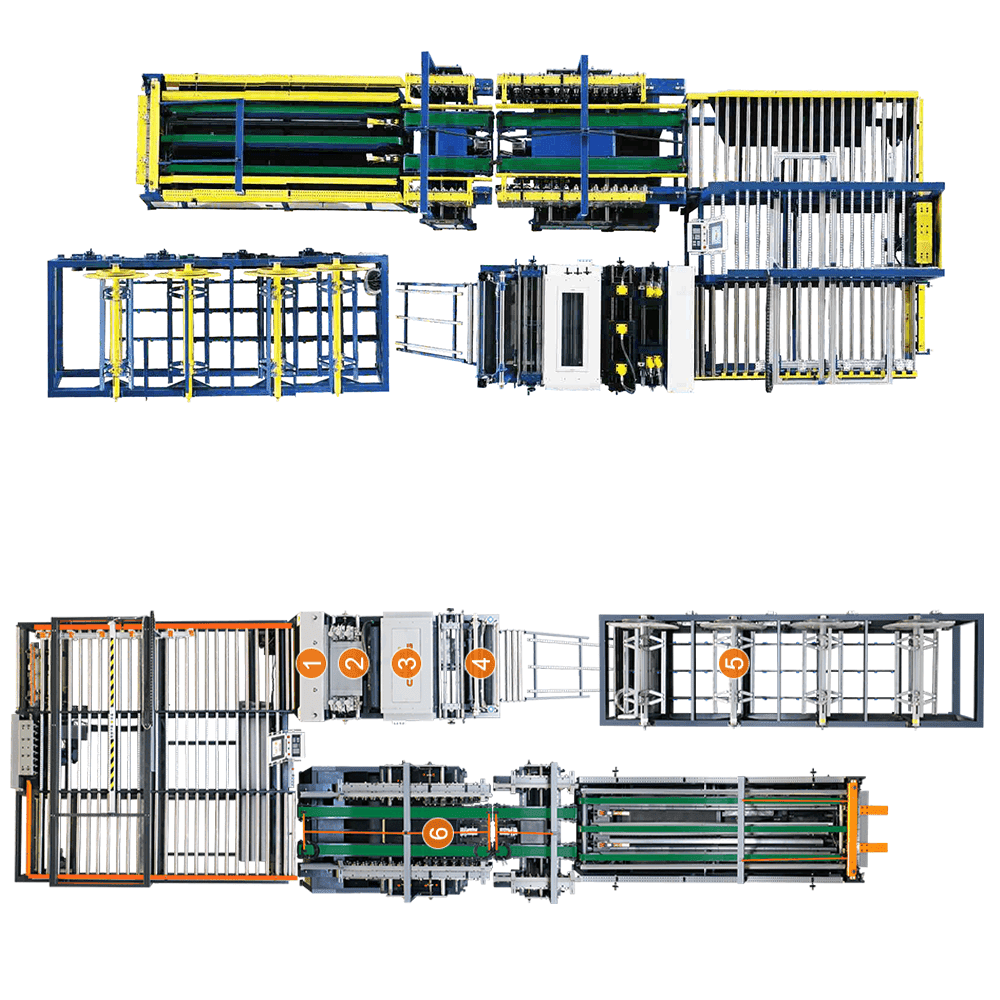
Customized Air Duct Production Lines
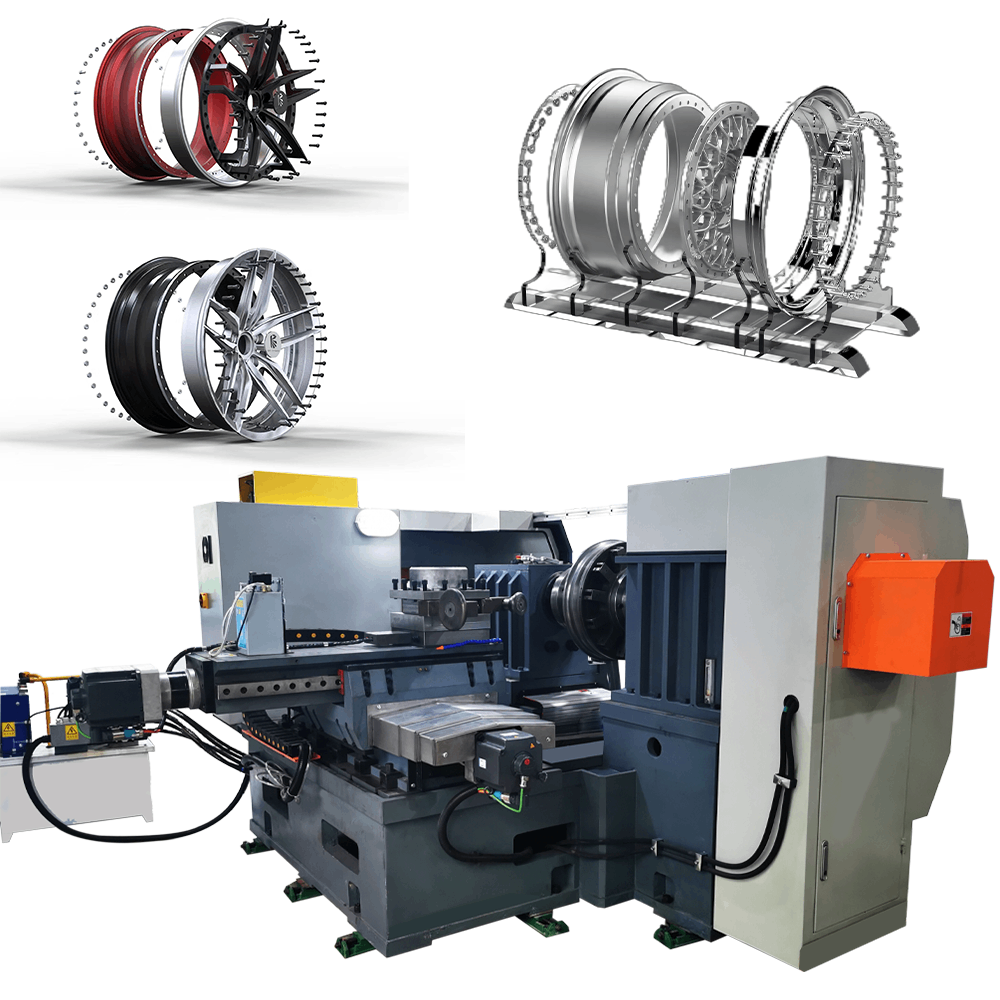
Horizontal Hub Wheel CNC Spinning Machine
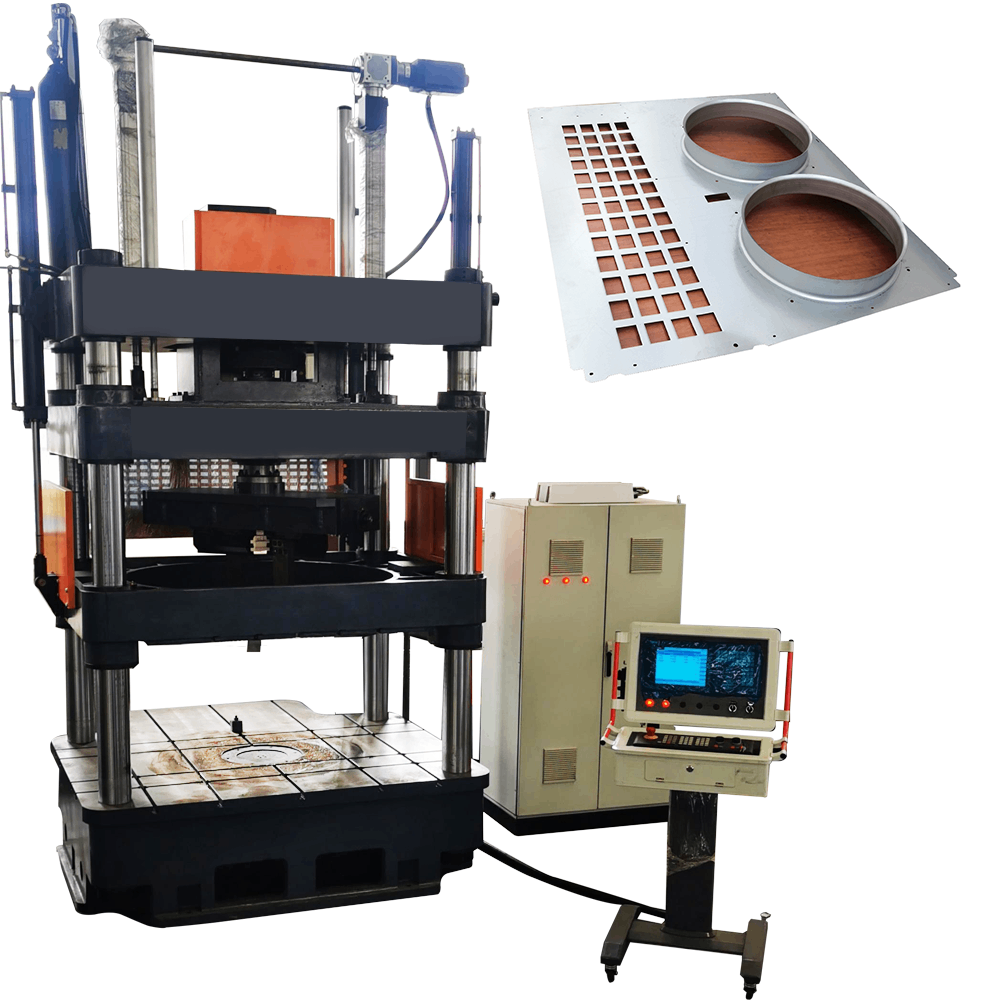
CNC Inner Spinning Machine -Siemens System