


Fan Guard Manufacturing Process: From Wire Forming to Automatic Production Line

Fan Guard Manufacturing Process: From Wire Forming to Automatic Production Line
For industrial fan manufacturers, fan guard production becomes a manufacturing bottleneck when order volume increases. Manual wire forming and welding processes often create inconsistent dimensions, unstable welding quality, higher labor dependency, and difficulty meeting OEM delivery requirements.
With growing demands for safety standards, faster delivery, and cost optimization in the global HVAC and industrial fan industries, manufacturers are increasingly evaluating whether automation is the right investment and how automated production lines can improve long-term manufacturing efficiency and reduce operating costs.

What Is an Industrial Fan Guard?
An industrial fan guard is a metal safety protection structure designed for centrifugal fans, axial fans, HVAC systems, and industrial ventilation equipment. It protects operators and equipment by preventing access to rotating components while maintaining proper airflow performance.
Unlike a standard metal mesh cover, an industrial fan guard is an engineered safety component that requires structural strength, dimensional accuracy, airflow consideration, and compliance with industrial safety requirements.
Why Fan Guard Quality Matters for HVAC and Industrial Fan OEM Manufacturers
For HVAC manufacturers, industrial fan OEMs, and metal fabrication companies, a fan guard is more than a safety cover. It is a critical structural component that influences product reliability, assembly efficiency, production consistency, and long-term manufacturing costs.
Poor fan guard quality can create several production challenges:
- Quality consistency issues: Dimensional variation and structural instability can affect assembly accuracy, increase adjustment work, and impact delivery reliability.
- Production efficiency problems: Unstable manufacturing processes increase manual intervention, extend production cycles, and create higher dependency on skilled operators.
- Higher manufacturing costs: Increased rework, scrap rates, production delays, and additional inspection requirements can significantly increase total manufacturing costs over the product lifecycle.
Types of Fan Guards and Material Selection
Wire Fan Guard
A wire fan guard is a welded metal structure made from formed wires and rings. It is commonly used for industrial fans because of its strength and airflow performance.
Stamped Metal Fan Guard
A stamped fan guard is produced through metal stamping and is suitable for standardized designs with large production volumes.

Plastic Fan Guard
Plastic fan guards are lightweight protection components mainly used in small fans and consumer applications.
Fan Guard Manufacturing Process
A typical industrial fan guard manufacturing process includes:
Material preparation → Wire forming → Ring forming → Positioning → Welding → Correction → Surface finishing
Wire Forming Process: Creating Accurate Metal Wire Structures
Manufacturing Challenge
During fan guard manufacturing, wire forming accuracy directly affects the final product size and assembly performance.
Common production issues include:
- Size variation
- Inconsistent bending radius
- Unstable wire shape
- Difficult product repeatability in mass production
Root Cause
The main causes of wire forming inconsistency are:
- Operator dependency
- Manual adjustment during bending
- No digital forming parameters
- Lack of process standardization
Automation Solution
CNC Wire Forming System
Key technologies include:
- Servo feeding
- CNC bending control
- Digital parameter storage
- Automatic program changeover
The system transforms wire forming from an experience-based process into a parameter-controlled manufacturing process.
Business Result
Automated wire forming helps manufacturers achieve:
- Lower rework cost
- Faster product changeover
- Stable production output
- Improved batch consistency
CNC wire forming systems improve fan guard manufacturing consistency by replacing operator-dependent bending with programmable and repeatable forming parameters.

Ring Forming Process: Ensuring Roundness and Assembly Accuracy
Manufacturing Challenge
Ring forming is a critical step that determines fan guard roundness and installation accuracy.
Common production problems include:
- Ring deformation
- Diameter variation
- Poor roundness
- Uneven mesh spacing
Root Cause
The main reasons for unstable ring forming include:
- Material variation between batches
- Manual positioning errors
- Lack of diameter control
- Inconsistent forming pressure
Automation Solution
Automatic Ring Forming System + Positioning Fixture
Key technologies include:
- Automatic positioning
- Diameter control
- Dedicated forming fixtures
- Repeatable forming parameters
The system reduces manual adjustment and ensures stable ring dimensions during high-volume production.
Business Result
Automated ring forming provides:
- Higher roundness accuracy
- Better assembly compatibility
- Lower adjustment requirements
- Improved production consistency
Automatic ring forming systems improve fan guard quality by controlling diameter accuracy, positioning precision, and repeatable forming performance.
Welding Process: Ensuring Structural Strength and Production Stability
Manufacturing Challenge
Welding is one of the most critical processes in fan guard manufacturing because welding quality directly affects structural strength and product reliability.
Common welding problems include:
- Inconsistent welding points
- Heat deformation
- Weak weld joints
- Limited production capacity
Root Cause
The main causes of welding instability include:
- Operator skill dependency
- Uncontrolled heat input
- Inconsistent welding parameters
- Lack of standardized welding sequence
Automation Solution
Automatic Fan Guard Welding System
Key technologies include:
- Welding current control
- Voltage control
- Welding time control
- Electrode pressure control
The system ensures every welding point is produced under consistent conditions.
Business Result
Automatic welding systems help manufacturers achieve:
- Reduced defect rate
- Lower welding deformation
- Higher production efficiency
- More stable OEM delivery quality
Automatic fan guard welding systems improve production reliability by controlling welding parameters, reducing deformation, and ensuring consistent weld quality.
The integration of these three processes transforms fan guard manufacturing from an experience-based operation into a process-controlled production system, enabling standardized parameters, stable manufacturing performance, and consistent quality across every production batch.

Fan guard manufacturing methods comparison
Wire Forming Fan Guard
Wire forming is widely used for industrial fan guard manufacturing because it provides flexible customization, lower tooling costs, and strong compatibility with CNC forming and automatic welding systems for high-volume OEM production.
Stamped Fan Guard
Stamping provides fast and cost-effective production for standardized fan guards, but high tooling costs and limited design flexibility make it less suitable for multi-model OEM fan manufacturers requiring customization.
Welded fan guard
Welded fan guards rely on consistent joining quality to ensure structural strength and stability, but manual welding limitations have driven industrial manufacturers to adopt automated welding systems integrated with wire forming processes for reliable mass production.
Manual Production vs Automated Fan Guard Production Line: When Should Manufacturers Upgrade?
Manual Production: Suitable for Low Volume, Limited Scalability
Manual fan guard production is suitable for prototypes, low-volume orders, and highly customized products, but as production volume increases, quality consistency, scalability, and OEM delivery requirements become difficult to maintain because manufacturing performance depends heavily on operator experience and available labor capacity.
Automated Fan Guard Production Line: Building a Scalable Manufacturing System
An automated fan guard production line transforms manufacturing from labor-dependent production into a process-controlled system by using CNC parameters, welding parameters, and digital programs to achieve repeatable quality, stable production capacity, faster order scaling, and continuous process optimization through data feedback.
The Real Difference: Labor-Based Manufacturing vs System-Based Manufacturing
Manual fan guard production is labor-based manufacturing, where quality and efficiency depend on operator experience. Automated fan guard production is system-based manufacturing, where CNC forming, controlled welding parameters, and standardized processes ensure repeatable quality and scalable output.

When Should a Factory Upgrade to an Automated Fan Guard Production Line?
Manufacturers should upgrade to an automated fan guard production line when manual processes can no longer support growing production volume, stable quality requirements, and OEM delivery expectations. Automation becomes necessary when labor dependency, quality variation, and production limitations start affecting business growth.
Complete Fan Guard Production Line Solution
Complete Fan Guard Production Line Components
① Wire Straightening and Cutting System
Prepares wire materials by straightening and cutting them into accurate lengths, reducing material waste and improving forming consistency.
② CNC Wire Forming Machine
Uses servo feeding, CNC bending control, and digital parameter storage to convert operator experience into repeatable production processes.
③ Ring Forming System
Forms outer and inner rings with precise diameter control to reduce ovality, dimensional deviation, and assembly problems.
④ Automatic Fan Guard Welding System
Uses automatic positioning, welding sequence control, and parameter management (current, voltage, welding time, electrode pressure) to reduce deformation and improve welding consistency.
⑤ Inspection and Finishing System
Includes dimensional inspection, surface treatment, and packaging to ensure batch consistency and OEM delivery quality.
How to Choose the Right Fan Guard Manufacturing Solution?
Choosing the right fan guard production solution depends on three factors: Production volume, Product variety and quality requirements
Choose Based on Production Volume
|
Production Type |
Production Characteristics |
Recommended Solution |
Suitable For |
|
Small Volume Production |
Customized products, low quantity, frequent design changes |
Manual production + semi-automatic equipment |
Prototype production, custom orders |
|
Medium Volume Production |
Stable models, increasing orders, need better consistency |
CNC wire forming + semi-automatic welding |
Growing HVAC and fan manufacturers |
|
High Volume OEM Production |
Large monthly output, stable designs, strict delivery requirements |
Complete automatic fan guard production line |
Industrial fan OEM manufacturers |
For small production volumes, flexibility is usually more important than automation level. However, when order volume increases, automated production becomes necessary to maintain quality consistency and delivery reliability
Choose Based on Product Variety
|
Product Type |
Manufacturing Requirement |
Recommended Solution |
|
High Product Variety |
Fast changeover, flexible programming, multiple specifications |
CNC wire forming system |
|
Standardized Products |
Maximum productivity, lowest unit cost, continuous production |
Dedicated automatic production line |
CNC-based systems are more suitable for OEM manufacturers producing multiple fan guard models, while dedicated automation is better for standardized high-volume production.
Fan Guard Production Line ROI: Is Automation Worth the Investment?
The value of fan guard automation is not only higher production speed, but also lower labor dependency, reduced quality costs, and improved long-term manufacturing efficiency.
|
ROI Factor |
Manual Production |
Automated Fan Guard Production Line |
|
Labor Cost |
High dependence on skilled workers and manual adjustment |
Reduced labor dependency through CNC and automated welding |
|
Production Efficiency |
Limited by operator skills and working hours |
Higher output with stable machine cycle time |
|
Quality Cost |
Higher risk of rework, scrap, and customer complaints |
Lower defect rate through standardized process control |
|
Production Scalability |
Difficult to increase capacity quickly |
Easier expansion for high-volume OEM production |
|
Manufacturing Cost |
Higher long-term operating cost |
Lower lifecycle cost through stable production |
How to select a fan guard production line supplier
Choosing a reliable supplier is not only about the price, but there are also three points you should focus on: Engineering Capability, Equipment Integration, and OEM Experience.
The supplier should provide customized production line design to suit your company, provide a complete production system to make sure the production line works, understand different industrial quality standards to meet different needs.
A reliable supplier should provide not only equipment, but a complete manufacturing solution.
FAQ
1. What causes fan guard welding deformation?
The main causes are uncontrolled heat input, improper fixtures, and inconsistent welding parameters.
2. Is wire forming better than stamping for fan guards?
For OEM manufacturers requiring customization and multiple models, wire forming usually provides better flexibility and lower tooling cost.
3. What wire diameter is commonly used for industrial fan guards?
Fan guard wire diameter is selected according to fan size, mechanical strength requirements, safety standards, and operating conditions.
4. Can one fan guard production line manufacture different sizes and designs?
Yes, a properly configured fan guard production system can manufacture different sizes and designs by using programmable forming parameters and adjustable fixtures.
However, the flexibility level depends on the machine configuration, tooling design, and production requirements.
5. What should manufacturers consider before purchasing a fan guard welding machine?
Selecting a fan guard welding machine requires evaluating product range, production capacity, automation level, and future manufacturing needs.
conclusion
If your factory is facing increasing labor costs, unstable welding quality, production bottlenecks, or higher OEM standards, upgrading to an automated fan guard production line can improve productivity, reduce manufacturing risks, and lower long-term operating costs.
Altron, with a professional team, can provide a customized fan guard production line solution based on your product requirements and production goals.If you are interested in the detailed plan, just contact us!

Related Products
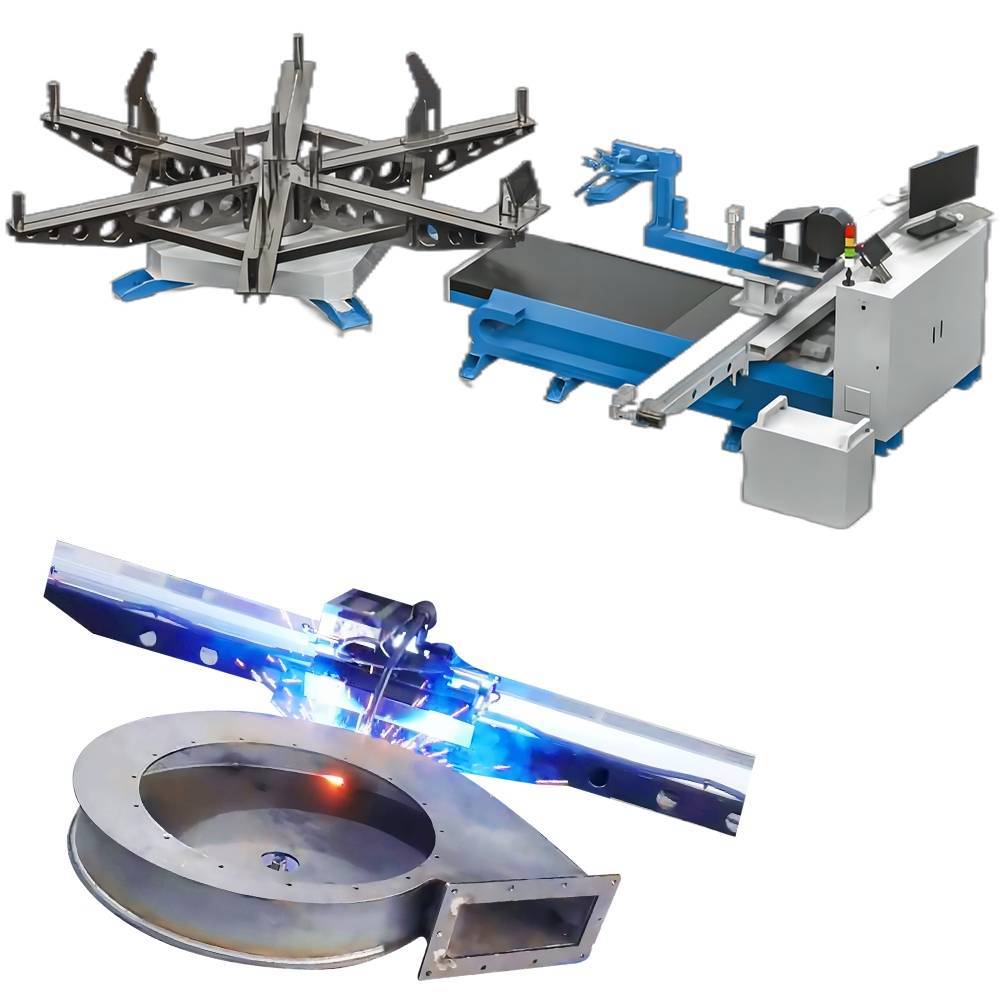
Auto Welding Machine For Centrifugal Fan
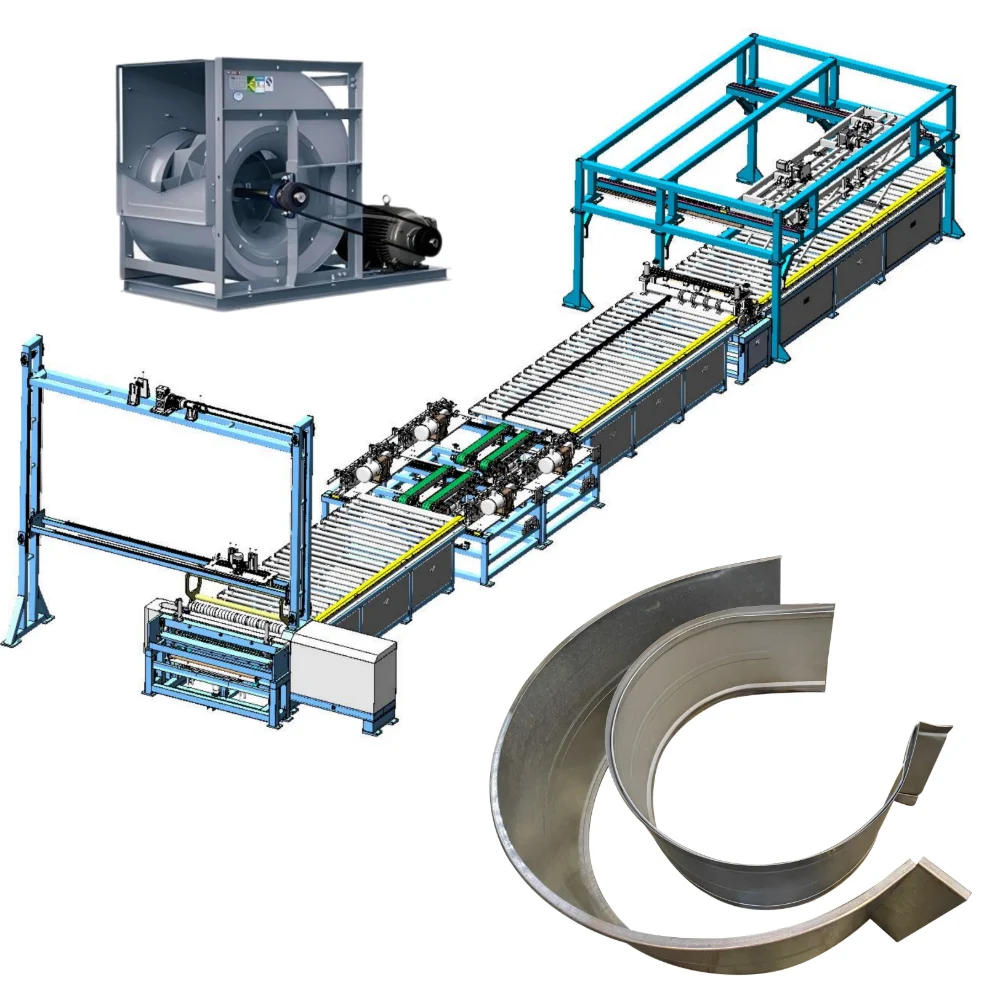
Centrifugal fan housing Forming machine
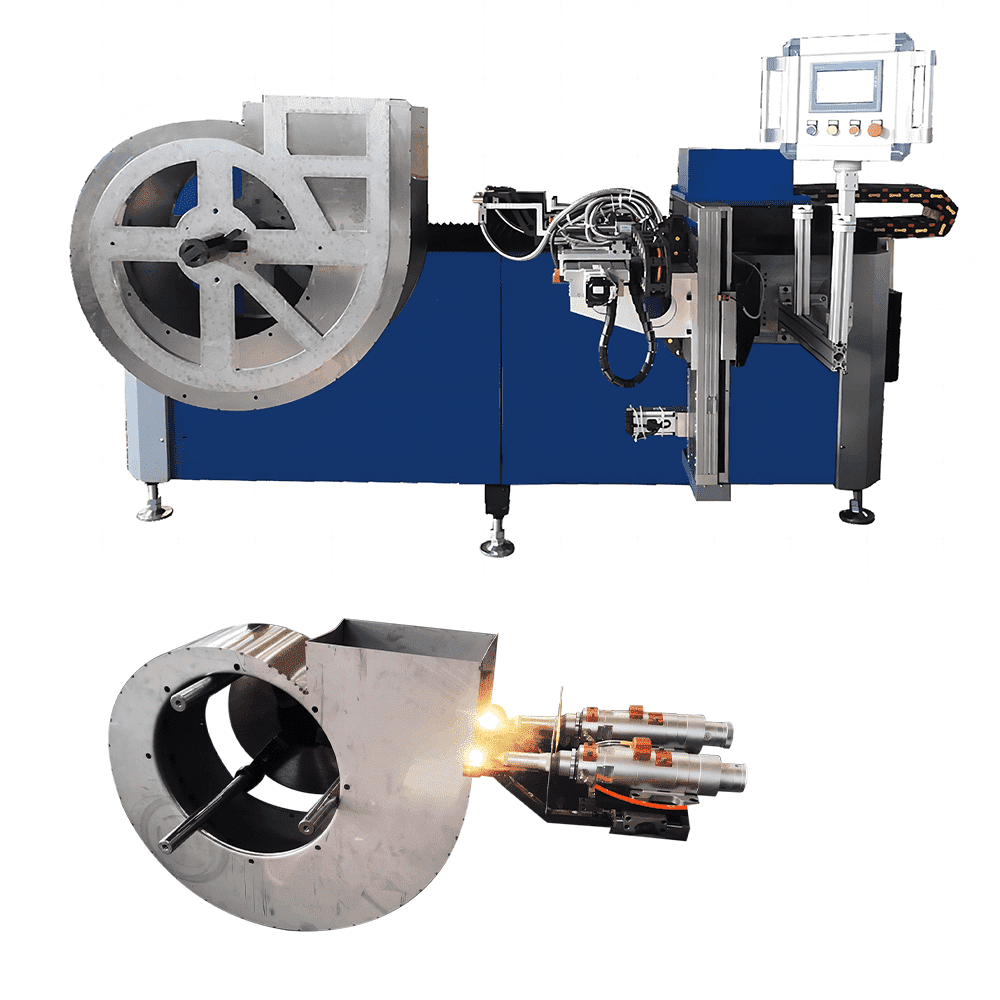
Double-Gun Centrifugal Fan’s Casing Welding Machine