


Rotary Welding:Manual Welding Improvement Methods

Rotary Welding: Manual Welding Improvement Methods
In industrial manufacturing sectors such as HVAC duct production, pipe fabrication, pressure vessel manufacturing, and OEM cylindrical component production, welding quality directly determines production efficiency, structural reliability, and total manufacturing cost.
However, manual welding is still widely used in cylindrical and circumferential welding processes, leading to inconsistent quality, unstable production cycles, and high dependency on skilled welders.
As production scale increases, manual welding becomes a limiting factor rather than a flexible manufacturing method.
Rotary welding systems are designed to improve manual welding by providing controlled rotation, stable heat input, and repeatable weld quality in cylindrical manufacturing applications.

Why Manual Welding Fails in Cylindrical Manufacturing
Manual welding fails in cylindrical production due to fundamental system limitations rather than operator skill alone:
1. Open-loop process control
Manual welding relies on operator judgment without closed-loop control of speed, heat input, or seam tracking.

2. Rotation inconsistency
Circumferential speed varies between operators, causing uneven weld formation and geometric deviation.
3. Heat input instability
Fluctuating arc length and travel speed result in inconsistent penetration and deformation.
4. Alignment deviation
Human-controlled torch movement introduces seam misalignment and repeatability errors.
These limitations become critical in high-volume production environments such as HVAC ducts, pipes, and pressure vessels.
Manual welding fails in cylindrical manufacturing not only due to technical limitations, but because it creates hidden production costs that scale with volume:
- inconsistent weld quality → increases rework cost
- operator dependency → creates labor bottleneck
- unstable cycle time → affects delivery commitment
- inspection failures → increase scrap rate and warranty risk
As production volume increases, manual welding does not scale — it multiplies inefficiencies.

What is a Rotary Welding System
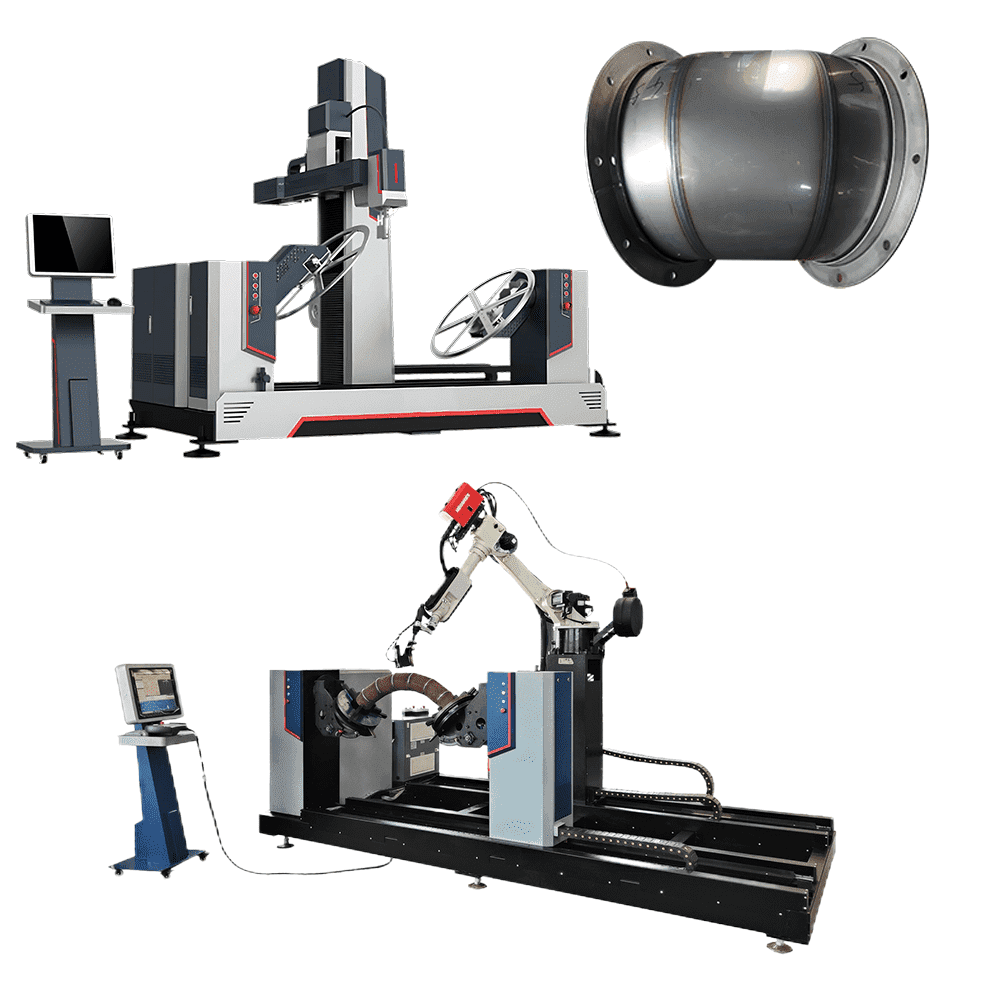
A rotary welding system is an automated industrial welding solution designed to rotate cylindrical workpieces at a controlled speed while maintaining a fixed welding torch and synchronized welding parameters to ensure consistent circumferential weld quality.
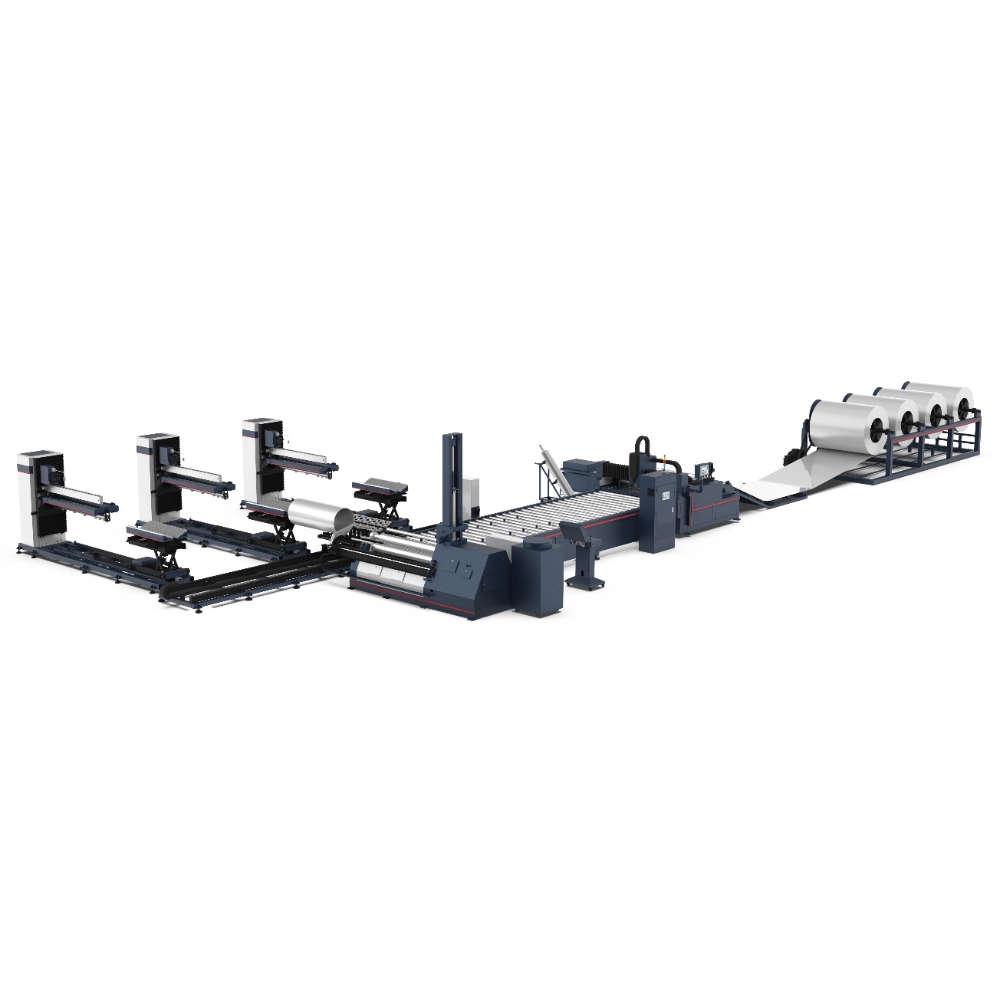
A rotary welding system is not just a welding machine, but a process standardization system designed to replace human welding variability with controlled industrial automation.
For manufacturers, it is a shift from “operator-dependent production” to “system-controlled manufacturing.”
It is widely used in:
- pipe fabrication systems
- tank welding rotary tables
- HVAC circular duct production
- OEM cylindrical part manufacturing
How Rotary Welding Systems Work
Rotary welding systems work by synchronizing controlled rotation, fixed torch positioning, and stable welding parameters to achieve consistent circumferential weld quality in cylindrical manufacturing.
The system rotates the workpiece at a constant speed while the welding torch remains in a fixed calibrated position, ensuring a uniform weld seam without operator interference.
1. Controlled Rotation System
The workpiece rotates at a constant programmable speed, ensuring uniform circumferential welding and eliminating ovality.
2. Welding Parameter Synchronization
Welding current, voltage, and wire feeding speed are synchronized through PLC control to stabilize arc performance and heat input.
3. Fixed Torch Positioning
The welding torch remains in a fixed calibrated position while the workpiece rotates, ensuring consistent weld trajectory and eliminating human movement error.

4. Heat Input Stability Control
Uniform energy distribution reduces thermal concentration, minimizing deformation, residual stress, and cracking in cylindrical structures.
Rotary welding systems replace manual welding variability with automated process control, ensuring repeatable and stable weld quality in industrial cylindrical production.
This closed-loop control system ensures that every weld is produced under identical conditions, eliminating variability that typically leads to rework and inspection failure.
Manual Welding vs Rotary Welding: Industrial Decision Comparison
|
Factor |
Manual Welding |
Rotary Welding System |
|
Process Control |
Operator dependent |
System controlled |
|
Weld Consistency |
Variable |
Repeatable |
|
Heat Input Stability |
Unstable |
Controlled |
|
Labor Requirement |
High skill dependency |
Semi-skilled operation |
|
Mass Production Capability |
Limited |
Scalable |
|
Defect Rate |
Higher |
Lower |
Rotary welding systems replace human-dependent welding variability with system-controlled repeatability for industrial mass production.

Key Welding Parameters That Determine Quality
In rotary welding systems, weld quality is determined by synchronized control of rotation speed, current, and voltage rather than operator skill.
- rotation speed → controls heat input per unit length
- welding current → determines penetration depth
- voltage stability → affects arc shape and weld bead formation
- wire feeding consistency → ensures stable deposition rate
- shielding gas flow → protects weld pool stability
Rotary Welding System Types
Small-Scale Rotary Table Welding System
Designed for:
- small cylindrical parts
- HVAC sheet metal components
Engineering focus:
- high precision rotation
- low heat input control
- thin material stability

impeller welding machine
Pipe Rotary Welding System
Designed for:
- pipeline fabrication
- tube welding
Engineering focus:
- full circumferential penetration
- alignment control
- continuous seam stability
Tank & Pressure Vessel Rotary Welding System
Designed for:
- storage tanks
- boilers
- pressure vessels
Engineering focus:
- heavy load rotation
- deep penetration welding (MIG/SAW)
- deformation control

gantry welding machine for centrifugal fan
Heavy-Duty Automated Welding Rotator Systems
Designed for:
- large cylindrical structures
- OEM production lines
Engineering focus:
- multi-ton load handling
- PLC automation
- production line integration
Industrial Applications of Rotary Welding Systems
HVAC & Duct Manufacturing
Rotary welding systems are widely used in HVAC manufacturing to replace manual welding and ensure consistent airtight seams in thin sheet metal duct production.
Problems:
- air leakage due to inconsistent weld seams
- burn-through in 0.5–1.2mm sheet metal
- poor spiral duct alignment
- high labor dependency
Why Manual Welding Fails:
Manual welding cannot maintain stable heat input in thin galvanized steel, leading to burn-through and inconsistent sealing quality.
Rotary Welding Solution:
Rotary table welding systems ensure constant rotation speed and fixed torch positioning for continuous seam welding.
Engineering Value:
- improved airtightness
- reduced burn-through risk
- stable duct geometry
- higher production efficiency
In high-volume duct production, even small weld inconsistencies can lead to air leakage, energy loss, and system inefficiency, directly affecting end-user performance and project acceptance.

Pipe & Tube Industry
Pipe rotary welding systems replace manual welding in tube fabrication by providing continuous rotation and stable weld penetration for long seam production.
Problems
- weld leakage risk
- misalignment in pipe joints
- inconsistent penetration
Solution
Pipe rotary welding systems ensure synchronized rotation and controlled welding parameters.
Engineering Value
- leak-free joints
- consistent penetration
- higher welding reliability
Weld instability in pipe fabrication can result in leakage risk, leading to system failure and high maintenance cost in industrial applications.
Pressure Vessel & Tank Manufacturing
Rotary welding systems are essential in pressure vessel manufacturing to replace manual welding and ensure uniform heat distribution and structural integrity.
Problems:
- weld cracking
- cylindrical deformation
- NDT failure
Why Manual Fails:
Uneven heat input creates residual stress and structural instability.
Solution:
Heavy-duty rotary welding + SAW/MIG ensures uniform heat distribution.
Engineering Value:
- higher structural integrity
- reduced deformation
- improved inspection pass rate
In pressure vessel manufacturing, weld defects are not quality issues — they are safety risks and regulatory compliance failures.

Automotive & OEM Cylindrical Parts
Rotary welding systems replace manual welding in automotive and OEM cylindrical parts manufacturing by ensuring repeatable quality and high production efficiency.
Problems:
- inconsistent quality
- low repeatability
- imbalance
Solution:
Automated rotary welding enables stable mass production.
Engineering Value:
- scalable production
- reduced rework
- consistent quality
In OEM production, inconsistency directly reduces product competitiveness and limits mass production scalability.
ROI and Business Impact
Rotary welding systems improve total manufacturing economics by increasing production stability and reducing variability-related losses.
Key economic benefits:
- reduced rework and scrap rate
- lower labor dependency
- increased production throughput
- improved shift-to-shift stability
- reduced inspection failure rate
Typical industrial result:
- 2–5× production efficiency improvement
- 40–80% labor cost reduction
- 50–90% defect rate reduction
- significantly lower rework and scrap costs
- improved production stability across shifts
Typical payback period ranges from 6 to 24 months depending on application.In most industrial cases, the cost of not automating welding is significantly higher than the investment in automation equipment.
When to Upgrade to Rotary Welding
Factories typically transition from manual welding to rotary welding systems when:
- welding defects increase with production volume
- skilled welders become difficult to hire
- OEM customers require stricter consistency standards
- production cycle time becomes unstable
- inspection failure rate increases
Automation adoption is triggered when manual welding becomes a limiting factor in production scalability and quality control.

How to Choose a Rotary Welding System
The selection of rotary welding systems is determined by workpiece geometry, material properties, and production scale requirements.
- workpiece diameter and weight capacity
- material type (carbon steel, stainless steel, etc.)
- production volume and cycle time
- welding process type (MIG, TIG, SAW)
- required automation level (semi or fully automated)
FAQ
Does rotary welding improve production efficiency or just quality?
Rotary welding improves both production efficiency and quality by stabilizing welding speed, heat input, and seam consistency in continuous production.
Is rotary welding suitable for small batch production?
Rotary welding is suitable for small batch production when weld consistency and repeatability are more important than process flexibility.
Is rotary welding a machine upgrade or a system upgrade?
Rotary welding is a system-level industrial automation upgrade that integrates mechanical rotation, welding control, and production standardization.
Can rotary welding systems work with different welding processes?
Yes, rotary welding systems can integrate MIG, TIG, or SAW processes depending on material thickness and application requirements.
What determines the weld quality in a rotary welding system?
Weld quality is determined by synchronized control of rotation speed, welding current, voltage, and wire feeding consistency rather than operator skill.
Conclusion:
Rotary welding systems are not simple equipment upgrades, but a transition from manual welding variability to controlled industrial manufacturing systems.
They enable manufacturers to achieve stable quality, scalable production, and reduced lifecycle cost in cylindrical manufacturing applications.
If your production is experiencing any of the following issues: inconsistent weld quality, high labor dependency, unstable production cycles, increasing rejection or rework rates. Contact Altron to evaluate your production and recommend a suitable rotary welding solution for your application.

Related Products
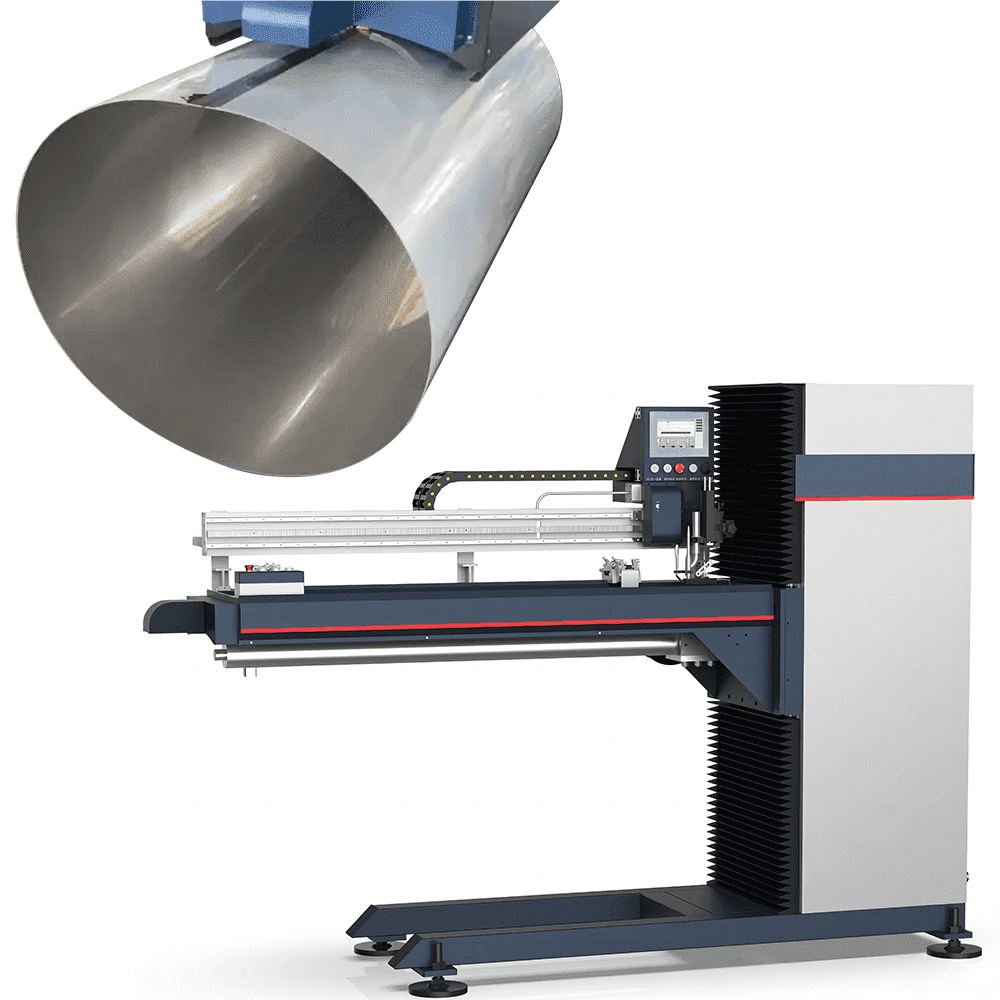
Auto-Seam Welding Machines
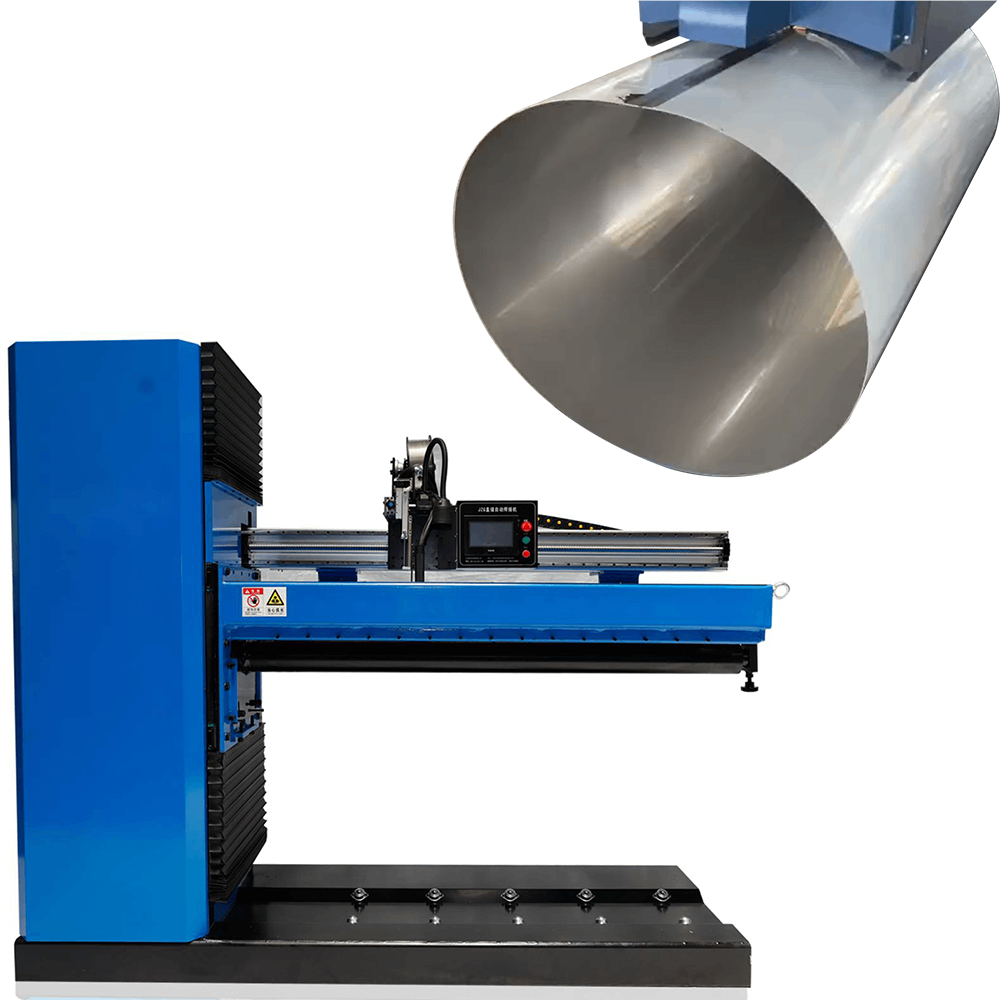
Customized Lift-Type Seam Auto Welding Solution
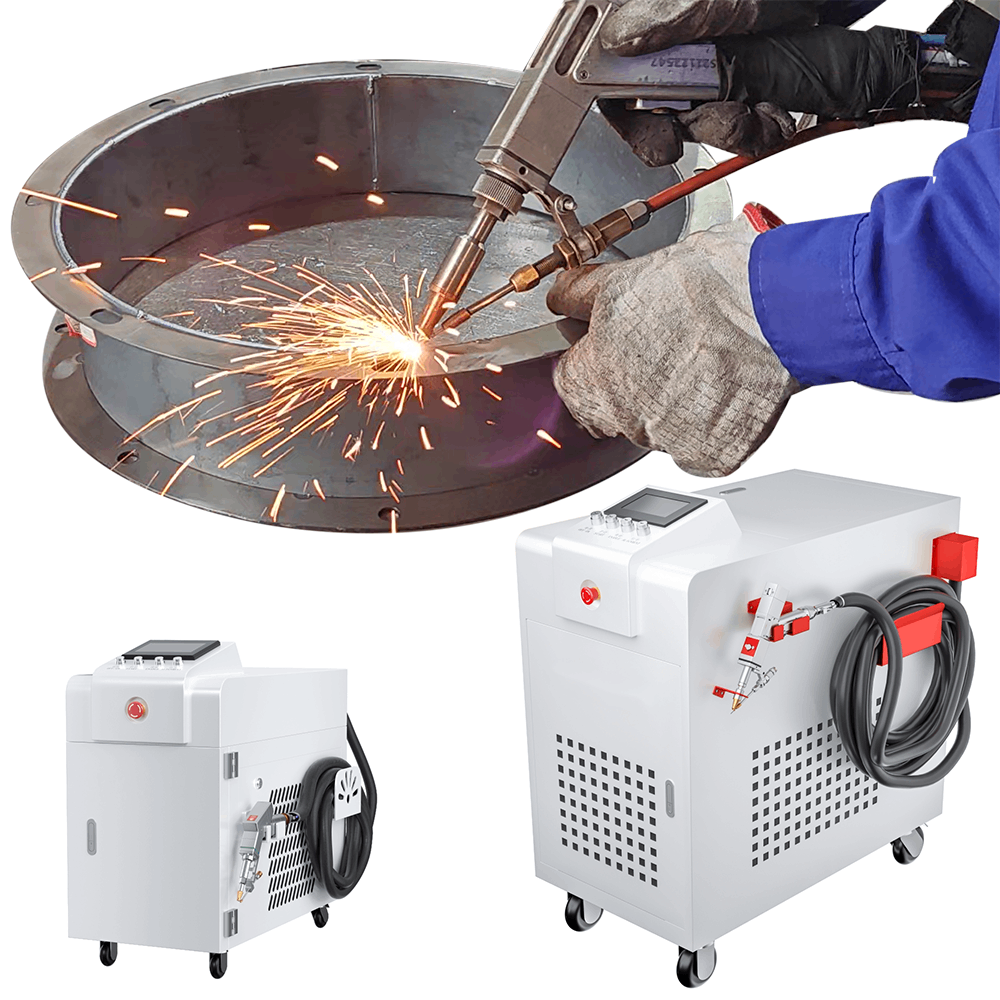
Handheld Laser Welding Machine